Khata Corridor is a transboundary wildlife corridor linking Nepal’s Bardia National Park with India’s Katarniaghat Wildlife Sanctuary. Once heavily degraded by settlement and over-exploitation, the corridor has been gradually restored through community-led conservation, strong government commitment, and long-term support from partners such as WWF. Today, Khata plays a crucial role in maintaining ecological connectivity for species including tigers, elephants, and leopards.
In recent years, rising human–wildlife conflict, including tragic human fatalities, has sparked renewed concern and debate over the future of the corridor. At this critical moment, it is essential to safeguard past conservation achievements while paving a realistic pathway toward harmony between conservation goals and community wellbeing.
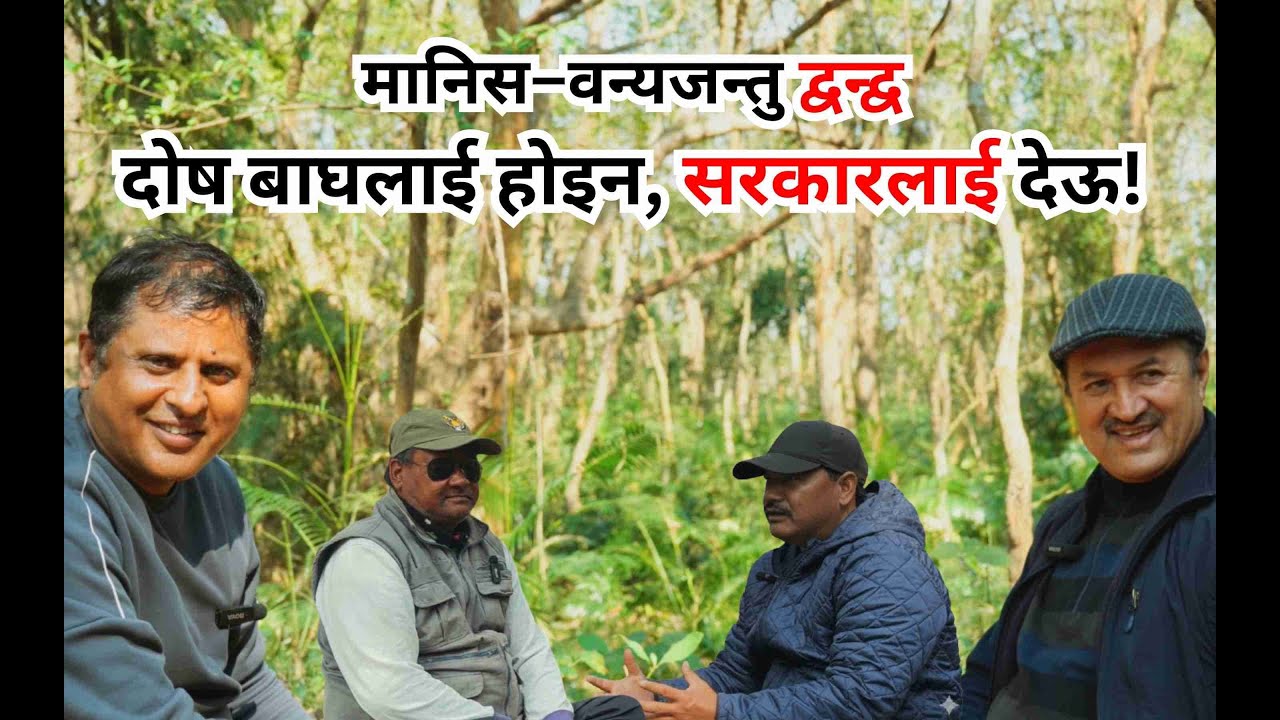
In this talk episode, the host sits down with three voices deeply rooted in the history and lived reality of the Khata Corridor to unpack its ecological, social, and human dimensions.
The conversation features:
Ramesh Thapa — Former Warden of Bardia National Park
Hari Gurung — President of the Khata Community Forest Coordination Committee
Bhadai Tharu — Local conservationist and community protector, who has dedicated his life to wildlife conservation despite losing his eyesight following a tiger attack
Together, they explore:
1. The origin and evolution of the Khata Corridor and its importance for wildlife connectivity
2. How community-led conservation has shaped the corridor’s success
3. Human–wildlife conflict and the real costs borne by frontline communities
4. Policy, governance, and on-ground challenges in managing wildlife corridors
5. Personal stories of sacrifice, resilience, and coexistence with wildlife
Drawing from decades of field experience, community leadership, and lived sacrifice, this episode goes beyond maps and policies to reveal the human stories behind conservation success.
If you care about wildlife corridors, community-based conservation, human–wildlife coexistence, this episode offers rare insights and deeply grounded perspectives.
Timestamps:
0:00 Introduction
3:26 Background & Host: Prakash Kumar Paudel
3:45 A Conservation with Mr. Ramesh Thapa
43:02 A Conservation with Local Leader: Mr. Hari Gurung
1:08:02 A Conversation with Local Conservationist Mr. Bhadai Tharu
About the Guests
Ramesh Thapa
Ramesh Thapa is a former Warden of Bardia National Park with more than three decades of experience in protected area management, wildlife conservation, and conservation governance in Nepal. During his tenure, he played a key role in strengthening park protection, community engagement, and transboundary conservation initiatives linked to the Khata Corridor.
Hari Gurung
Hari Gurung is the President of the Khata Community Forest Coordination Committee and a leading figure in community-based conservation in western Nepal.
Bhadai Tharu
Bhadai Tharu is a local conservationist from the Khata Corridor area who has been actively involved in wildlife conservation for decades. Despite losing his eyesight due to a tiger attack, he continues to inspire conservation efforts through his courage, commitment, and unwavering dedication to protecting wildlife and supporting coexistence between people and nature.
About Host
Dr. Prakash Kumar Paudel is a Conservation Biologist with more than two decades of research and professional experience in biodiversity conservation, environmental governance, and sustainable development. His work focuses on the science–policy–practice interface, with particular emphasis on conservation planning, wildlife ecology and conservation, community-based natural resource management, disaster risk reduction, climate change, and ecosystem-based adaptation.
Our social media links
Facebook: / himavatsambaad
Instagram: / himavat_sambaad
TikTok: https://tiktok.com/ himavatsambaad
LinkedIn: / himavat-institute
Himavat Sambaad [1: 2-0-0-0:2] : Expert Consultation [2]
Himavat Sambaad is published by Himavat Institute Pvt. Ltd.
For more information, please visit our website: www.himavatinstitute.com.np
Disclaimer:
This podcast episode is intended for educational and awareness purposes only. The discussion focuses on wildlife conservation, community-based conservation practices, and policy perspectives. Views expressed by the speakers are their own and do not necessarily represent the official positions of their affiliated institutions.
Any unofficial download and publishing of the content from this channel is strictly prohibited and will lead to punitive measures.

Информация по комментариям в разработке