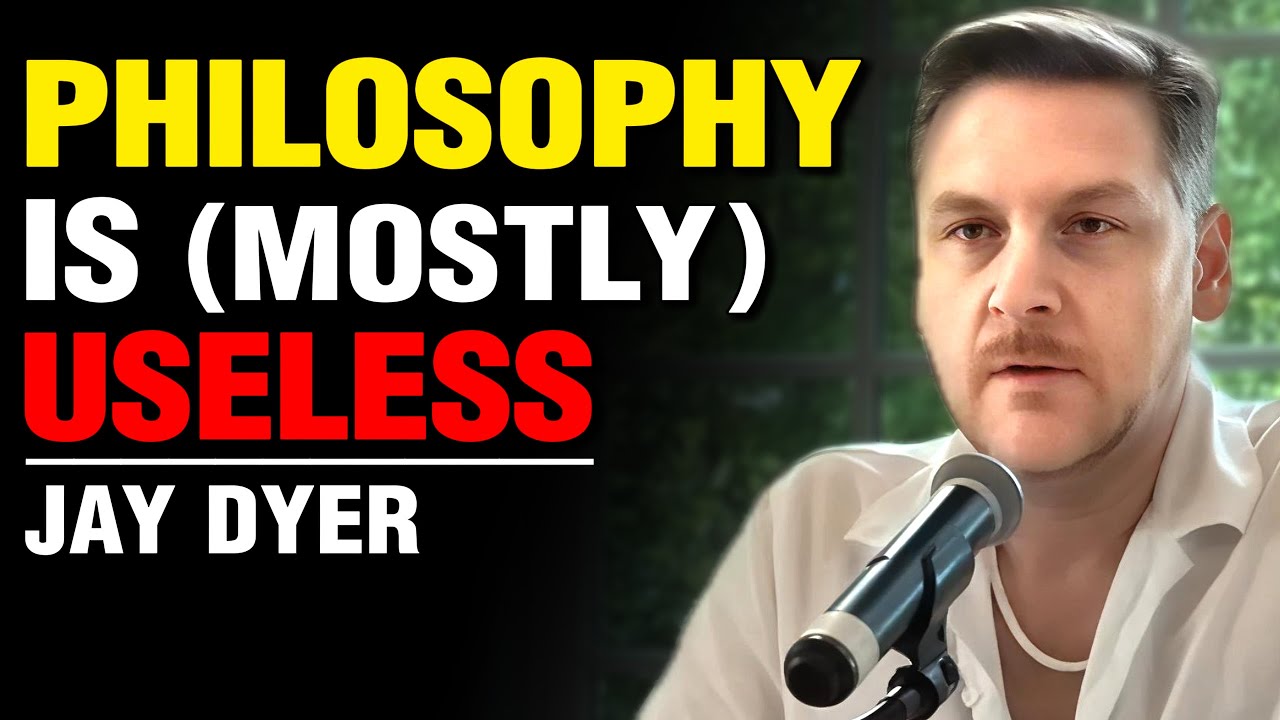
In this lecture, Jay Dyer offers a sustained Orthodox analysis of apologetics, philosophy, and the nature of God, arguing that much of what passes for “philosophical theology” in the modern world ultimately fails to describe the God revealed in Holy Scripture and experienced in the life of the Church.
Jay begins by challenging the assumption that Christianity must be grounded in abstract philosophy in order to be intellectually credible. While acknowledging that the Church Fathers made careful and limited use of philosophical language, he argues that philosophy was never meant to dictate or confine divine revelation. When metaphysical systems are placed above Scripture, theology shifts away from a personal, relational God and toward an impersonal concept of being.
Central to the lecture is Jay’s critique of classical theism, the idea of God shared across Aristotelian philosophy, Neoplatonism, medieval scholasticism, and many non-Christian religions. This model presents God as pure actuality, absolute simplicity, and an abstract monad existing beyond time, space, and manifestation. Jay argues that such a deity may be coherent within philosophical systems, but it is not the God of the Bible, and it cannot account for the Incarnation.
Drawing extensively from the Old Testament theophanies, Jay shows that God repeatedly appears, speaks, acts, and even stands in time and space. He highlights key passages involving Moses, Jacob, Gideon, and the Angel of the Lord, arguing that these encounters make no sense within classical theism but fit naturally within Orthodox Trinitarian theology. These appearances, he explains, are best understood as Christophanies, manifestations of the pre-incarnate Logos.
Jay then contrasts the Orthodox understanding of God with that of Islam, Judaism, and Western scholastic theology. In Orthodoxy, God is not an abstract essence but a personal, triadic reality, with the Father as the sole source, eternally begetting the Son and manifesting the Spirit. This preserves both divine unity and personal distinction, avoiding the reduction of God to a metaphysical principle.
A major theme of the lecture is the essence–energy distinction, which allows God to remain transcendent in His essence while genuinely present and active in the world through His uncreated energies. Jay explains that this distinction is essential for understanding prayer, revelation, divine love, and salvation. Without it, God becomes inaccessible, unable to act in history or enter into real communion with human beings.
Jay also addresses apologetic encounters with Muslims, Jews, and philosophical theists, noting a recurring assumption: that perfection must mean absolute unity, immutability, and abstraction. He challenges this premise by asking a deeper question — who decides what perfection is? In Orthodoxy, perfection is not defined by metaphysical categories but revealed in the God-Man, Jesus Christ, who is both fully God and fully man.
Quoting St. Justin Popovich, Jay argues that true perfection is not found in escaping the world or dissolving into an impersonal absolute, but in the incarnate life of Christ, where divine and human realities are united without confusion or division. Christ is not abstract wisdom; He is living Wisdom, the concrete revelation of truth, love, and righteousness.
The lecture concludes by returning to the practical implications of Orthodox apologetics. Jay emphasizes that Christianity is not primarily a system of ideas but a revealed faith grounded in history, incarnation, and lived experience. Philosophy may serve as a tool, but it must always remain subordinate to divine revelation. Without the Incarnation, every philosophical system and every world religion ultimately falls short.
This talk provides a clear Orthodox framework for engaging philosophy, classical theism, Islam, Judaism, and Western theology, while reaffirming that the heart of Christianity is not abstraction, but the personal, incarnate God revealed in Jesus Christ.
Jay's Socials ⬇️
Subscribe to Jay: / @jaydyer
Find Jay on X: https://x.com/Jay_D007
Jay's Website: https://jaysanalysis.com/
Jay Dye Archive's X page: https://x.com/JayDyerArchive
Original Stream: • Orthodox Apologetics & Philosophy
#jaydyer #orthodoxy #orthodox #Philosophy #catholic #protestant

Информация по комментариям в разработке