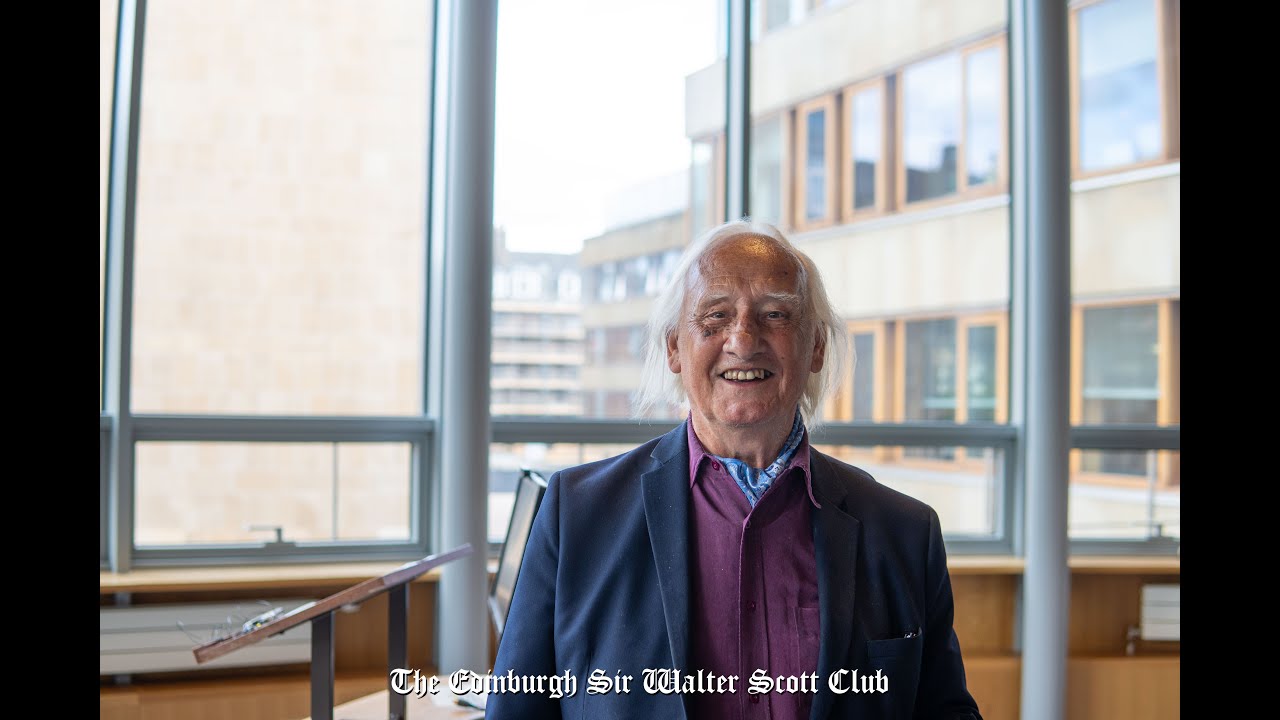
On Wednesday, 28th May 2025 we had a Joint event with the Byron Society and the University of Edinburgh.
https://www.walterscottclub.com/blog/...
Summary of the Talk:
Bernard Beatty posed the question of whether Scott and Byron are Scotland’s greatest writers, noting that while Scott is unambiguously Scottish, Byron’s claim is more complex. Though born in London, Byron spent his formative years in Aberdeen, retained a Scottish identity in part, and later acknowledged this heritage—especially under Scott’s influence. Beatty used this duality to explore ideas of literary greatness, cultural identity, and historical legacy.
Key Themes and Interesting Points:
Byron’s Scottish Identity:
Byron lived in Scotland until age ten and considered himself “bred a canny Scot.”
He admired Scott deeply and felt nostalgic connections to Scotland through Scott’s novels.
Monuments and Literary Greatness:
The Scott Monument in Edinburgh once held the record as the world’s largest monument to a writer.
Lord Byron was included among the 16 Scottish writers commemorated there in the 1840s, indicating his cultural association with Scotland at the time.
Changing Views of Greatness:
Beatty observed that modern society hesitates to label anyone as “great,” especially writers, whereas earlier generations confidently celebrated figures like Scott and Byron.
He connected this to broader democratic trends that resist hierarchical notions of artistic merit.
Historical Perspective and Novelistic Vision:
Scott’s novels depict individual lives shaped by historical forces, typically ending with characters accepting a post-Romantic, pragmatic future (e.g., Waverley, Redgauntlet).
Byron’s tales (especially the “Turkish Tales”) dwell more in the realm of myth, personal psychology, and the metaphysical, often resisting tidy resolutions.
Illicit Glamour and Heroism:
Both writers lured readers into identification with romanticised, dangerous worlds (e.g., Flora MacIvor and Gulnare).
Scott resolves these tensions with order; Byron indulges and sometimes challenges them.
Napoleon as a Litmus Test:
Both were fascinated by Napoleon. Scott tried to understand and memorialise him fairly in his multi-volume biography.
Byron idolised him as the embodiment of opposition and “greatness” against mediocrity and saw him as akin to the Byronic hero.
Contrast in Style and Legacy:
Scott’s heroines (like Jeanie Deans) show moral strength in realistic frameworks; Byron’s heroes (like Manfred or Conrad) are more operatic, defiant, and psychologically tortured.
Byron’s Don Juan parodies traditional heroism, turning the iconic seducer into a passive, dominated figure—perhaps influenced by Scott’s passive male protagonists.
Critical Reputations:
Beatty lamented the mid-20th century critical dismissal of both writers, especially by F. R. Leavis.
He noted a revival of interest in Byron but regrets Scott remains undervalued, despite his literary and cultural impact.
Conclusion:
Beatty affirms that Scott and Byron are Scotland’s greatest writers in terms of range, innovation, and influence.
However, he resists ranking them definitively over others like Burns or Muriel Spark, cheekily ending with “Dinna fash yersel” to any critic demanding rigid hierarchies.
Notable Quotations:
“Byron said of himself that he was ‘born for Opposition’.”
“Scott’s world accepts that greatness belongs in the past, though it may be visited by the imagination.”
“Redgauntlet has to swallow the unpalatable truth that the world of honour… is now simply impossible—it is ‘lost for ever’.”
“Scott and Byron did not need sausages. They could and did talk from the outset about all manner of things.”
Final Thought:
Beatty celebrated the mutual admiration between Scott and Byron, noting how their contrasting temperaments enriched their respective works and strengthened their friendship. Their joint legacy, he argued, remains unmatched in the Scottish literary tradition.

Информация по комментариям в разработке