SUBSCRIBE, LIKE, BELL ICON, SHARE, COMMENT, / @demondai
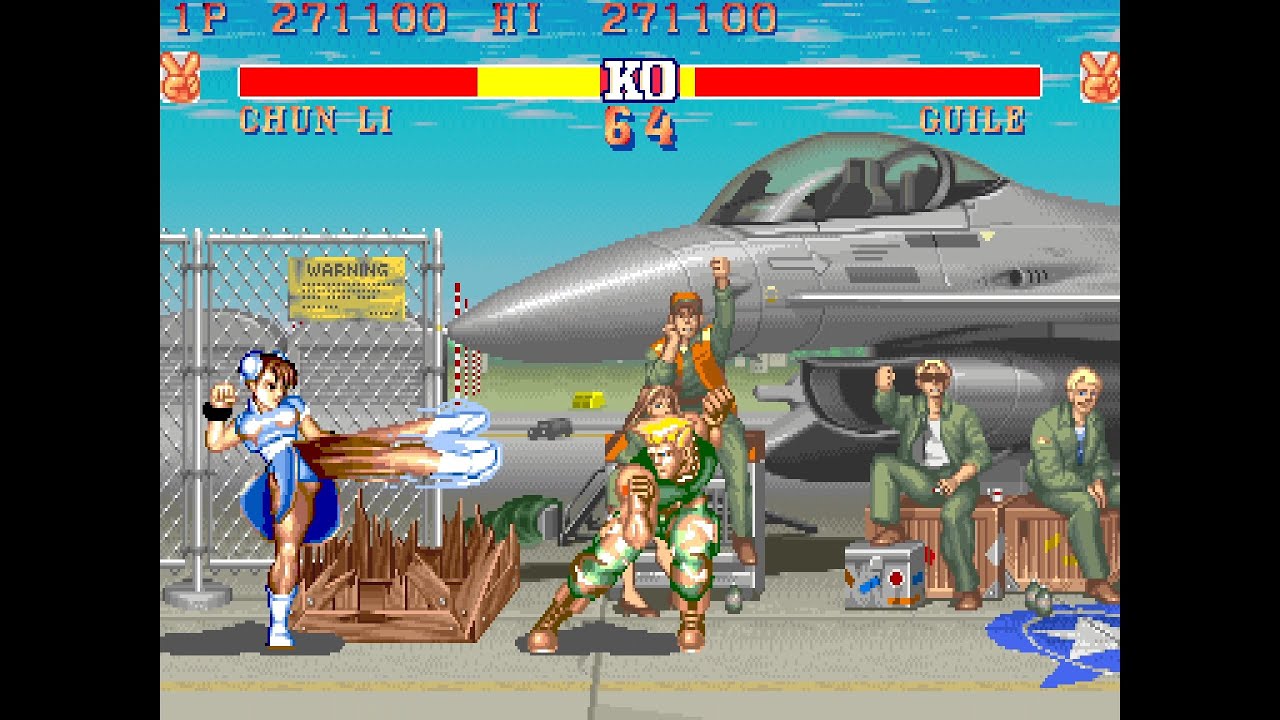
Street Fighter II The World Warrior Gameplay Fighting Game Capcom Arcades Combo
Gameplay, Blind Run, Rush, Replay, Arcade, Italian, English, Full HD, 2K, WQHD, QHD, Quad HD, 144 hz, 60 hz, PC, Window, No Commentary, Uncut, Retro
STREET FIGHTER II THE WORLD WARRIOR
Chun Li
Street Fighter II: The World Warrior is a 1991 fighting game developed and published by Capcom for arcades. It is the second installment in the Street Fighter series and the sequel to 1987's Street Fighter. Designed by Yoshiki Okamoto and Akira Yasuda, who had previously worked on the game Final Fight, it is the fourteenth game to use Capcom's CP System arcade system board. Street Fighter II vastly improved many of the concepts introduced in the first game, including the use of special command-based moves, a combo system, a six-button configuration, and a wider selection of playable characters, each with a unique fighting style.
Street Fighter II became the best-selling game since the golden age of arcade video games. By 1994, it had been played by an estimated 25 million people in the United States alone. More than 200,000 arcade cabinets and 15 million software units of every version of Street Fighter II have been sold worldwide, earning an estimated $10 billion in total revenue, making it one of the top three highest-grossing video games of all time as of 2017 and the best-selling fighting game until 2019. More than 6.3 million SNES cartridges of Street Fighter II were sold, making it Capcom's best-selling single software game for the next two decades, its best-selling game on a single platform, and the highest-selling third-party game on the SNES.
Unlike the original game, Street Fighter II became a pop culture phenomenon, and is frequently regarded as one of the greatest video games ever made. It is also cited as the most important and influential fighting game ever made, with its launch being credited with popularizing the genre during the 1990s and inspiring other producers to create their own fighting series. Additionally, it prolonged the survival of the declining video game arcade business market by stimulating business and driving the fighting game genre. It prominently features a popular two-player mode that obligates direct, human-to-human competitive play, inspiring grassroots tournament events, culminating in Evolution Championship Series (EVO). Street Fighter II shifted the arcade competitive dynamic from achieving personal-best high scores to head-to-head competition, including large groups. Due to its major success, a series of updated versions were released with additional features and characters, starting with 1992's Street Fighter II: Champion Edition; its major successor was Street Fighter III in 1997
Street Fighter II follows several conventions and rules established by its 1987 predecessor Street Fighter. The player engages opponents in a series of timed one-on-one, close-quarters combat matches. In order to win a round, the player must either completely drain the opponent's health bar by landing attacks, or have more health left than the opponent when the timer runs out. Neither fighter wins the round if they have equal health when time expires or if they simultaneously knock each other out. The first fighter to win two rounds is declared the victor of the match.
While a single-player game is in progress, a second player may join at any time, immediately starting a head-to-head match. The winner continues in single-player mode.
The original Street Fighter II allowed up to 10 rounds per match; this maximum is reduced to four rounds starting with Champion Edition. If there is no clear winner by the end of the final round, either the computer-controlled opponent will win by default in a single-player match or both fighters will lose in a two-player match. After every third match in the single-player mode, a bonus stage gives a chance to earn additional points by smashing a car, wooden barrels, or metal oil drums. After each match, the location for the next one is selected on a world map.
Playing Street Fighter II on an arcade machine
Like in Street Fighter, the controls are an eight-directional joystick and six attack buttons. The joystick can jump, crouch, walk left and right, and block. A tradeoff of strength and speed are given by three punch buttons and three kick buttons, each of light, medium, and heavy. The player can perform a variety of basic moves in any position, including new grabbing and throwing attacks. Special moves are performed by combinations of directional and button-based commands.







Информация по комментариям в разработке