Logo video2dn
  • Сохранить видео с ютуба
  • Категории
    • Музыка
    • Кино и Анимация
    • Автомобили
    • Животные
    • Спорт
    • Путешествия
    • Игры
    • Люди и Блоги
    • Юмор
    • Развлечения
    • Новости и Политика
    • Howto и Стиль
    • Diy своими руками
    • Образование
    • Наука и Технологии
    • Некоммерческие Организации
  • О сайте

Скачать или смотреть Rafael Martínez-Galarza @ Astroinformatics 2018 in Heidelberg

  • TheHITSters
  • 2018-10-22
  • 411
Rafael Martínez-Galarza @ Astroinformatics 2018 in Heidelberg
AstroinformaticsAstrophysicsInformaticsScienceResearchBig DataHeidelbergGermanyConferenceTalksMachine LearningAI
  • ok logo

Скачать Rafael Martínez-Galarza @ Astroinformatics 2018 in Heidelberg бесплатно в качестве 4к (2к / 1080p)

У нас вы можете скачать бесплатно Rafael Martínez-Galarza @ Astroinformatics 2018 in Heidelberg или посмотреть видео с ютуба в максимальном доступном качестве.

Для скачивания выберите вариант из формы ниже:

  • Информация по загрузке:

Cкачать музыку Rafael Martínez-Galarza @ Astroinformatics 2018 in Heidelberg бесплатно в формате MP3:

Если иконки загрузки не отобразились, ПОЖАЛУЙСТА, НАЖМИТЕ ЗДЕСЬ или обновите страницу
Если у вас возникли трудности с загрузкой, пожалуйста, свяжитесь с нами по контактам, указанным в нижней части страницы.
Спасибо за использование сервиса video2dn.com

Описание к видео Rafael Martínez-Galarza @ Astroinformatics 2018 in Heidelberg

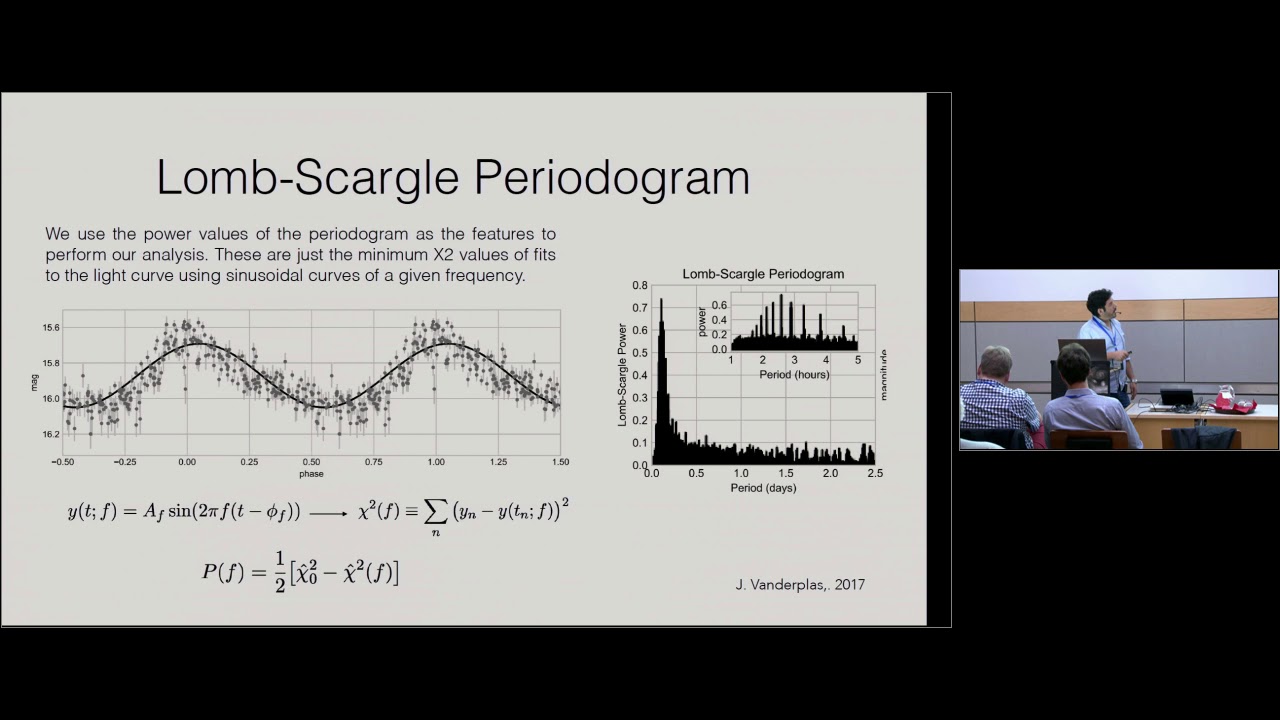
Rafael Martínez-Galarza talks about „Finding anomalous light curves in large surveys with machine learning" at the Astroinformatics 2018 in Heidelberg.

Abstract of the talk:
Upcoming large observational surveys such as the Large Synoptic Survey Telescope (LSST) will produce millions of irregularly-sampled astronomical light curves. The enhanced sensitivity and time-sampling strategies of LSST will open a new window for several fields of astronomy, including precision cosmology, variable stars, as well as the discovery and characterization of new solar system objects. However, the large volume of the data that LSST will produce will require sophisticated algorithms for processing and interpreting these light curves. One important related question is how to find the most anomalous light curves, those that are perhaps not explained by current models. In this talk I will discuss state-of-the-art anomaly detection methods that use machine learning to find needles in the upcoming haystack of data. I will discuss several approaches to feature extraction for irregular light curves, including the use of auto-encoding recurrent neural networks, and the performance of several anomaly detection algorithms with respect to the features used. I will show the results of applying these methods to several time domain surveys, including SDSS's Stripe 82 and the All Sky Automated Survey (ASAS) catalog of variable stars, and present some of the weirdest light curves found. Finally, I will present the results of our upcoming Photometric LSST Astronomical Time-Series Classification Challenge (PLAsTiCC), which will reach out to the community to spur development of algorithms to classify astronomical transients.

The international Astroinformatics 2018 conference took place in the Studio Villa Bosch, Heidelberg, from September 3–7, 2018. Scientists from all over the world met to exchange views on the newest and most successful methods of machine learning in an effort to advance the exploration of the Universe. The conference was organized by HITS researchers Dr. Kai Polsterer, Antonio D’Isanto, Erica Hopkins, and Dr. Nikos Gianniotis (all from the Astroinformatics group at HITS – Heidelberg Institute for Theoretical Studies) in cooperation with Prof. Joachim Wambsganss (Heidelberg University) and Dr. Coryn Bailer-Jones (Max Planck Institute for Astronomy).

The Astroinformatics – which is devoted to the scientific exploitation of the fast-growing volumes of data in astronomy – is one of the most important events in this field. At the conference, scientists discussed topics including novel database systems, visualization and augmented reality, artificial intelligence, and the reproducibility of research results. The conference is hosted at a different location all around the world once every year. In 2018, it took place in Germany for the first time.
Conference page: https://astroinformatics2018.h-its.org/

Комментарии

Информация по комментариям в разработке

Похожие видео

  • О нас
  • Контакты
  • Отказ от ответственности - Disclaimer
  • Условия использования сайта - TOS
  • Политика конфиденциальности

video2dn Copyright © 2023 - 2025

Контакты для правообладателей [email protected]