3x More Calcium Than Cocoa, Impossible to Kill: Why We Destroyed The "Diamond Standard" Superfood
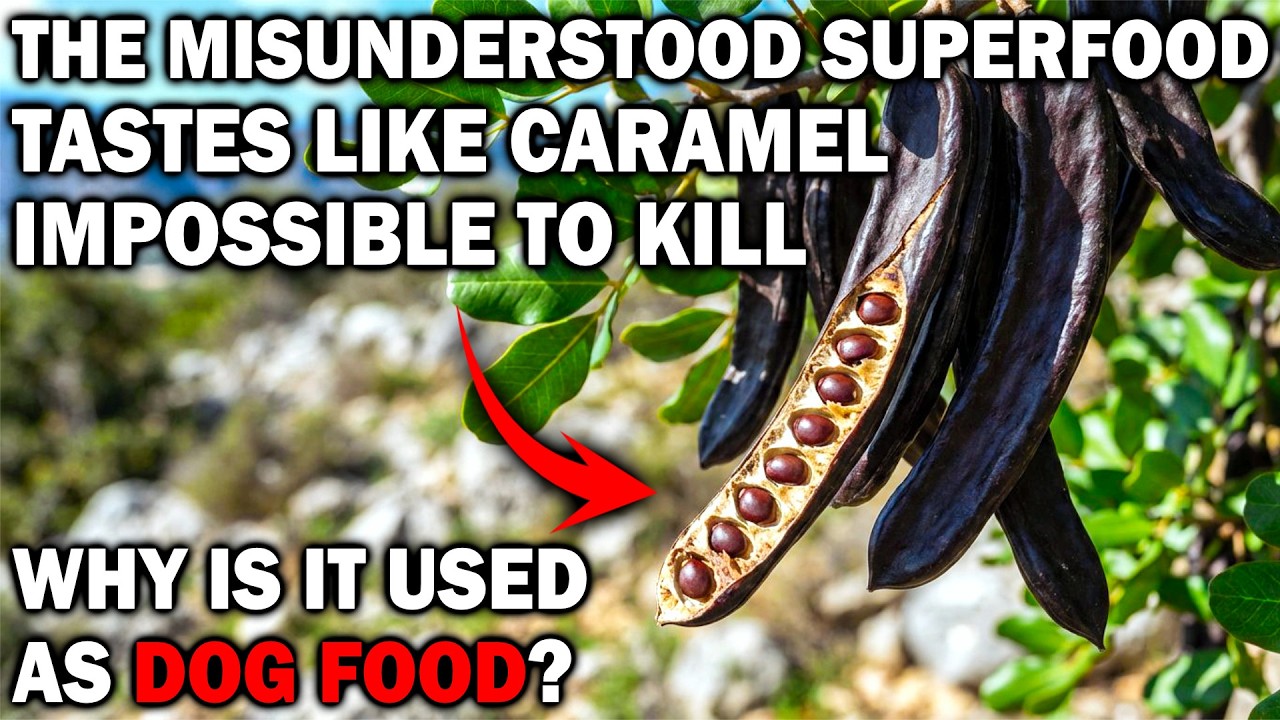
There is a seed so biologically perfect that for thousands of years, it was the universal standard for measuring the weight of gold and diamonds. It fueled the Roman legions, saved the Duke of Wellington’s cavalry, and kept millions alive during the Spanish Civil War. Yet, in the 1970s, a marketing error turned this ancient titan into a punchline: "fake chocolate."
This is the story of Carob (Ceratonia siliqua), the drought-proof survival crop that we discarded because we tried to force it to be candy, missing the fact that it is the ultimate fuel for a warming world.
🔬 THE SCIENCE:
Botanical consistency: The seeds of the carob tree are so uniform in mass (approx. 0.2g) that they became the "Carat," the unit of measurement still used today for gemstones.
Nutritional Superiority: A 100g serving of carob flour contains approximately 348mg of calcium—nearly 3X the amount found in cocoa (128mg) and comparable to milk. Unlike cocoa, carob is oxalate-free, meaning the body can actually absorb 100% of the minerals present.
The Anti-Anxiety Energy: Cocoa contains caffeine and theobromine, stimulants that trigger cortisol spikes and are toxic to canines. Carob is 100% stimulant-free, providing energy through natural carbohydrates without the "jitters" or crash.
The Metabolic Secret: Research published in the Journal of Agricultural and Food Chemistry identified Carob as a potent source of D-pinitol. This compound is an insulin-mimetic, meaning it mimics the effects of insulin to regulate blood sugar, making carob a sweet food that actively fights metabolic damage.
Historical Resilience: During the Peninsular War (1808) and the Spanish Civil War (1936-1939), carob pods were the primary survival ration. They require no preservation, do not rot, and provide a complete carbohydrate profile.
Botany of the Future: Carob is a xerophyte. It thrives in USDA Zones 9-11 with almost no irrigation once established, producing massive caloric yields in desert conditions where almond and citrus trees fail.
💰 THE STIGMA:
Carob wasn't suppressed by a law; it was destroyed by a stigma. During Spain's "Years of Hunger," it was the only food available to the poor, permanently associating the flavor with starvation.
In the 1970s, the American health food industry tried to rebrand it as a "chocolate substitute," setting consumers up for disappointment. Today, the industry harvests carob globally, but only for the seeds to extract "Locust Bean Gum" (E410) for ice cream, often discarding the nutrient-dense fruit pod as waste.
We are throwing away a superfood to keep a food additive.
📚 SOURCES:
Turnbull, L. A. et al. (2006). Seed size variability: from carob to coconuts. Biology Letters.
Papaefstathiou, E. et al. (2018). Nutritional characterization of carob product. Food Chemistry.
Srivastava, N. et al. (2020). Antidiabetic activity of Ceratonia siliqua (Carob) and its bioactive compound D-pinitol. Journal of Ayurveda and Integrative Medicine.
Craig, W. J., & Nguyen, T. T. (1984). Caffeine and theobromine levels in cocoa and carob products. Journal of Food Science.
Baumel, A. et al. (2018). Ceratonia siliqua: The domestication of a Mediterranean legume tree. PLOS ONE.
Richards, M. (1998). A Time of Silence: Civil War and the Culture of Repression in Franco's Spain.
USDA FoodData Central. Carob flour vs. Cocoa powder, unsweetened.
#AncestralYields #Carob #FoodHistory #SurvivalFood #Permaculture #StJohnsBread #FoodSovereignty #DroughtCrops #Superfood #Foraging







Информация по комментариям в разработке