The British sparrowhawk (Accipiter nisus) is a small bird of prey in the family Accipitridae. It is a common sight in the UK, and can be found in a variety of habitats, including woodlands, parks, and gardens.
Appearance
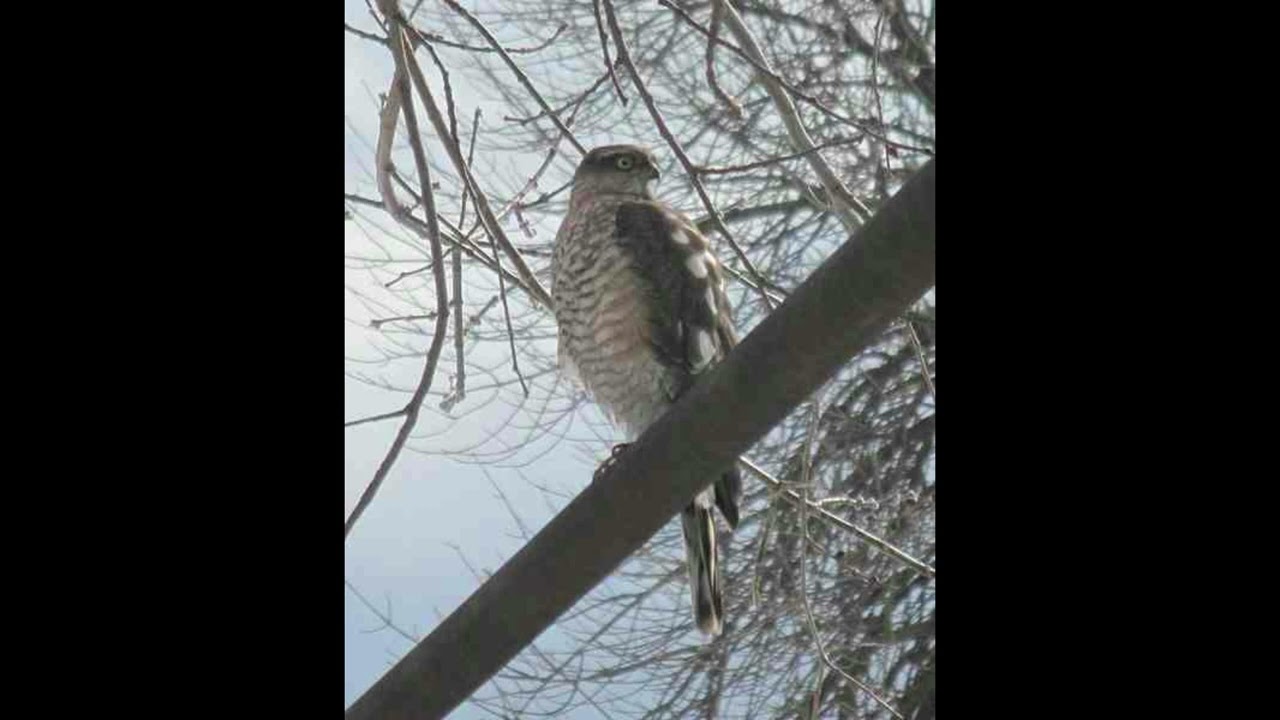
The British sparrowhawk is a medium-sized bird, with a wingspan of up to 100 cm (39 in). It has a long, slender body and a short tail. The male has a bluish-grey back and wings, and orangey-brown bars on its chest and belly. The female is larger than the male, and has a brown back and wings, and brown bars underneath. Both sexes have bright yellow eyes and long, yellow legs.
Habitat
The British sparrowhawk is found in a variety of habitats, including woodlands, parks, and gardens. It prefers habitats with dense vegetation, which it uses to hunt and nest in.
Diet
The British sparrowhawk is a carnivore, and its diet consists mainly of small birds. It also eats other small animals, such as mammals, reptiles, and amphibians. The sparrowhawk is a skilled hunter, and can often be seen swooping down on its prey from above.
Breeding
The British sparrowhawk breeds in the spring, from April to June. The male builds a nest in a tree, and the female lays four to six eggs. The eggs are incubated by both parents, and the chicks hatch after about 21 days. The young chicks fledge after about 35 days.
Conservation
The British sparrowhawk is a common bird in the UK, and its population is stable. However, it is a protected species under the Wildlife and Countryside Act 1981, and it is illegal to kill, injure, or disturb the bird or its nest.
Threats
The main threats to the British sparrowhawk are habitat loss and persecution. Habitat loss is caused by the development of land for housing and agriculture. Persecution is the killing of sparrowhawks by gamekeepers and other people who believe that the bird is a pest.
What can be done to help?
There are a number of things that can be done to help the British sparrowhawk. These include:
Protecting and restoring habitat: This is essential for the bird's survival. Woodland habitats can be protected by designating them as protected areas, and by working with landowners to manage them for wildlife.
Reducing persecution: It is important to educate people about the importance of the sparrowhawk, and to discourage them from killing the bird.
Monitoring the population: It is important to monitor the sparrowhawk population to assess its status and trends. This information can be used to inform conservation actions.
By taking these steps, we can help to ensure that the British sparrowhawk continues to thrive in the UK for generations to come.

Информация по комментариям в разработке