Exploring the Depths of AI and ML
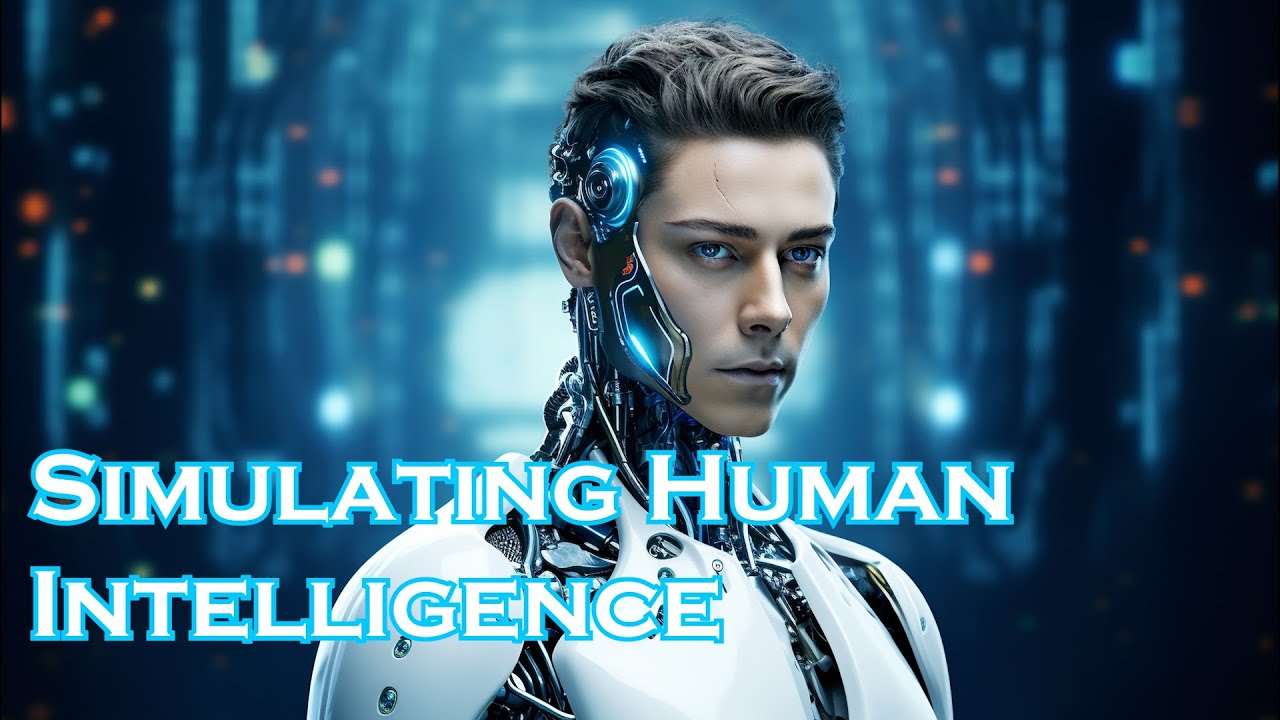
Artificial Intelligence (AI) and Machine Learning (ML) stand at the forefront of technological advancements, driving innovations that seemed like mere science fiction a few decades ago. At its heart, AI is about creating machines capable of performing tasks that traditionally require human intelligence. This journey into AI reveals how it encompasses learning, reasoning, problem-solving, perception, and language understanding, aiming to function intelligently and independently.
Learning and Adaptation: The cornerstone of AI's simulation of human intelligence lies in its remarkable ability to learn from data and experiences. This adaptability allows AI systems to evolve their responses based on new information, a process facilitated by machine learning algorithms. These algorithms enable continuous improvement, as seen in language translation programs that refine their accuracy through exposure to vast datasets.
Reasoning and Problem Solving: AI's prowess in reasoning and making decisions is perhaps most evident in its application within the healthcare sector, where AI systems analyze complex patient data to diagnose conditions and recommend treatments. This capability mirrors human cognitive processes, showcasing AI's potential to make informed, logical decisions.
Perception and Language Understanding: AI's simulation of human perception through computer vision and natural language processing illustrates its ability to interpret the world and communicate effectively. Whether recognizing objects or understanding spoken words, AI systems process information in a way that mimics human sensory functions. Furthermore, AI's ability to comprehend and generate language enables interactions that are remarkably human-like, enhancing communication with users.
Ethical and Social Implications: The simulation of human intelligence by machines also brings to light ethical and social considerations. Issues of privacy, autonomy, and bias underscore the importance of guiding AI development with ethical principles to ensure its benefits are realized while minimizing potential harms.
Diving Deeper into Machine Learning: ML, as a vital subset of AI, empowers systems to identify patterns and make decisions with minimal human intervention. It encompasses:
Supervised Learning: This method involves training an algorithm on a labeled dataset, facilitating the model's ability to make accurate predictions for unseen data.
Unsupervised Learning: Here, algorithms explore unlabeled datasets to discover underlying structures, offering insights into complex data without predefined categories.
Reinforcement Learning: Through interaction with their environment, algorithms learn to make decisions that maximize cumulative rewards, demonstrating AI's potential in strategy and real-time decision-making.
Technological Breakthroughs: The advancements in deep learning, automated machine learning (AutoML), and explainable AI (XAI) have been game-changers. Deep learning, through neural networks, has enhanced AI capabilities in image and speech recognition, while AutoML has democratized AI, making it more accessible. XAI addresses the need for transparency in AI's decision-making processes, fostering trust and accountability.
Conclusion: The exploration of AI and ML unveils a landscape where machines not only mimic human intelligence but also have the potential to surpass our cognitive capabilities in specific tasks. The interplay between AI and ML is crafting a future where intelligent systems are not just tools but partners in solving some of the most complex challenges facing humanity.
This primer on AI and ML only scratches the surface of a field that is rapidly evolving, pushing the boundaries of what is possible with technology. As we venture further into this era of intelligence, the promise and challenges of AI and ML continue to spark imagination and debate, shaping the future of our digital world.
*********
Effortlessly Keep up with A.I. Ascendance. Have you subscribed yet?
"If you zoom out, the purpose of life is not just to do jobs," -Bill Gates
(...on how A.I. could allow humans to work just three days a week)
Music credits to the artist (Jantrax/Yoitrax)

Информация по комментариям в разработке