OBJECT COLLECTION PRESENTS
AUTOMATIC WRITING
A Staged Adaptation of Robert Ashley’s Seminal 1979 Composition
OCTOBER 26–30, 2022 AT THE BRICK
Object Collection’s Automatic Writing will run Wednesday–Saturday, October 26–29, at 7pm, and Sunday, October 30, at 5pm.
Tickets start at $15 are available here: https://www.bricktheater.com/event/au...
The Brick is located at 579 Metropolitan Avenue, in Brooklyn.
Composed by Robert Ashley
Adapted by Travis Just and Kara Feely
Directed and Designed by Kara Feely
Fulya Peker and Travis Just (voice)
Aaron Meicht (vocal processing)
John Hastings (guitar)
Kara Feely (actions)
Paula Matthussen (programming/electronics)
David Pym (video)
photos by Hunter Canning
The Brooklyn-based performance group Object Collection, acclaimed for its invigorating blend of music and theater, will remount its live, staged adaptation of Robert Ashley’s seminal studio composition, Automatic Writing (1979). The piece premiered at Incubator Arts Project in 2011, with subsequent performances in London and Birmingham in 2014. This revised adaptation will take place at The Brick in Brooklyn, October 26–30, 2022.
Originally composed in recorded form over five years, Robert Ashley’s Automatic Writing is the result of the composer’s fascination with involuntary speech. Ashley said, “I went towards the idea of sounds having a kind of magical function—of being able to actually conjure characters. It seemed to me that in a sort of psycho-physical sense sounds can actually make you see things, can give you images that are quite specific.” (from The Wire, Issue 234, 2003) He recorded and analyzed the repeated lines of his own mantra, extracting four musical characters and creating an early form of ambient music that is incredibly evocative.
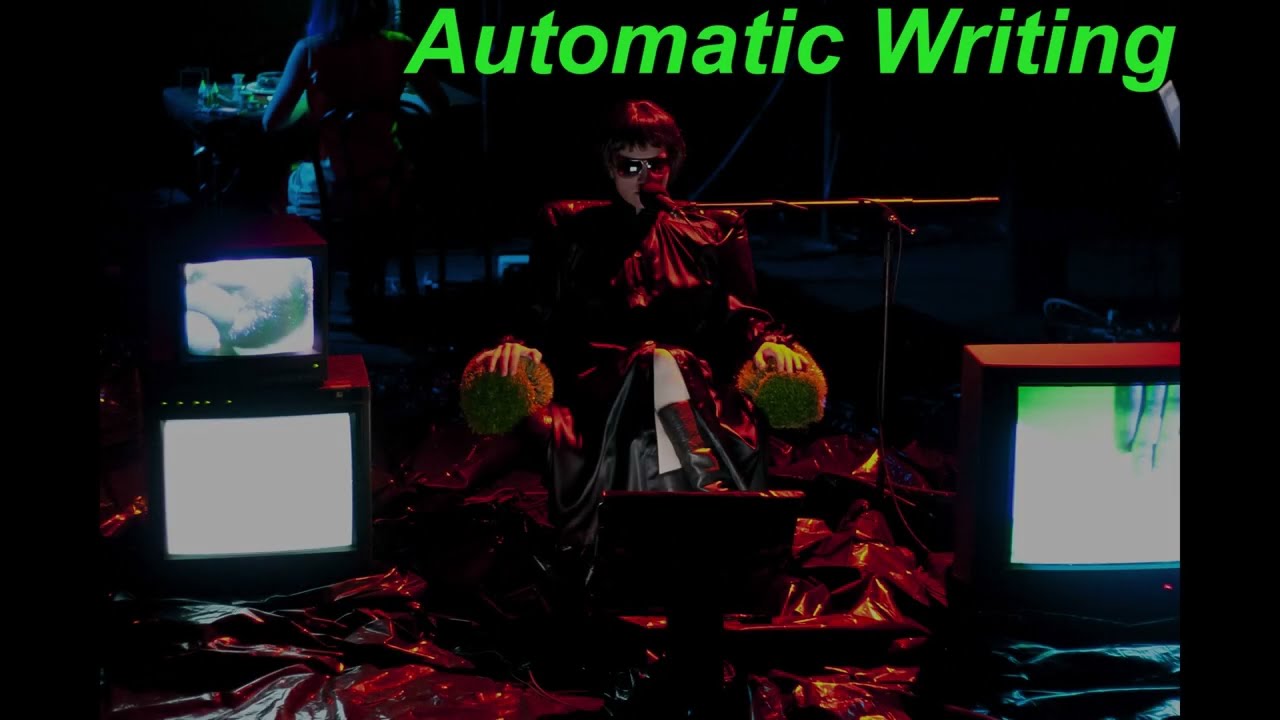
On a stage strewn with television monitors, video cameras, and dim pools of slowly shifting light, Object Collection evokes the four characters—or parts—while crafting an environment that aims to heighten the enigmatic and melancholic mood of the original. Performers inhabit four disparate islands, contributing to a dense sound environment. The recording, which never had a score for performance, is treated as a composition that can be interpreted instead of recreated: Genders and languages get switched up, electronics are used over analog, and objects and scenic elements are introduced to give the work a visual dynamic. The result is a mirage-like, transient, and vibrant environment, conducive to listening to the music, as well as enriching it.

Информация по комментариям в разработке