Pete Ross - Guitar https://linktr.ee/Thephantomeye
Larry Hundertmark - Drums
Rob McKinney - Keys
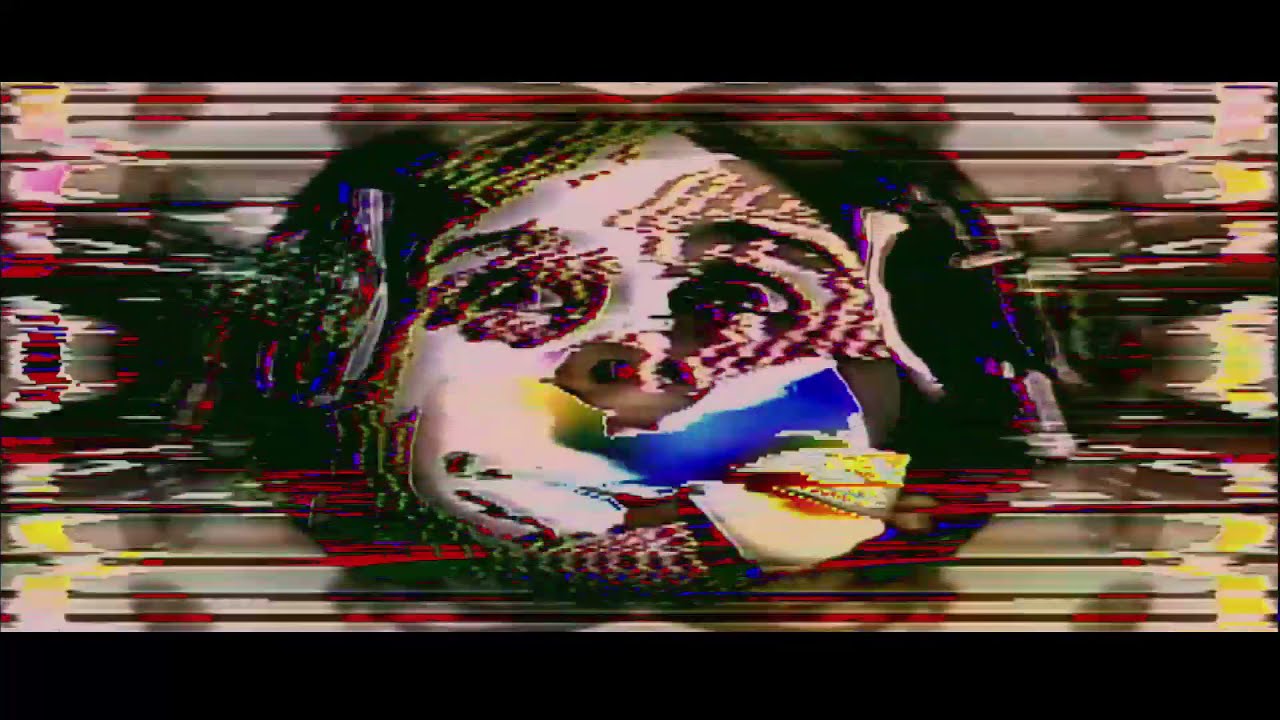
Video By Analog Glitch Master: Ali C. Yildiz
Recorded @StudioGBrooklyn NY
Mixed @WestEndStudioKC
By Justin Mantooth
The Phantom Eye EP is Now Available on all streaming Platforms
Chromesthesia or sound-to-color synesthesia is a type of synesthesia in which sound involuntarily evokes an experience of color, shape, and movement.[1][2] Individuals with sound-color synesthesia are consciously aware of their synesthetic color associations/perceptions in daily life.[3] Synesthetes that perceive color while listening to music, experience the colors in addition to the normal auditory sensations. The synesthetic color experience supplements, but does not obscure real, modality-specific perceptions.[3] As with other forms of synesthesia, individuals with sound-color synesthesia perceive it spontaneously, without effort, and as their normal realm of experience.[3] Chromesthesia can be induced by different auditory experiences, such as music, phonemes, speech, and/or everyday sounds.[1]
Chromesthesia can be transiently induced with chemical agents through the manipulation of neurotransmitters. These substances can also modulate existing synesthesia.[1] Psychoactive drugs including LSD, mescaline, psilocybin, and ayahuasca are non-selective serotonin agonists that elicit spontaneous synesthesia, specially sound-to-color.[20]
The first to report drug-induced chromesthesia was Théophile Gautier in 1845.[1] Under the influence of hashish, he described: "My hearing was developed extraordinarily; I heard the noise of colors. Green, red, blue, yellow sounds reached me in perfectly distinguishable waves".[21] Gautier made a sketch of Gustave Moreau playing the piano, where he depicted his chromesthetic experiences as lines of color above the instrument.[21]
Recent scientific studies, with enhanced methodologies, suggest that drug-induced synesthesia is substantially different from congenital synesthesia. Psychoactive substances "affect ongoing streams of transmission rather than causing stimulus-induced activation".[1] The most common type of synesthesia elicited with chemical agents is chromesthesia. Still, frequent inducers include auditory and visual stimuli, especially music - which could explain the prevalence of sound-to-color synesthesia over other types of synesthesia.[20]
Heinrich Klüver's form constants: Tunnels, Spirals, Honeycombs Gratings, and Cobwebs
Heinrich Klüver categorized recurring geometric shapes under the influence of peyote in the 1920s.[1] He called these the form constants: Tunnels, Spirals, Honeycombs Gratings, and Cobwebs. These also apply to both drug-induced and natural hallucinations, which appear in near-death experiences, sensory deprivation, waking up or falling asleep, and during migraines.[22] According to Klüver, all hallucinations consist of shapes in one of these categories and 'atypical' hallucinations are simply variations. The form constants are common in chromesthetic experiences.[1]
Psychedelics greatly enhance suggestibility, so it is fairly common to mistaken hallucinations with chromesthesia;[20] especially considering that all measures of color perception including brightness, saturation, luminance, contrast, and hue are affected due to chemical agents. Drug-induced chromesthesia, as opposed to congenital chromesthesia, is not consistent or automatic. Furthermore, bottom-up processing is responsible for experiences under drug influence, so external stimuli and context are not as critical.[1]
Several studies, both direct (intentionally trying to induce synesthesia) and indirect (participants respond to a set of questions, including one about synesthetic experiences), suggest that the induction of synesthesia with chemical agents is possible. Nevertheless, most studies "suffer from a large number of limitations including a lack of placebo control, double-blinds, and randomized allocation".[20]

Информация по комментариям в разработке