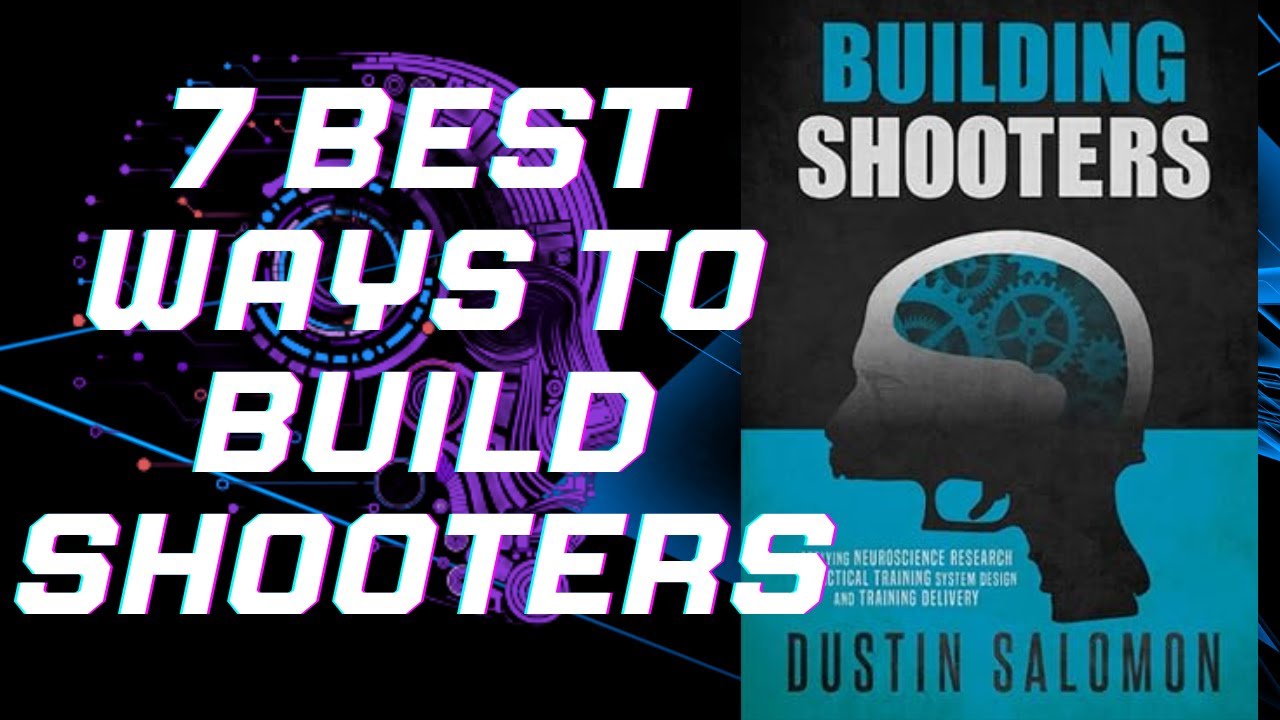
In this video, we break down 7 actionable strategies from "Building Shooters" by Dustin Salomon. Learn how to apply cutting-edge neuroscience principles to improve tactical training, enhance decision-making, and create expert-level shooters. Whether you're in law enforcement, the military, or just interested in tactical skill development, these methods will help you train smarter, not harder.
7 Best Ways to Build Shooters:
1. Align Training with Cognitive Architecture
Action: Focus training systems on how the brain processes information. Design drills and exercises that match how the brain naturally learns and retains information, such as breaking down complex tasks into simpler components.
Why it works: This approach maximizes the brain’s capacity to learn efficiently and enhances retention, reducing cognitive overload.
2. Implement Deliberate Practice
Action: Apply deliberate practice principles by setting specific, measurable goals and consistently working on areas that are challenging. Create drills that push shooters to focus on weaknesses.
Why it works: Deliberate practice targets areas of improvement and increases proficiency more quickly than random or unstructured practice.
3. Focus on Stress Inoculation
Action: Design training environments that simulate stress, such as high-pressure scenarios or time-limited exercises. Include physical and mental stressors that mimic real-life tactical environments.
Why it works: Stress inoculation prepares the shooter for real-world situations by teaching them to stay focused and make good decisions under pressure.
4. Integrate Feedback Loops
Action: Incorporate immediate feedback into training, whether from a coach, mentor, or self-analysis tools. Feedback helps the shooter understand their mistakes and improve faster.
Why it works: Consistent feedback enables rapid adjustments and ensures that good habits are formed during practice.
5. Use Simulation-Based Training
Action: Include simulation drills that replicate actual scenarios (e.g., virtual or live-action drills) to help shooters make decisions in real-time. Ensure simulations are as close to reality as possible, involving multiple variables.
Why it works: Simulations provide hands-on experience in a controlled environment, making decision-making and action second nature.
6. Minimize Cognitive Load
Action: Keep drills simple and repeat them often to reduce unnecessary cognitive load. Make sure the shooter focuses on mastering a few core skills rather than overwhelming them with too much information at once.
Why it works: When cognitive load is minimized, shooters can better focus on the critical components of the task at hand, leading to higher performance.
7. Foster Team-Based Training
Action: Promote training in team-based settings where shooters work together to solve tactical problems. Emphasize communication, coordination, and mutual support in high-stakes situations.
Why it works: Tactical teams rely on effective communication and collaboration. Training in teams ensures that each shooter is prepared to perform under real-world conditions where teamwork is essential.
Ready to take your tactical training to the next level? Make sure to hit subscribe and stay tuned for more actionable tips and strategies to build the optimal shooter and master new skills. Let’s unlock your full potential together!
Get the book on Amazon: Building Shooters by Dusin Salomon
https://www.amazon.com/Building-Shoot...
This channel is dedicated to helping you become the best version of yourself—physically, mentally, and emotionally. Whether you're looking to boost productivity, improve fitness, or develop mental resilience, you're in the right place. We break down the best actionable strategies and key principles from top personal development books, offering you science-backed insights to enhance your life.
On Optimal You, we cover topics including:
Self-discipline and goal setting to take control of your life and achieve long-term success.
Mental toughness and strategies to boost your focus and productivity.
Physical health, fitness routines, and nutrition to optimize your energy and well-being.
Time management tips and motivation techniques to keep you on track.
Mindfulness, stress management, and emotional resilience for mental and emotional balance.

Информация по комментариям в разработке