Please watch: "Subscribe Please - Fur Elise Beethoven"
• Subscribe Please - Fur Elise Beethoven -~-
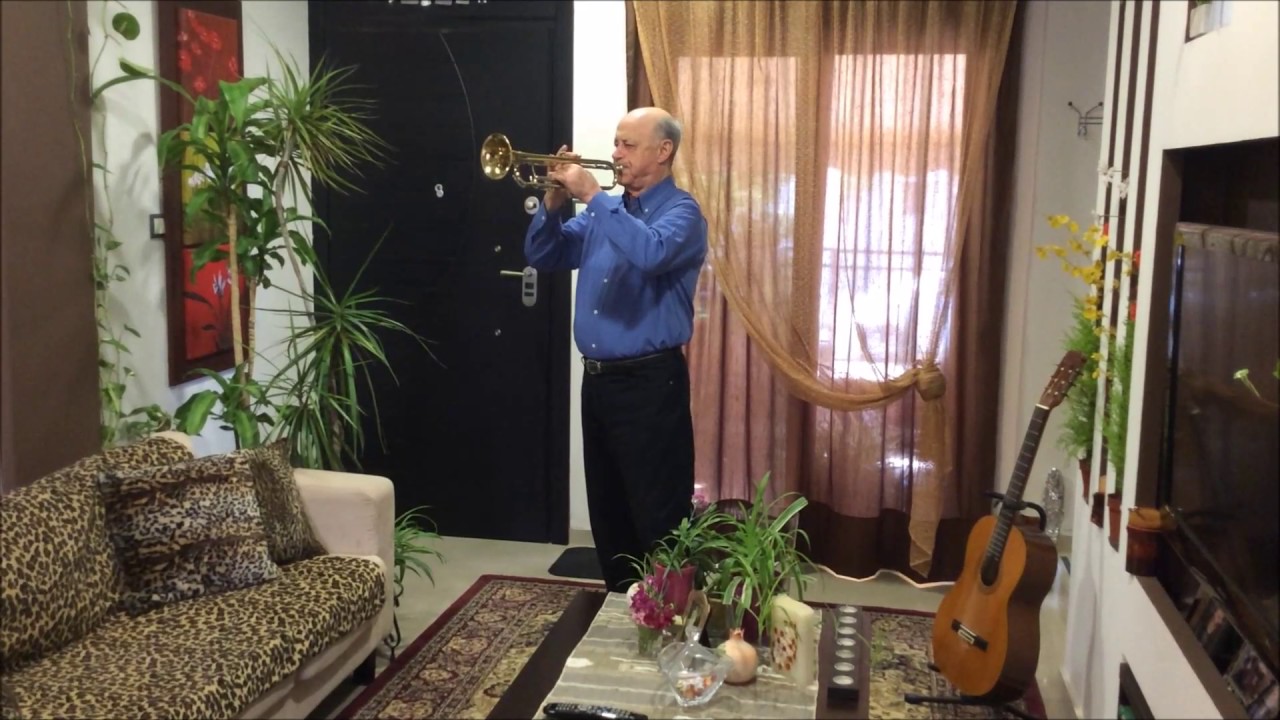
#Solamente_una_vez ( #You_Belong_To_My_Heart ) played by #Stavros_Sakorafas
"You Belong to My Heart" is the name of an English-language version of the Mexican Bolero song "Solamente una vez" (Only One Time, in English). This song was composed by Mexican songwriter Agustín Lara and originally performed by singer Ana María González and tenor José Mojica in the 1941 film Melodías de América.
After that, the original Spanish-language version was very popular in Mexico and Cuba as well as being recorded by many of the greatest Bolero interpreters.
"Solamente una vez" has been performed by many artists including Sara Montiel, Daniel Rodríguez, Quartetto Gelato, Arielle Dombasle, Benny Moré, Ignacio Piñeiro, Pedro Vargas, Julio Iglesias, Roberto Carlos, Andrea Bocelli, Chucho Valdés, Plácido Domingo, Nat King Cole, Marty Robbins, Lucho Gatica, Guadalupe Pineda, Roland Shaw & His Orchestra, Luis Miguel, and Cliff Richard and the Shadows.
"Solamente una vez", retitled "You Belong to My Heart", was featured in the Disney film "The Three Caballeros" with English lyrics written by Ray Gilbert and sung by Dora Luz. Gilbert's lyrics bear no similarity to Lara's original Spanish language lyrics.
This song is on the orange disc of Classic Disney: 60 Years of Musical Magic.
Stavros Sakorafas is a Greek trumpeter.
The flugelhorn (/ˈfluːɡəl.hɔːrn/—also spelled fluegelhorn, flugel horn, or Flügelhorn—from German, wing horn, or flank horn German pronunciation: [ˈflyːɡl̩hɔʁn]) is a brass instrument pitched in B♭, and resembles a trumpet, but has a wider, conical bore. The instrument known today as the flugelhorn is a descendant of the valved bugle, which had been developed from a valveless hunting horn known in eighteenth-century Germany as a Flügelhorn. The valved bugle provided Adolphe Sax (creator of the saxophone family) with the inspiration for his B♭ soprano (contralto) saxhorns, on which the modern-day flugelhorn is modeled.
Some sources falsely consider it to be a member of the saxhorn family developed by Adolphe Sax (who also developed the saxophone). Other historians assert that it derives from the valve bugle designed by Michael Saurle (father) in Munich in 1832 (Royal Bavarian privilege for a "chromatic Flügelhorn" 1832), which predates Adolphe Sax's work.
The instrument was used on the battlefield to summon the flanks of an army
The flugelhorn appears mainly in jazz, brass band music, and popular music, though it appears occasionally in orchestral music.
You may use this video for personal & commercial projects. Attribution is not required, but it is appreciated. If you use it in something, I would love to see it. Post this link in your video info like here: / danai2014
Share this video with your friends
SUBSCRIBE HERE / @zoipana
Thanks for watching and comments!
#danai2014
Share this playlist with your friends:
Playlist creative commons
• How to peel a pomegranate Πως καθαρίζουμε ...
Connect with Me On Social Media
Google+ https://plus.google.com/u/0/+DanaiMor...
Twitter / danai2014
Pinterest / danaimoraiti
Tumblr https://www.tumblr.com/blog/danaimoraiti
http://danai2014.blogspot.gr/
Join my Facebook Group at: https://www.facebook.com/danai2014/?f... more_views #more_views This video is purely for entertainment and recreational purposes. No Copyright infringement intended! All rights go to its rightful owners.









Информация по комментариям в разработке