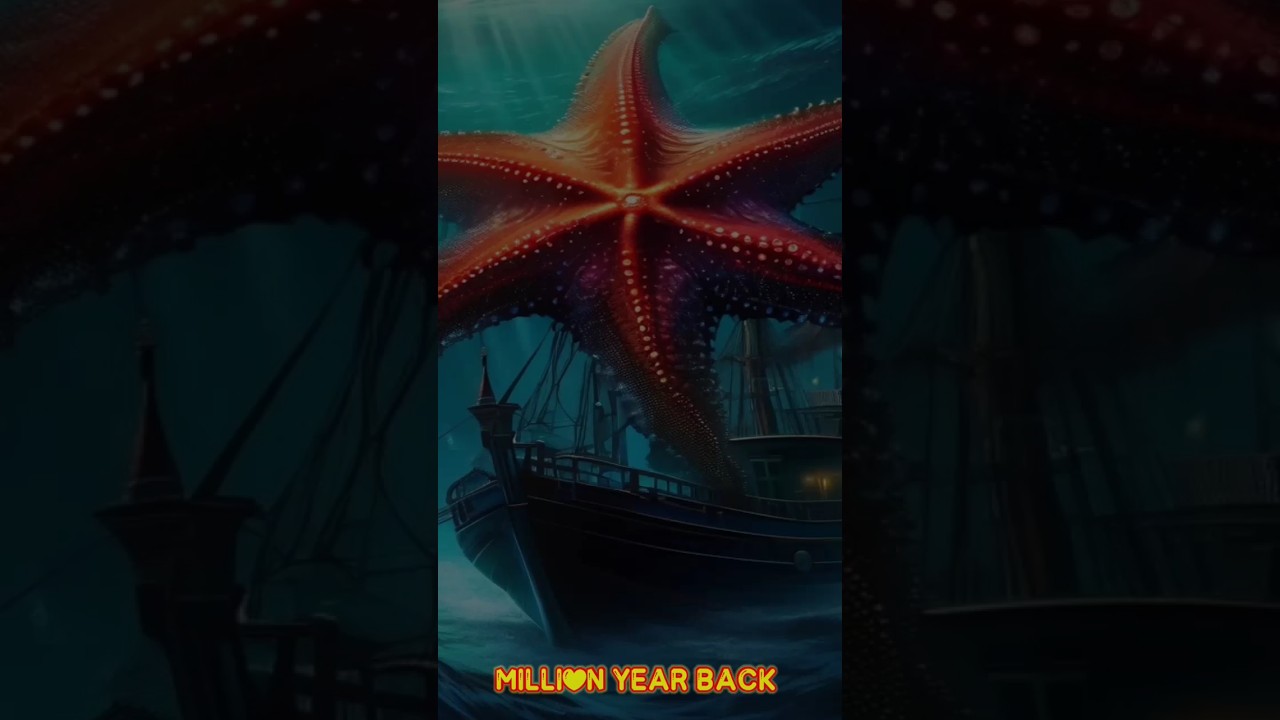
Starfish or sea stars are star-shaped echinoderms belonging to the class Asteroidea (/ˌæstəˈrɔɪdiə/). Common usage frequently finds these names being also applied to ophiuroids, which are correctly referred to as brittle stars or basket stars. Starfish are also known as asteroids due to being in the class Asteroidea. About 1,900 species of starfish live on the seabed in all the world's oceans, from warm, tropical zones to frigid, polar regions. They are found from the intertidal zone down to abyssal depths, at 6,000 m (20,000 ft) below the surface.
Starfish are marine invertebrates. They typically have a central disc and usually five arms, though some species have a larger number of arms. The aboral or upper surface may be smooth, granular or spiny, and is covered with overlapping plates. Many species are brightly coloured in various shades of red or orange, while others are blue, grey or brown. Starfish have tube feet operated by a hydraulic system and a mouth at the centre of the oral or lower surface. They are opportunistic feeders and are mostly predators on benthic invertebrates. Several species have specialized feeding behaviours including eversion of their stomachs and suspension feeding. They have complex life cycles and can reproduce both sexually and asexually. Most can regenerate damaged parts or lost arms and they can shed arms as a means of defense. The Asteroidea occupy several significant ecological roles. Starfish, such as the ochre sea star (Pisaster ochraceus) and the reef sea star (Stichaster australis), have become widely known as examples of the keystone species concept in ecology. The tropical crown-of-thorns starfish (Acanthaster planci) is a voracious predator of coral throughout the Indo-Pacific region, and the Northern Pacific seastar is on the list of the World's 100 Worst Invasive Alien Species.
The fossil record for starfish is ancient, dating back to the Ordovician around 450 million years ago, but it is rather sparse, as starfish tend to disintegrate after death. Only the ossicles and spines of the animal are likely to be preserved, making remains hard to locate. With their appealing symmetrical shape, starfish have played a part in literature, legend, design and popular culture. They are sometimes collected as curios, used in design or as logos, and in some cultures, despite possible toxicity, they are eaten.
Echinoderms first appeared in the fossil record in the Cambrian. The first known asterozoans were the Somasteroidea, which exhibit characteristics of both groups.[87] Starfish are infrequently found as fossils, possibly because their hard skeletal components separate as the animal decays. Despite this, there are a few places where accumulations of complete skeletal structures occur, fossilized in place in Lagerstätten – so-called "starfish beds".[88]
By the late Paleozoic, the crinoids and blastoids were the predominant echinoderms, and some limestones from this period are made almost entirely from fragments from these groups. In the two major extinction events that occurred during the late Devonian and late Permian, the blastoids were wiped out and only a few species of crinoids survived.[87] Many starfish species also became extinct in these events, but afterwards the surviving few species diversified rapidly within about sixty million years during the Early Jurassic and the beginning of the Middle Jurassic.[89][90] A 2012 study found that speciation in starfish can occur rapidly. During the last 6,000 years, divergence in the larval development of Cryptasterina hystera and Cryptasterina pentagona has taken place, the former adopting internal fertilization and brooding and the latter remaining a broadcast spawner.[91]

Информация по комментариям в разработке