Logo video2dn
  • Сохранить видео с ютуба
  • Категории
    • Музыка
    • Кино и Анимация
    • Автомобили
    • Животные
    • Спорт
    • Путешествия
    • Игры
    • Люди и Блоги
    • Юмор
    • Развлечения
    • Новости и Политика
    • Howto и Стиль
    • Diy своими руками
    • Образование
    • Наука и Технологии
    • Некоммерческие Организации
  • О сайте

Скачать или смотреть Stubs in the Stone: The Lost Iron Railings of Wartime Britain

  • Roland 'Roly' Keates aka Lost Histories
  • 2025-06-30
  • 31
Stubs in the Stone: The Lost Iron Railings of Wartime Britain
  • ok logo

Скачать Stubs in the Stone: The Lost Iron Railings of Wartime Britain бесплатно в качестве 4к (2к / 1080p)

У нас вы можете скачать бесплатно Stubs in the Stone: The Lost Iron Railings of Wartime Britain или посмотреть видео с ютуба в максимальном доступном качестве.

Для скачивания выберите вариант из формы ниже:

  • Информация по загрузке:

Cкачать музыку Stubs in the Stone: The Lost Iron Railings of Wartime Britain бесплатно в формате MP3:

Если иконки загрузки не отобразились, ПОЖАЛУЙСТА, НАЖМИТЕ ЗДЕСЬ или обновите страницу
Если у вас возникли трудности с загрузкой, пожалуйста, свяжитесь с нами по контактам, указанным в нижней части страницы.
Спасибо за использование сервиса video2dn.com

Описание к видео Stubs in the Stone: The Lost Iron Railings of Wartime Britain

Have you ever walked past a front garden and noticed odd metal stubs embedded in the stonework, as if something’s missing? Or stood in an old cemetery and seen only gaps where wrought iron fences once framed the graves?

These ghostly remnants are the legacy of one of Britain’s most visible — and controversial — wartime campaigns: the mass removal of iron railings during World War II.

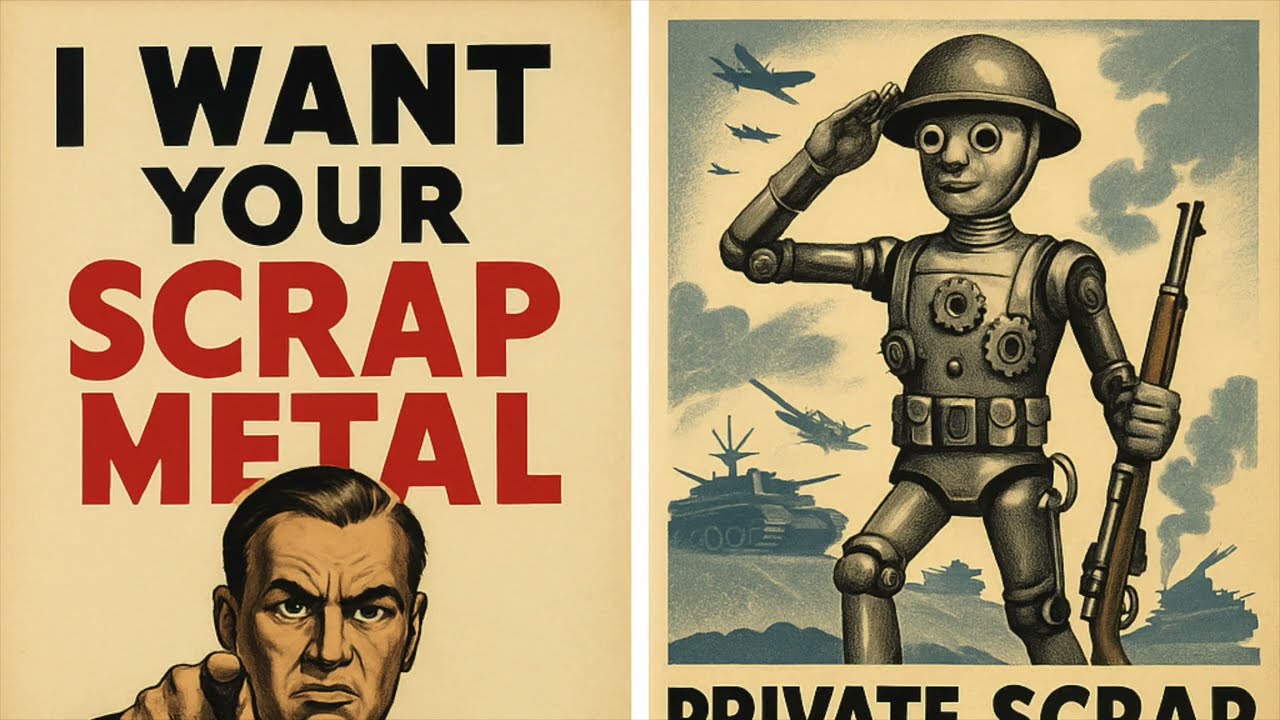
In the early 1940s, as Britain braced for total war, every citizen was called to contribute to the national effort. The Ministry of Supply launched a dramatic public appeal for scrap metal. Posters, pamphlets, newsreels, and mobile exhibitions such as Private Scrap urged households to donate any metal they could spare — from saucepans to stair rails.

The call to remove iron railings from homes, gardens, parks, public buildings, and even cemeteries was cast as both a patriotic duty and a personal sacrifice. “Your Railings Will Help Build Tanks!” proclaimed wartime posters. The metal was said to be essential for producing ships, planes, and munitions — a tangible way for civilians to “fight from home.”

Under Defence Regulation 50B, councils across the UK were ordered to inventory and remove all “unnecessary” iron or steel railings, unless they were of historic or safety significance. Between 1941 and 1943, more than 530,000 tons of ironwork were collected. In towns and cities, workers were seen with oxy-acetylene torches slicing through ornate cast iron fences.

Many people gave up their railings willingly, even proudly. It was a shared sacrifice — a gesture of solidarity and defiance in the face of Nazi aggression. However, records suggest that in some cases people resisted, especially when it came to beloved decorative or commemorative ironwork. Occasionally, communities would try to argue for exemption based on aesthetic, historical, or sentimental grounds.

What happened next is where the story turns. While some of the metal was indeed recycled and used in wartime manufacturing, much of it — especially the low-grade cast iron common in domestic railings — was deemed unsuitable for military use.

With little transparency or foresight, vast quantities were quietly dumped or stockpiled:
• Thames Estuary & Coastal Waters: Divers have found submerged piles of iron, including railings, along Britain’s coasts.
• Quarries & Landfills: Disused quarries became unofficial scrap pits.
• Rail Sidings: Rail yards became overrun with rusting iron, never used, never returned.

There was no national strategy for reuse, nor any effort to return railings after the war. Councils often cited financial hardship or modern planning standards as reasons not to replace them.

Government officials carefully crafted a story of national unity and efficient sacrifice. The idea that millions had surrendered railings for no real gain would have been damaging to morale. Even after the war, officials gave vague or evasive responses when questioned about the scrap’s fate.

This silence persisted into the post-war years, allowing myths to grow — many believed their iron had directly helped win the war, and in some cases, it had. But in most cases, it simply hadn’t.

Today, the legacy of the campaign is still physically visible:
• Stone coping with sawn-off stubs stands across Britain’s towns and cities.
• Graveyards remain partially enclosed or oddly open.
• Public parks show gaps where Victorian railings once bordered footpaths or fountains.

These scars in the built environment are more than visual reminders — they speak to how deeply the war reshaped civilian life, often in ways not fully understood even by those who lived through it.

In Derbyshire, specific documentation on where railings were dumped is rare. Local archives and oral histories suggest wide participation in the scrap drive, though no confirmed local dumping sites have surfaced. In contrast, Stornoway and parts of the Scottish Highlands were untouched — the cost of transporting the scrap from remote regions was deemed too high.

As a result, original ironwork in these areas survives as a rare and evocative contrast to the rest of the country.

Conclusion: Stubs as Silent Witnesses

The wartime railings campaign was one of the most visual expressions of home-front sacrifice. It fused real patriotism with flawed logistics and political symbolism. Today, those stubs in walls, those gaps in graveyards, stand as quiet markers of what was given — and, ultimately, what was lost.

They remind us that the war was fought not just on the battlefield, but in everyday streets and homes — and that even the most visible sacrifices can fade into quiet mystery.

Music - René Baptist Huysmans - Les invités
Комментарии

Информация по комментариям в разработке

Похожие видео

  • Опасная установка точильного станка в 1971 году
    Опасная установка точильного станка в 1971 году
    1 месяц назад
  • Иноземцев: Москва под Пекином: как война изменила баланс сил в пользу Китая. Крах импортозамещения
    Иноземцев: Москва под Пекином: как война изменила баланс сил в пользу Китая. Крах импортозамещения
    14 часов назад
  • Заброшенная канализация. ПОЛНЫЙ ОБЗОР
    Заброшенная канализация. ПОЛНЫЙ ОБЗОР
    1 год назад
  • Фильм Алексея Семихатова «ГРАВИТАЦИЯ»
    Фильм Алексея Семихатова «ГРАВИТАЦИЯ»
    16 часов назад
  • Альфред Кох – Путин 1990-х, бандиты, НТВ, Навальный / вДудь
    Альфред Кох – Путин 1990-х, бандиты, НТВ, Навальный / вДудь
    22 часа назад
  • История петербургского/ленинградского трамвая. Часть 6. Расцвет ленинградского трамвая
    История петербургского/ленинградского трамвая. Часть 6. Расцвет ленинградского трамвая
    5 дней назад
  • Rav 4 2026 new-Разобрали, удивились.
    Rav 4 2026 new-Разобрали, удивились.
    15 часов назад
  • ЧТО НЕМЦЫ писали про РУССКИХ, когда думали, что никто не прочтёт | Дневники Вермахта.
    ЧТО НЕМЦЫ писали про РУССКИХ, когда думали, что никто не прочтёт | Дневники Вермахта.
    2 месяца назад
  • «Режим ненавидит молодежь»: Шульман — почему в России сажают детей
    «Режим ненавидит молодежь»: Шульман — почему в России сажают детей
    4 часа назад
  • Арестович: 4 года войны - провалы и достижения.
    Арестович: 4 года войны - провалы и достижения.
    12 часов назад
  • Либеральный переворот, заговор против Сталина, водородная бомба. Большая игра Берии | ФАЙБ
    Либеральный переворот, заговор против Сталина, водородная бомба. Большая игра Берии | ФАЙБ
    8 дней назад
  • Кох у Дудя, Латвия выгнала Ланькова, Камбэк Сабурова. Радионов, Алексашенко, Романова
    Кох у Дудя, Латвия выгнала Ланькова, Камбэк Сабурова. Радионов, Алексашенко, Романова
  • The Flying Pancake: Aviation's Most Bizarre World War II Flying Saucer | Rare historical Footage
    The Flying Pancake: Aviation's Most Bizarre World War II Flying Saucer | Rare historical Footage
    4 дня назад
  • САПР в машиностроении. Фильм 1, 1986
    САПР в машиностроении. Фильм 1, 1986
    4 года назад
  • Арест военных в Украине / Обращение Киева к Москве
    Арест военных в Украине / Обращение Киева к Москве
    6 часов назад
  • 💥Россияне В УЖАСЕ: озвучили ЖУТКИЙ ПРОГНОЗ. Китай В ЯРОСТИ из-за Путина. МИЛОВ, ШИРЯЕВ. Лучшее
    💥Россияне В УЖАСЕ: озвучили ЖУТКИЙ ПРОГНОЗ. Китай В ЯРОСТИ из-за Путина. МИЛОВ, ШИРЯЕВ. Лучшее
    3 часа назад
  • Why Britain's WW1 Tank Designers Built A 'Monster' That Belonged In The Last War
    Why Britain's WW1 Tank Designers Built A 'Monster' That Belonged In The Last War
    1 час назад
  • Почему римский БЕТОН прослужит 2000 лет, а наш — умрёт через 50 лет
    Почему римский БЕТОН прослужит 2000 лет, а наш — умрёт через 50 лет
    3 месяца назад
  • Игорь Данилевский — Фейк-ньюс Древней Руси: актуальные проблемы источниковедения
    Игорь Данилевский — Фейк-ньюс Древней Руси: актуальные проблемы источниковедения
    Трансляция закончилась 1 месяц назад
  • Топ-10 CCD-камер, которые вам нужно купить СЕЙЧАС (издание 2026 года)
    Топ-10 CCD-камер, которые вам нужно купить СЕЙЧАС (издание 2026 года)
    5 дней назад
  • О нас
  • Контакты
  • Отказ от ответственности - Disclaimer
  • Условия использования сайта - TOS
  • Политика конфиденциальности

video2dn Copyright © 2023 - 2025

Контакты для правообладателей video2contact@gmail.com