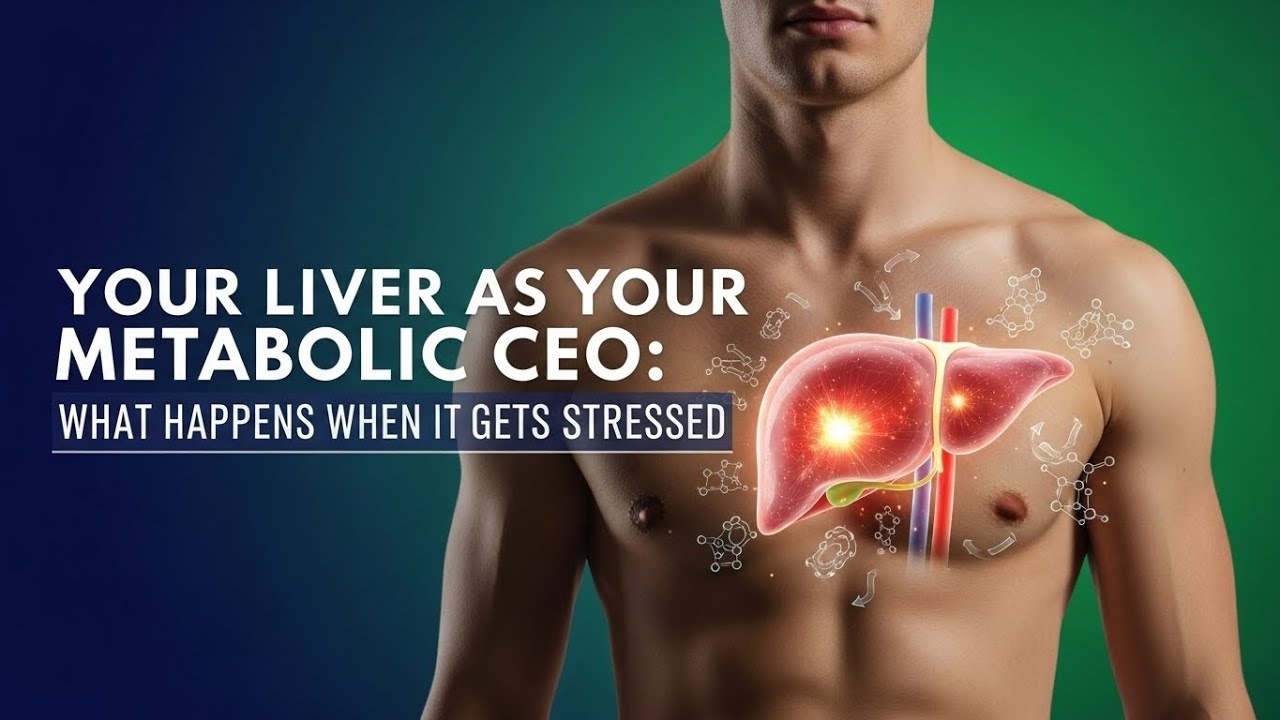
Your Liver as Your Metabolic CEO: What Happens When It Gets Stressed
Your liver is one of the most powerful and underrated organs in your body. Think of it as your metabolic CEO—quietly making decisions every second that affect your energy, weight, hormones, blood sugar, and even your mood. When the liver is healthy, your metabolism runs smoothly. But when it becomes stressed, the entire system begins to struggle.
The liver plays a central role in processing nutrients from the food you eat. It decides whether calories are burned for energy, stored as glycogen, or converted into fat. It also regulates blood sugar levels, filters toxins, produces bile for digestion, and manages cholesterol. In short, almost everything related to metabolism passes through the liver first.
So what does “liver stress” actually mean? Liver stress doesn’t always involve disease. More often, it’s a functional overload caused by modern lifestyles. Excess sugar, refined carbohydrates, alcohol, ultra-processed foods, lack of sleep, chronic stress, and environmental toxins all place extra demands on the liver. Over time, this overload reduces efficiency.
One of the first signs of liver stress is blood sugar instability. A healthy liver stores glucose and releases it steadily between meals. When stressed, this regulation weakens, leading to spikes and crashes in blood sugar. This can cause fatigue, cravings, irritability, and difficulty losing weight.
Another major consequence is fat accumulation. When the liver is overwhelmed, it converts excess carbohydrates into fat and may begin storing fat itself. This contributes to non-alcoholic fatty liver conditions and slows overall metabolism. Even people who are not overweight can experience this hidden metabolic slowdown.
Hormonal balance also depends heavily on the liver. The liver helps deactivate and remove excess hormones such as estrogen and cortisol. When liver function is strained, hormones remain in circulation longer than they should. This may contribute to weight gain, water retention, mood changes, and sleep disturbances.
Detoxification is another key role. The liver filters chemicals, medications, alcohol, and metabolic waste from the blood. When overloaded, detox pathways slow down. This can lead to inflammation, brain fog, skin issues, and a general feeling of heaviness or low energy.
The good news is that the liver is highly resilient. Supporting it does not require extreme detoxes or supplements. Simple daily habits make a powerful difference. Reducing added sugars, limiting alcohol, eating fiber-rich vegetables, staying hydrated, and maintaining regular sleep patterns all ease the liver’s workload.
Movement also matters. Gentle daily activity improves insulin sensitivity and helps the liver manage fat more efficiently. Even walking after meals can support liver health and stabilize blood sugar.
When the liver is supported, metabolism becomes more flexible, energy improves, and weight regulation feels less like a constant battle. By treating your liver like the CEO it is—rather than an afterthought—you give your entire body clearer direction and better balance.
A calm, well-supported liver leads to a calmer, more efficient metabolism.
Hashtags
#LiverHealth
#MetabolicHealth
#HealthyAging
#WellnessEducation
#MetabolismExplained
#BloodSugarBalance
#HormoneHealth
#FattyLiverAwareness
#HolisticHealth
#HealthScience
#LongevityHealth
#BodySystems
#PreventiveHealth
#NutritionEducation
#MindBodyHealth
#HealthyLifestyle
#InflammationHealth
#EnergyLevels
#WeightManagement
#HealthChannel
#WellnessContent
#MedicalEducation
#FunctionalHealth
#DailyHealthTips
#HealthAwareness
#ModernHealth
#MetabolicFunction
#SelfCareScience
#HealthExplained
#WellnessJourney

Информация по комментариям в разработке