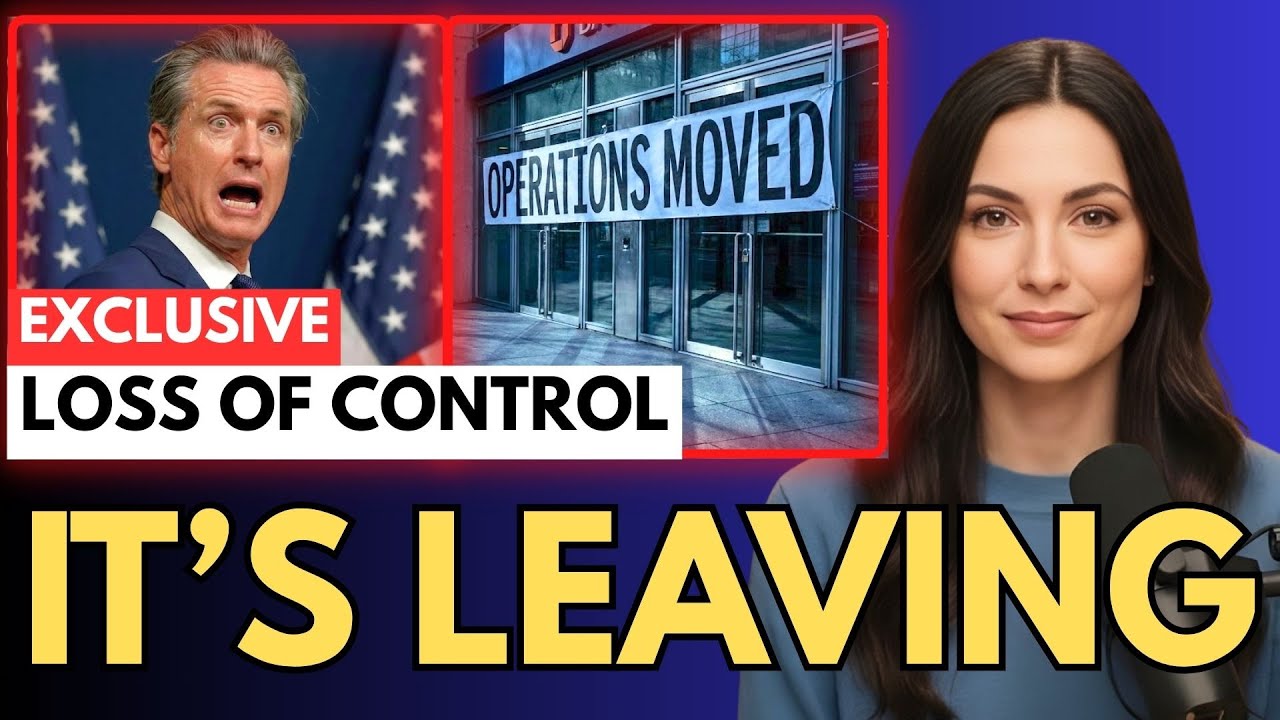
📉 California is no longer setting the direction for financial expansion in the United States. While the state maintains legacy institutions and existing infrastructure, the center of gravity for future banking and financial decision-making is shifting. As major financial firms expand operations and executive presence in Texas, the balance of economic influence is quietly moving away from California.
🏦 Over the past several years, financial institutions have evaluated long-term location decisions based on cost structures, regulatory environments, tax exposure, and workforce mobility. These decisions are not driven by short-term market volatility, but by incentives that shape where capital, leadership, and taxable activity concentrate over time. While California remains a large economy, marginal growth increasingly compounds elsewhere, altering revenue stability and institutional leverage.
📊 This video examines how and why financial gravity shifts without a visible crisis. It looks at the systems that guide banking expansion, the incentives that influence executive relocation, and the downstream effects on state budgets, municipal services, and long-term competitiveness. Rather than focusing on personalities or politics, the analysis follows the structural mechanics that determine where economic power accumulates.
🔍 This video explains:
• Why financial institutions prioritize incentives over tradition when choosing where to expand
• How executive relocation changes where income, bonuses, and capital gains are taxed
• Why legacy presence does not guarantee future financial dominance
• How state-level cost structures influence banking and investment decisions
• What happens when marginal growth compounds outside a high-cost state
• Why shifts in financial gravity often appear gradual before consequences accelerate
⚖️ This is not a partisan argument. It focuses on data, incentives, and consequences that shape institutional behavior over time, regardless of ideology.
🧠 When financial decision-making moves, revenue exposure follows.
🧠 When incentives change, capital responds before policy does.
🧠 When growth compounds elsewhere, control weakens at home.
💬 Do you view this shift as a temporary adjustment driven by market cycles, or a long-term realignment of financial power in the United States?
🔔 Subscribe for continued analysis of economic systems, institutional behavior, and the consequences that emerge when financial power relocates.
ℹ️ This video is for educational and informational purposes only. It is based on publicly available data, reporting, and analysis. It does not constitute legal, financial, or tax advice. Viewers are encouraged to verify information independently, and conditions discussed may change over time.

Информация по комментариям в разработке