🔌 Power over Ethernet (PoE, PoE+, UPoE, and UPoE+) Explained in Simple Terms!
In this video, we break down the key concepts of PoE technologies — including IEEE 802.3af, IEEE 802.3at (PoE+), and Cisco's Universal Power over Ethernet (UPoE and UPoE+) — with real-world examples. Learn how devices like IP phones, security cameras, wireless access points, and more get both data and power through a single Ethernet cable!
📌 What You’ll Learn:
What is PoE and how does it work?
Differences between PoE, PoE+, UPoE, and UPoE+
IEEE 802.3af vs 802.3at standards
Cisco UPoE and UPoE+ explained
PoE classes and power negotiation
Hardware handshake vs LLDP negotiation
Benefits of using PoE in modern networks
Perfect for network engineers, CCNA/CCNP students, IT professionals, or anyone curious about how power and data are delivered over Ethernet!
Power over Ethernet (PoE, PoE+, UPOE, UPOE+)
PoE and PoE+
Power over Ethernet (PoE) is a widely used LAN technology that provides DC power to endpoints over existing copper Ethernet cabling used for data connectivity.
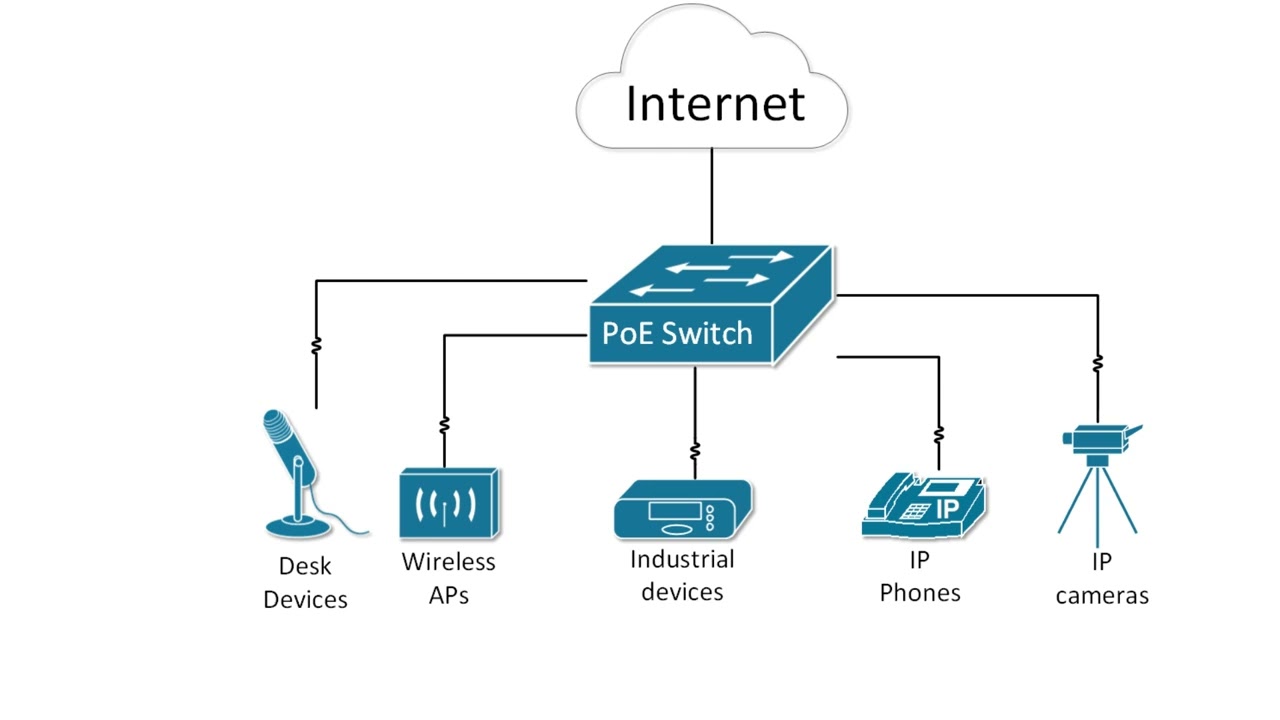
Power is passed from Power Sourcing Equipment (PSE) over the twisted pairs to Powered Devices (PD) such as IP phones, IP cameras, card readers, selling machines, wireless access points, and other industrial and building appliances.
There are two specifications for standard PoE implementations, IEEE 802.3af (2003) and IEEE 802.3at (2009), which accommodate different power levels.
They do not affect the data speed level 10/100/1000 Mbps to the PD though.
The first standard IEEE 802.3af PoE provides up to 15.4W on DC power per switch interface (PSE side).
Due to power dissipation in the cable, only 12.95W of this is guaranteed to be available at the end client.
With the technology getting popular and widely deployed, the power requirement of end clients increased. This led to the introduction of the IEEE 802.3at standard, known as PoE+.
It provides up to 30W of DC power per switch interface, assuring 25.5W of power at the end device.
Both standards deliver electrical power over two out of four pairs in the UTP cable, cat5e or better.
Cisco UPoE and UPoE+
Over the years, IP networks have evolved and connected devices required greater power.
To meet this demand, Cisco two improved Power over Ethernet technologies
Cisco Universal Power over Ethernet (UPoE) and Cisco Universal Power over Ethernet Plus (UPoE+)
which tripled the power provided per switch interface.
It uses the same cabling standard as Power over Ethernet but instead of delivering power over two of the twisted pairs, it uses all four twisted pairs in the Category 5e or better cable.
Device detection and negotiation process
When you connect an end device to a PoE enabled interface, the switch sends out a detection pulse and waits for a valid detection signature (as defined in 802.3af/at).
When the end device responds to this pulse by drawing a standard amount of current, which tells the switch what PoE class the end client is.
This process is called a hardware handshake or PoE handshake and as the name implies, it is implemented in the switch's hardware.
There is another software-based approach to negotiate the power consumption of an end device. It is done using the Link Layer Discovery Protocol (LLDP), which is a data link layer protocol for advertising network capabilities.
#PoE #PowerOverEthernet #PoEPlus #UPoE #CiscoUPoE #IEEE8023af #IEEE8023at #NetworkingBasics #CiscoNetworking #PoETutorial #CCNA #CCNP #LLDP #NetworkEngineering #TechExplained #EthernetPower

Информация по комментариям в разработке