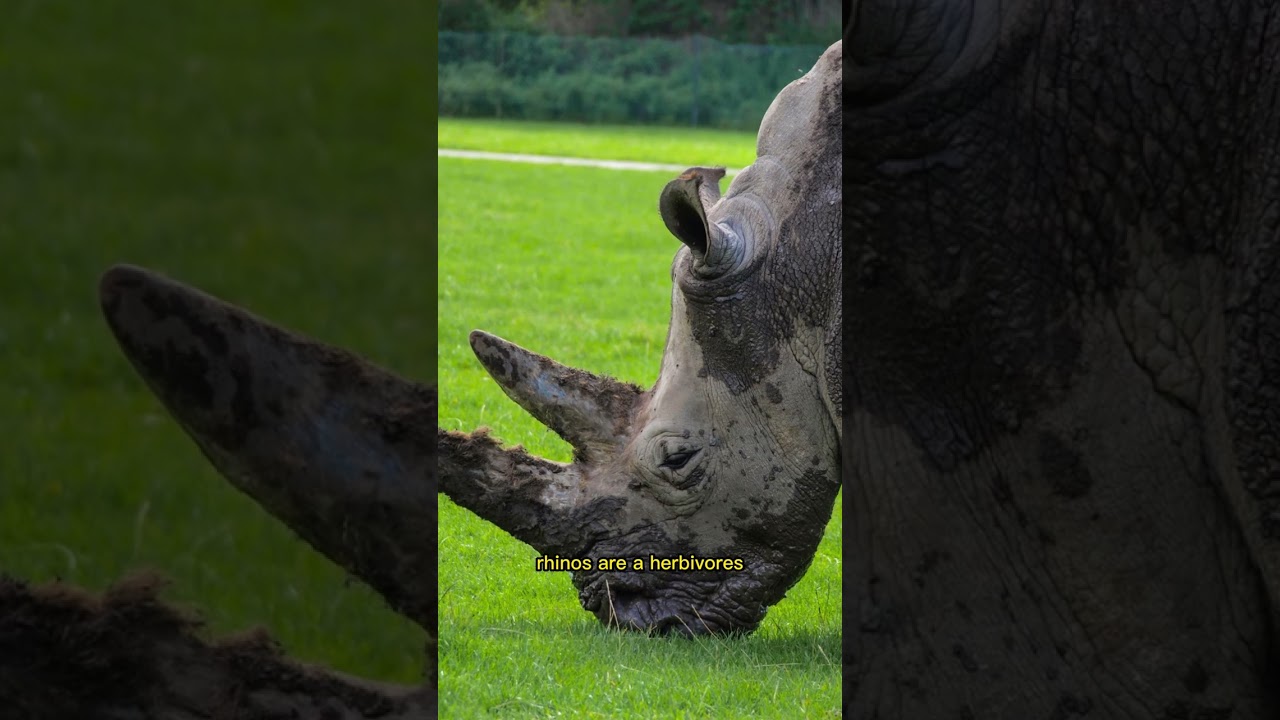
Rhinoceroses are fascinating and majestic creatures that have roamed the Earth for millions of years. These massive herbivores are well-known for their distinctive horn, which is made of keratin and is used for defense, territorial displays, and even foraging. However, rhinos are facing a number of threats today, including habitat loss and poaching, and several species are now critically endangered. In this one-minute video, we'll explore some interesting facts about rhinos, from their size and habitat to their behavior and conservation efforts. Let's take a closer look at these incredible animals.
Taxonomic classification: Animalia, Chordata, Mammalia, Perissodactyla, Rhinocerotidae, Rhinoceros, unicornis.
Etymology: The scientific name Rhinoceros comes from the Greek words "rhino" meaning nose and "ceros" meaning horn, while unicornis refers to its single horn. The common name rhinoceros comes from the Greek words "rhino" and "keros" meaning horned-nose.
Physical characteristics: The Indian rhinoceros has a gray-brown skin with skin folds, a single horn on its nose, and a hump on its shoulders. They can reach up to 6.5 feet in height and 11 feet in length, weighing up to 2.5 tons.
Morphology: The Indian rhinoceros has a massive body, with a large head and short legs. Its horn is made of keratin, the same material as human hair and nails. It has a distinctive prehensile upper lip, which it uses to grasp food.
Habitat: The Indian rhinoceros is found in the grasslands and forests of India, Nepal, and Bhutan.
Geographic distribution: The Indian rhinoceros is found in South Asia, mainly in India and Nepal.
Behavior: The Indian rhinoceros is mostly solitary, except during mating season. They are active during the day and feed on grasses, leaves, and fruits.
Communication: Indian rhinoceroses communicate through vocalizations, body language, and chemical signals, such as urine marking.
Информация по комментариям в разработке