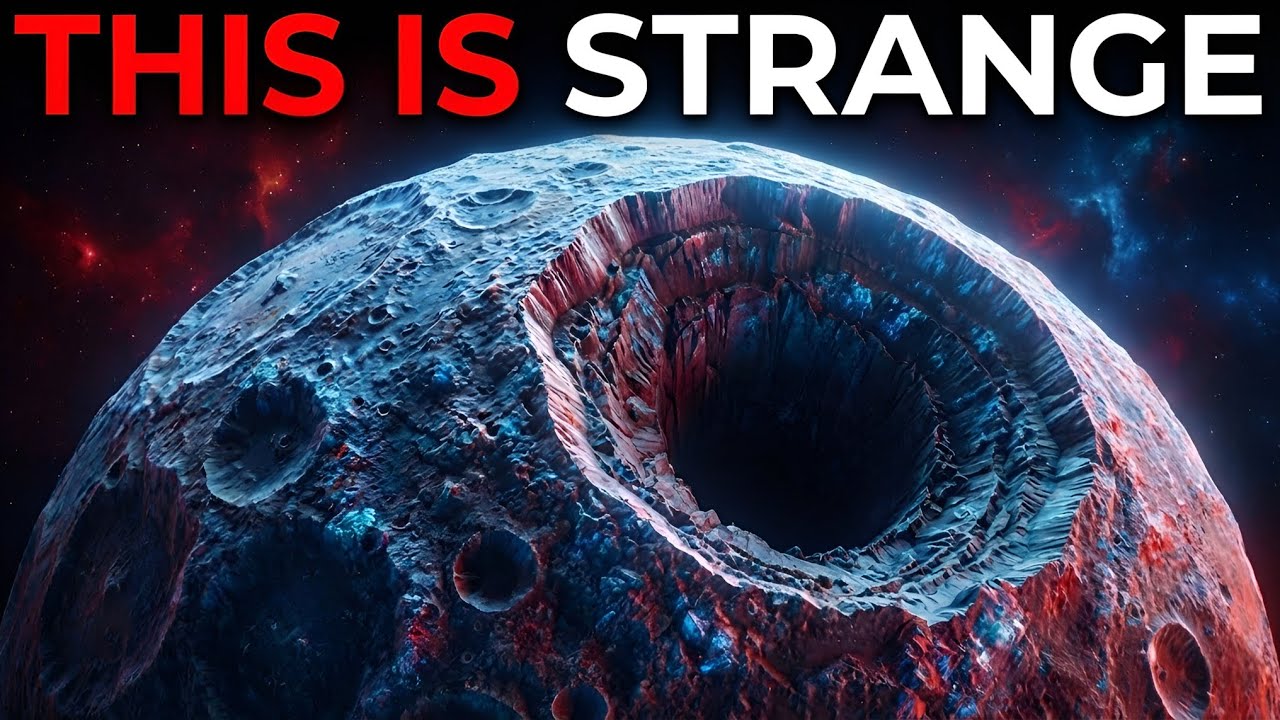
Saturn's moon Mimas has shocked scientists with a groundbreaking discovery that challenges everything we thought we knew about ocean worlds. Despite looking like a frozen, dead moon resembling the Death Star, Mimas hides a global liquid ocean 20-30 kilometers beneath its icy surface. This revolutionary finding was revealed through precise measurements of the moon's wobble during its orbit around Saturn. The Herschel crater, which dominates one-third of Mimas's face, made scientists believe this moon was just a solid ice ball for decades. However, new analysis of Cassini spacecraft data proved otherwise. The ocean is kept liquid by tidal heating from Saturn's gravity, not sunlight. What makes this discovery even more remarkable is that the ocean appears to be only 15 million years old, making Mimas a newborn ocean world. Unlike Enceladus which shoots water geysers into space, Mimas is a stealth ocean world with no surface activity. This changes how we search for habitable worlds in our solar system and beyond. Scientists now believe dozens of similar hidden ocean moons may exist, disguised as dead rocks but harboring the conditions necessary for life beneath their surfaces.
mimas moon, saturn's moons, ocean worlds, liquid water, cassini mission, death star moon, subsurface ocean, tidal heating, herschel crater, planetary science, astrobiology, nasa discoveries, space exploration, saturn system, enceladus comparison, stealth ocean world, habitable moons, outer solar system, libration wobble, ice shell, gravitational forces, extraterrestrial oceans, spacecraft discoveries, astronomy news, hidden oceans, potentially habitable worlds, moon geology, space science, cosmic discoveries, solar system secrets
#mimas #saturn #saturnmoons #oceanworld #nasa #cassini #spaceexploration #astronomy #solarsystem #astrobiology #planetaryscience #alifeinsystem #enceladus #tidalheating #herschelcrater
Информация по комментариям в разработке