What Does Information Really Want?
New videos DAILY: https://bigth.ink/youtube
Join Big Think Edge for exclusive videos: https://bigth.ink/Edge
----------------------------------------------------------------------------------
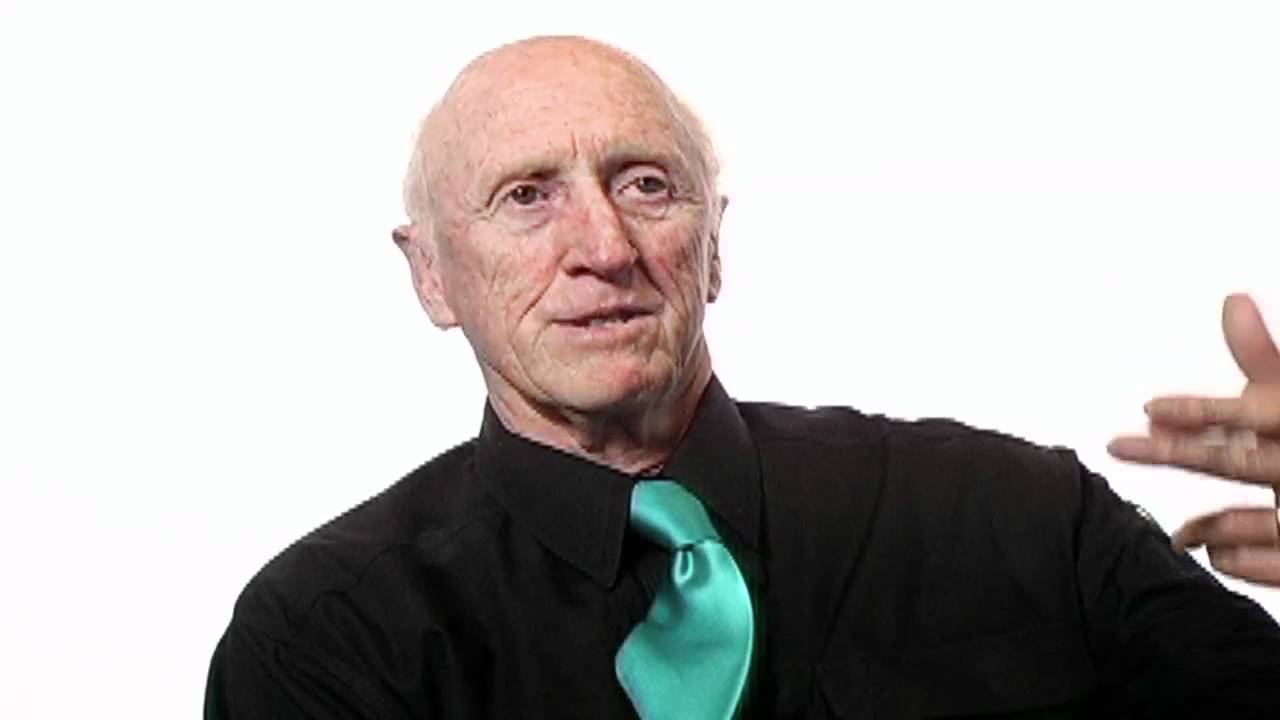
In 1984, Stewart Brand said that “information wants to be free” (and also expensive). A quarter century later, he revisits his famous phrase.
----------------------------------------------------------------------------------
Stewart Brand:
Stewart Brand is an author, pioneering environmentalist, and former editor of the Whole Earth Catalog, which he published from 1968 through 1998. In the early 1960s he served as an infrantryman in the U.S. Army and was subsequently associated with Ken Kesey's "Merry Pranksters" movement. He is president of The Long Now Foundation and co-founder of the Global Business Network (GBN), a consulting firm that helps businesses, NGOs, and governments plan for multiple possible futures. His most recent book, "The Whole Earth Discipline: An Ecopragmatist Manifesto," was published by Viking-Penguin in 2009.
----------------------------------------------------------------------------------
TRANSCRIPT:
Question: Is too much information being given away for free?
Stewart Brand: I have a pretty profound faith in the market to always find a way to charge for stuff, if people find it valuable, and the scarcity issues keep moving around. But, back when I said, “information wants to be free,” and information wants to be expensive, and then the constant battle between those two over the same material is driven forward by technology and also drives technology forward to some extent. I don't think that contradiction is going to go away because it's not a contradiction; it's a paradox. And a paradox is constantly restating its opposite, that's how it works. So, the people who are managing expensive information are going to be continually feeling undermined by information coming along they feel is directly competitive and has this unfair price from their standpoint, for free. And they will be forever finding more ways to casually create, distribute, consume information in this relatively free fashion.
But it's just like conversation. Conversation has not been commoditized except to the extent that we've ran it through telephones for a long time, and even there the content was not commoditized it was just the dial tone; it was just the excess to another voice, another ear. And so I think we see that kind of constant renegotiation of what we can charge for in terms of information, it's just going to be a perpetual debate and every now and then somebody says something like, "Well one thing China can never do is regulate the Internet." And then China regulated the Internet. So whatever we think is going to happen, it keeps showing us that something different is going to happen. And you can say it's all going to be free, no it isn't. You say it's all going to be expensive, no it isn't.
Question: Does Chris Anderson’s “Free” misappropriate your phrase?
Stewart Brand: No, far from it. Chris Anderson's book, Free, has a whole chapter on my riff on “information wants to be free,” which dates back to 1984, and a very insightful one, I think. He's thought about the issue more than I have, he studied it economically, partly from his own background more than I have and I think his book is outstanding and I would say that it is unfairly reviewed not once, but twice by the New York Times.
Question: Malcolm Gladwell has doubted that information can “want” anything. How do you respond?
Stewart Brand: Gladwell sometimes waxes eloquent and uses language to refer to things that are not technically precise, and that's part of what you do when you do creative writing, which he does brilliantly. And that's what I was doing. And one of the reasons we remember the phrase "information wants to be free" is because it imputes this as if willfulness, a kind of determinism, to the process which invites that second thought. And so that is indeed exactly how it was analyzed in the book, "Free" and quite well, I think should have responded to that I think rather than invent his own, I think, inappropriate argument.
Question: What do you want for information?
Read the full transcript at https://bigthink.com/videos/what-does...

Информация по комментариям в разработке