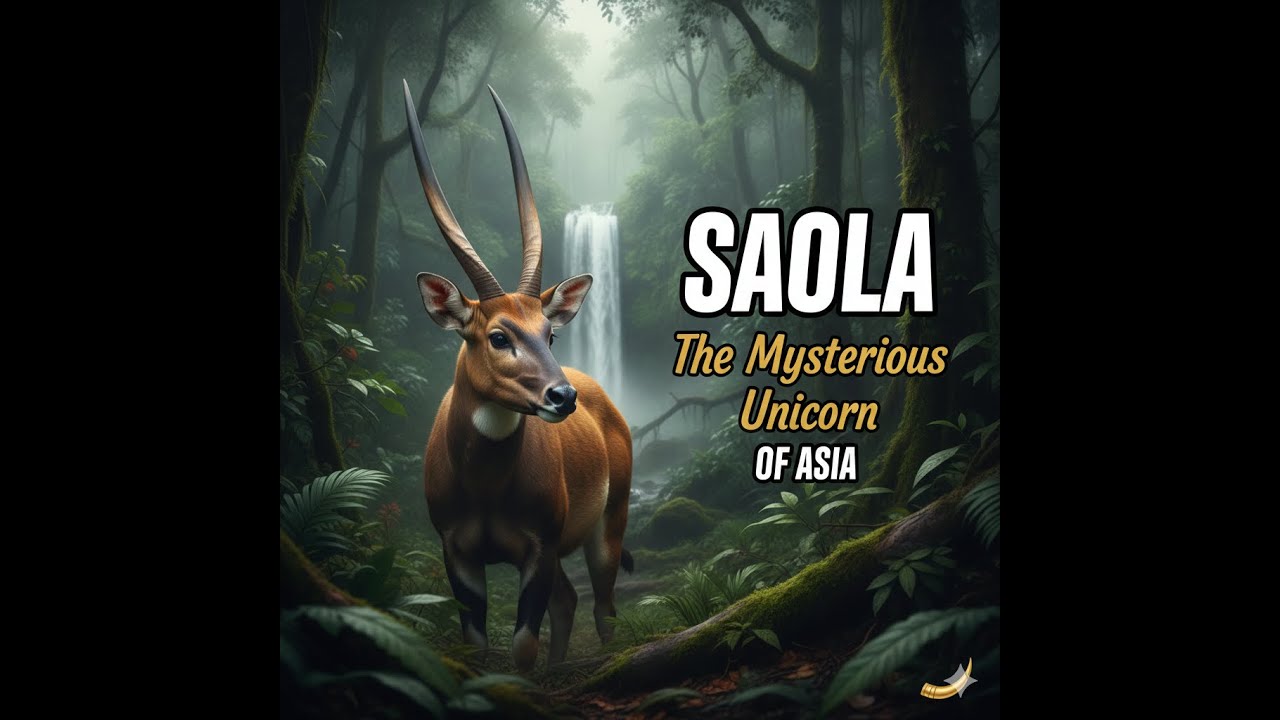
Animal Name: Saola Scientific Name: Pseudoryx nghetinhensis English Name: Saola (also known as Asian Unicorn, Spindlehorn, Vu Quang Bovid/Ox)
Habitat: Humid evergreen forests in the Annamite Mountains (Truong Son Mountains) between Vietnam and Laos, at altitudes from 400 to 750 meters. Average Lifespan: Estimated 8-11 years in the wild. Diet: Herbivorous, mainly feeding on leaves, shrubs, ferns, flowering plants, fruits, seeds, and grasses. Natural Predators: Tigers, leopards, wild dogs (dholes), and especially humans. Life Cycle: * Birth: Saolas are solitary animals. The breeding season is estimated from late August to mid-November. A single offspring is born between April and late June. The gestation period is approximately 33 weeks (about 8 months). * Growth: The young stay with their mother. Detailed information about its development is limited due to the species' mysterious nature. * Foraging: Saola are herbivores, spending their time foraging for leaves, shrubs, ferns, and other plants. They are active both day and night but prefer morning and late afternoon. * Reproduction: They reach reproductive maturity, seeking mates during the mating season. Both males and females have long, pointed horns, which can be used to mark territory or attract mates through large scent glands on their faces. * Death: They face threats from natural predators and especially humans, due to hunting and habitat loss. Unique Biological Characteristics: * Elusiveness: Saola are one of the rarest large mammals on Earth, first discovered by science in 1992. To date, no biologist has ever seen a saola in the wild. All information comes from camera traps, carcasses, or accounts from local people. * Unique horns: Both males and females have a pair of long, straight, pointed, and almost parallel horns, which can be up to 50cm long, resembling spinning wheels, and are the origin of the name "saola".
Информация по комментариям в разработке