This workout began with a hip mobility exercise. The instruction was to cross the leg over without putting it down, letting it swing and pivot back and forth. The reminder was to keep the chest up. This movement worked as an open kinetic chain for the right leg, while the left leg was weight-bearing. As the pelvis rolled back and forth, the left leg also benefited from mobilization.
After switching sides, it was noted that resistance felt different—sometimes the right leg was more comfortable, sometimes the left had better range. During the exercise, conversation shifted to weekend plans, including refereeing on the Florida Gulf Coast and getting a deep tissue massage from Brian.
The next drill involved swinging the right leg forward and backward while keeping the chest and eyes up. Questions followed about neurological symptoms all of which checked out fine. Clothing changes after spin class were mentioned, along with details of an intense cycling session simulating a ride through Sicily.
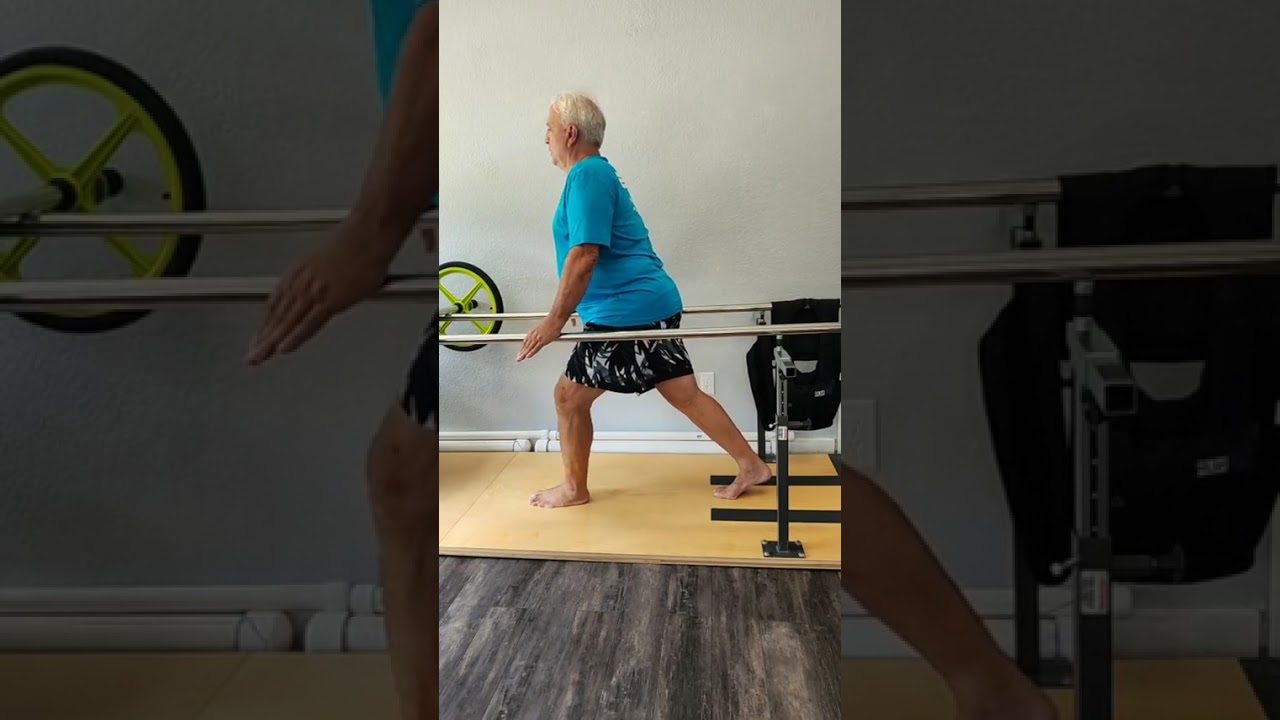
When assessing hip flexor mobility, it became clear that tightness was pulling the trunk forward during leg swings. The cue was to squeeze the glutes, which helped open up the hip. This led into an active, weight-assisted hip flexor stretch: pushing the front knee forward, keeping the back leg straight, and squeezing the glute to deepen the stretch. Using bars for assistance allowed for a greater range of motion. The focus was on opening the hips, strengthening the glutes, and reducing nerve pinching caused by muscular imbalances.
On the other side, calf soreness was reported during the stretch, especially on the left. This was identified as a deep soleus stretch, important for ankle mobility. Improving this range of motion in the ankle would help the knees do less compensating and ease back discomfort.
After several rounds, there was discussion of how consistent stretching, soft tissue work, and strength training had noticeably improved knee function. The importance of seeing exercise as a lifelong journey rather than a destination was emphasized. Dave shared how he had outlived his father by 15 years and intended to keep going strong. He also noted increased alertness since starting creatine supplementation.
Next, hip rotation and mobility drills were performed, bringing the knee toward the chest and leaning into the stretch. This targeted the glutes and hip socket range of motion, helping reduce strain on the knees and back. Conversation drifted into eating habits, with the observation that under-eating—especially protein—might be affecting recovery and body composition. Historical examples of hunter-gatherer calorie storage were shared to explain how the body reacts to perceived starvation.
From there, the workout moved into hip flexor strengthening in a seated position, lifting each leg straight with the trunk upright. Cramping highlighted muscle weakness, and additional holds at the top helped reinforce strength. It was explained that the rectus femoris functions both as a quadriceps muscle and a hip flexor, which explained why the exercise was so demanding.
Active calf stretches at the wall followed, engaging both the gastrocnemius and soleus muscles. The conversation compared muscles to hardware and the brain to software, underscoring how the body rewires movement patterns after injury. Strengthening weak areas was key to correcting faulty compensations.
The session then progressed into shin muscle activation (dorsiflexion) against the wall, targeting the tibialis anterior. This muscle supports the arch of the foot and contributes to knee function. Adjusting foot placement forward increased intensity, and by leaning the trunk, the effort level quickly jumped from a three to a seven out of ten.
Balance between left and right sides was discussed, noting the long injury history and dominance of certain muscle groups. The takeaway was that evening out strength would reduce wear and tear on overworked joints.
Additional drills included elevated lunges for hip flexion and calf stretching, with emphasis on ankle mobility’s impact on back pain. Toe spacers and barefoot training were also mentioned as helpful tools for long-term joint health.
The workout incorporated hamstring activation, trunk mobility, and wide-stance hamstring stretches. Scar tissue and adhesions from old injuries were explained as factors that change movement patterns over decades. Proper healing and tissue alignment were emphasized to avoid future restrictions.
Upper body work was introduced using only body weight and gravity. Leaning forward and lifting arms challenged the back muscles, shoulders, and glutes without equipment. Rotational hip mobility was added, working the hip rotator cuff in a weight-bearing position.
The session closed with marching-in-place hip flexor drills. Dave reported feeling stretched out, looser, and more nimble compared to when he arrived.

Информация по комментариям в разработке