Eternal Thanks in Every Note. ( AI-Created )
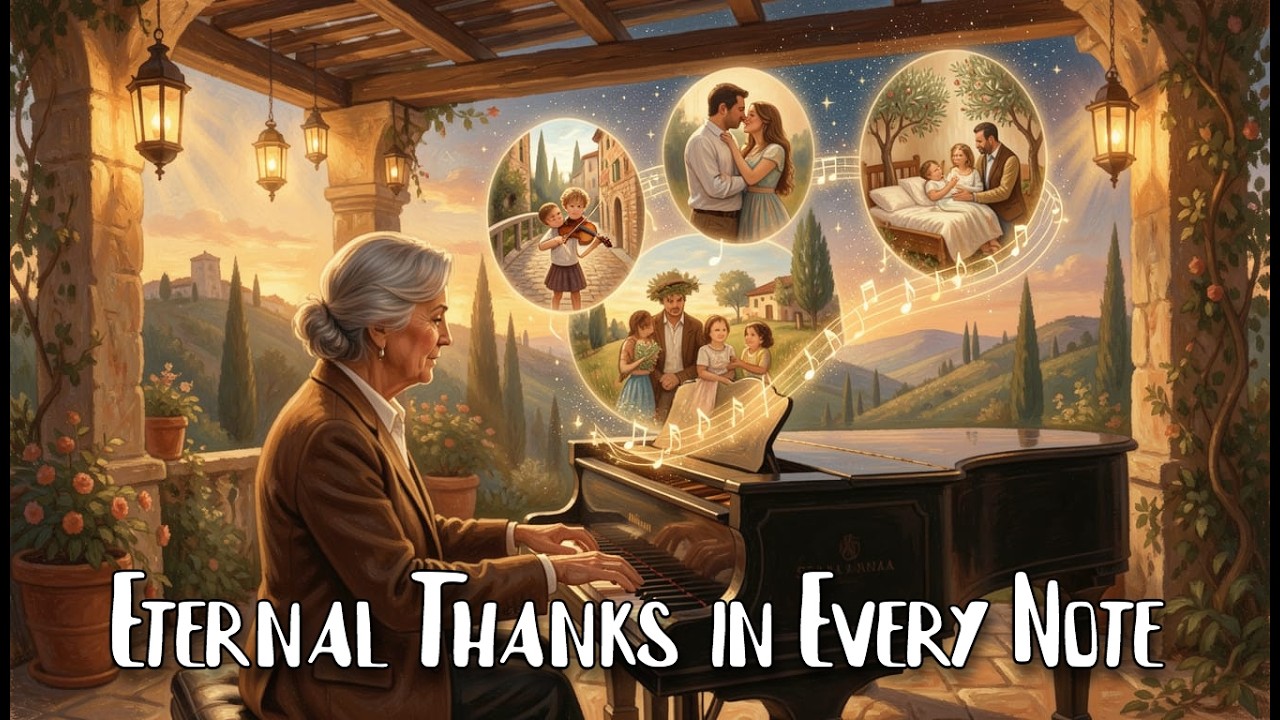
In the amber hush of a Tuscan hillside villa, where olive groves whispered ancient benedictions and cypress spires pierced lazy summer skies, Elena Moretti sat at her weathered Steinway, fingers hovering like prayers over ivory keys. It was August 2024, her 50th year cresting like a gentle wave, and the melody unspooled from her heart—a luminous sonata of eternal thanks, each note a ledger of gratitude etched by time's patient hand. No grand orchestra, just solo piano: arpeggios ascending like dawn over Siena's terracotta roofs, chorales resolving in warm major hues.
Elena's life had been no straight aria but a symphony of contrasts. Born in a cramped Genoa tenement to a widowed laundress, she'd chased rats from flour sacks as a child, dreaming through street fiddlers' tunes. At eight, Nonna's pawned violin became hers—first notes scratched in alley shadows, gratitude budding for callused hands that coaxed beauty from wood. Adolescence brought tempests: Papa's ghost haunting empty chairs, a scholarship to Milan Conservatory snatched by bureaucratic thorns, forcing waitressing amid bel canto echoes.
Yet every discord birthed grace. At 19, scrubbing plates in La Scala’s canteen, she befriended maestro Luca Rossi, who heard her hum "Clair de Lune" over clattering porcelain. "Grazie, cielo," she whispered, clutching his loaned scores—first formal lessons, notes of thanks blooming in nocturnes. Luca's tutelage opened doors: competitions won in shadowy halls, a debut recital where nerves trembled but applause rained like Tuscan gold.
Love arrived in minor keys. Mateo, the painter with ochre-stained fingers, met her at a Florence café, sketching her profile mid-adagio. Their waltz through Uffizi galleries, kisses under Ponte Vecchio lamps, culminated in vows exchanged on Positano cliffs. Gratitude swelled for his canvas of their life—two daughters, Sofia's violin solos mirroring Elena's, Giulia's laughter a staccato joy. But shadows intruded: Mateo's cancer at 42, chemo's bitter rhythm shadowing their home. In hospice vigils, Elena played Debussy, his final breath syncing to "Reverie's fade: "Grazie, amore, for every borrowed dawn."
Widowhood carved deeper furrows, daughters fledging to Berlin orchestras and Rome academies. Elena retreated to this inherited villa—Nonna's legacy, vines heavy with Sangiovese—teaching masterclasses by day, composing by dusk. Each pupil's breakthrough, a village festa's shared Chianti, the harvest moon gilding her scores: notes of thanks for solitude's quiet forge, tempering grief into gold.
Now, under pergola lanterns, neighbors gathered unbidden—village elders with pecorino wheels, Sofia and Giulia home with husbands and babes. Elena played: theme of humble beginnings in low registers, soaring cadenzas for love's zenith, somber interlude for losses, finale a radiant hymn weaving all threads. "Eternal thanks," she announced, voice cracking, "in every note—for hungers that honed hunger for more, pains that polished joy, faces framing my score."
Tears glistened; Sofia joined in on the violin, harmonies enfolding generations. Glasses clinked to life's ledger: "Grazie, vita." As stars wheeled above, Elena felt it—gratitude not an endpoint, but an eternal melody, every note a bow to the composer of her days.
The sonata endured in local lore, villagers claiming the wind through olives hummed its refrain. Elena, silver-threaded, played on, heart full: thanks infinite, notes forever.


![Почему реактивный двигатель не плавится? [Veritasium]](https://i.ytimg.com/vi/F6UB0V2Fct4/maxresdefault.jpg)









Информация по комментариям в разработке