50 million deaths? That’s just water under the bridge.
Chapters:
0:00 Intro
0:24 Feudalism
2:08 Renaissance
2:54 Conclusion
Everybody's Wrong About The Black Death Transcript:
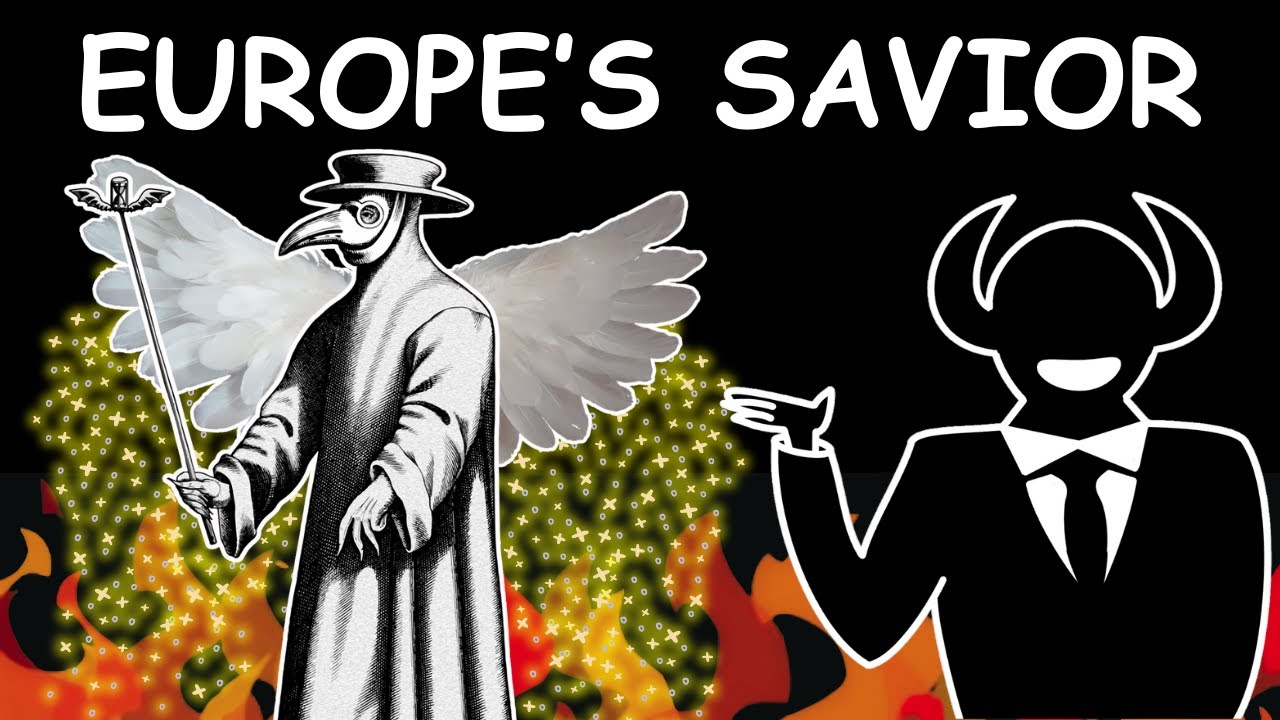
Most people think that the Black Death wiping out half of Europe was a bad thing. “Boo hoo my wife and children are dead.” But I’m here to tell you that the Black Death actually saved Europe, not destroyed it. And no, I’m not doing my best Thanos impression, preaching that medieval Europe needed correction or anything like that, so just hear me out. For centuries leading up to the plague, Europe suffocated under feudalism, a system where over 90 percent of the population were peasants, each of them bound to the land under their lords. People today complain about the modern world being like a rat race, but back then, it was closer to rats chained to a treadmill, a treadmill that only ever stopped at the grave. They worked from sunup to sundown in the blazing heat—their pay barely enough to feed their families basic grain. And on top of this, they owed church tithes, feudal dues, and even a death tax called a heriot, where a lord could claim a peasant’s best animal or tool after they died—basically the medieval equivalent of a landlord showing up to your mother’s funeral, and asking for the keys to her car. But when the Black Death hit, it crippled the workforce, sending demand for labor skyrocketing. Suddenly, peasants were granted newfound leverage, many soon demanding wages up to three times their original pay. And if their lord refused, then they could simply give them the finger and be on their merry way, sparking a mass migration among the lower class. Naturally, the nobles scrambled to stop this nonsense. In England, the Ordinance of Laborers and Statute of Laborers tried to freeze wages and chain workers back to their original lands. But, much like Prohibition in the United States, these laws were laughably unenforceable. With lords too eager to poach labor from one another and authorities too weakened by the plague, feudalism was dead and buried for good, giving millions the opportunity to live anew. Once the plague had run its full course and weakened the nobility, merchants stepped in to fill the power vacuum, transforming trade and finance into unprecedented influence. Families like the Medicis then reinvested their wealth not only into commerce, but into art, science, and medicine, ushering in the Renaissance. Yes, I say it the pretentious way—don’t @ me. And with this patronage, doctors and scholars finally began performing dissections while questioning the old Galenic texts, led by pioneers like Andreas Vesalius. These advancements led to earth-shattering breakthroughs—like safer surgeries and the discovery that bloodletting wasn’t actually the cure for everything. Turns out, mass extinction events go a long way in jumpstarting a few centuries of innovation. So, was the Black Death “worth it”? Well, if major life improvement, like the emancipation of a serf from their lord’s iron grip or access to better healthcare, counts as a life saved, then it stands to reason that the boons ushered in by the plague ultimately outweigh its devastation. If not, or if, I don’t know, for some silly reason you struggle to get past the 75-200 million global death toll, then sure—*maybe* it wasn’t worth it. Either way though, it’s hard to deny that most people radically undervalue the Black Death’s positive impact. From the collapse of feudal hierarchies to the flourishing of the Renaissance, the plague reshaped nearly every aspect of European life for the better. Maybe the big purple guy really did have a point in the end.

Информация по комментариям в разработке