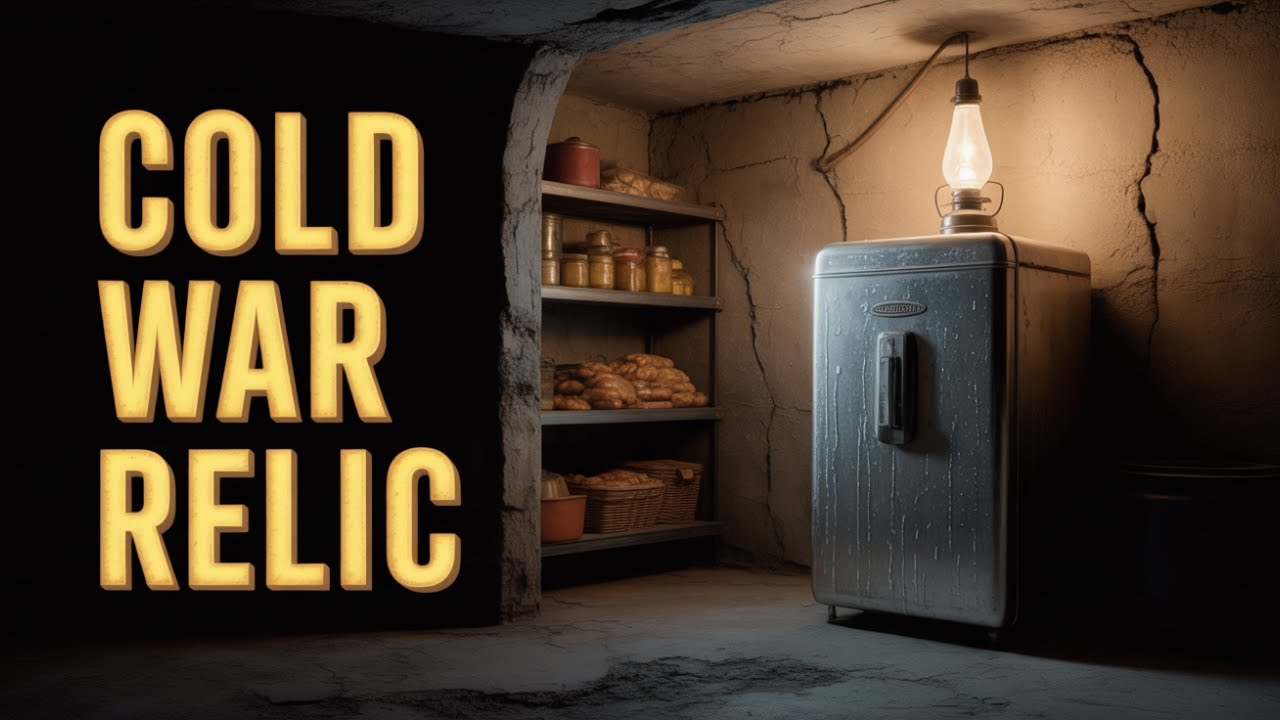
When electricity vanished during wartime Europe, survival depended on more than courage or ration cards. Food spoiled quickly. Medicine failed. Entire cities went dark for weeks or months at a time. Yet in the middle of blackouts, bomb damage, and fuel shortages, some households and hospitals kept food and medical supplies cold using a technology that required no electricity at all.
This documentary-style video explores the absorption refrigerator, a fire-powered refrigeration system developed in the early 20th century and widely used throughout the 1930s and 1940s. Using only heat, chemistry, and gravity, these machines preserved food, milk, insulin, and blood plasma when modern infrastructure collapsed completely. With no motors, no moving parts, and no dependence on the power grid, absorption refrigeration became a quiet lifeline in rural homesteads, underground cellars, field hospitals, and occupied cities.
You’ll learn how ammonia, hydrogen, and water worked together inside sealed systems to turn heat into cold, why these refrigerators were trusted during prolonged blackouts, and how families adapted them using kerosene lamps, wood gas, and improvised heat sources. This is not theory or speculative survival content. It is documented engineering that functioned under real wartime conditions.
The video also explains why absorption refrigeration still exists today in off-grid cabins, expedition vehicles, and remote installations, and what modern survivalists can learn from technology that valued reliability over speed. In a world increasingly dependent on fragile systems, this forgotten approach to preservation remains relevant.
WARZONE SURVIVAL is dedicated to preserving real historical survival knowledge, not trends or entertainment myths. Every episode focuses on what worked when systems failed completely, and why those lessons still matter.
If you value serious survival history, consider subscribing, sharing this video, and joining the discussion in the comments. The past already tested these systems. The question is whether we remember them in time.
Информация по комментариям в разработке