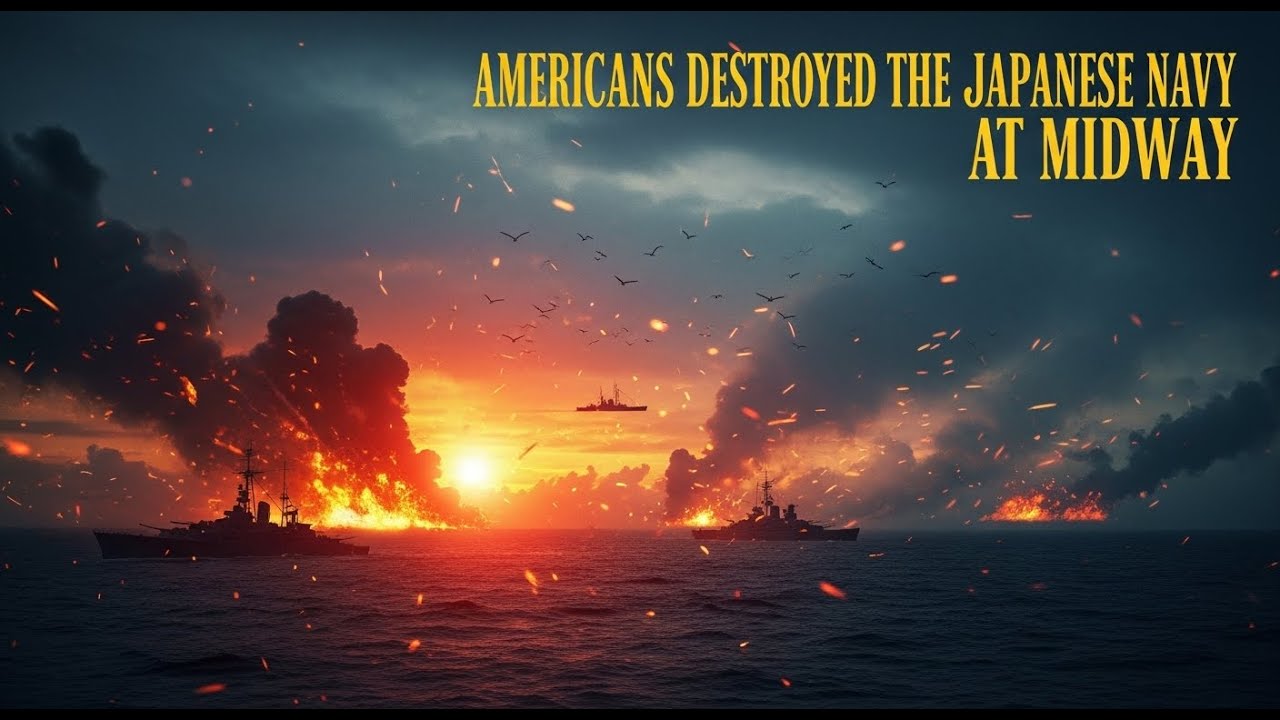
The Battle of Midway, fought between June 4–7, 1942, stands as one of the most decisive naval engagements in history. Just six months after the devastating attack on Pearl Harbor, the United States faced the powerful Japanese Navy, which had dominated the Pacific with seemingly unstoppable force. Yet through brilliant intelligence work, daring strategy, and extraordinary courage, a smaller American force turned the tide of World War II.
American codebreakers, led by Lieutenant Commander Joseph Rashford and his team, had deciphered critical Japanese communications. The coded reference “AF” revealed the Japanese target: Midway Atoll, a small but strategically crucial island guarding the approaches to Hawaii. By exploiting this intelligence, Admiral Chester Nimitz positioned his carriers, including Enterprise, Hornet, and the hastily repaired Yorktown, for a surprise counterattack that would forever change the course of the war.
The outnumbered American forces faced overwhelming odds. Midway’s defenders, including Marine Colonel Harold Shannon and his young pilots, flew obsolete fighters against Japan’s modern Zero aircraft, risking nearly certain death. Torpedo squadrons launched suicidal attacks to draw enemy fighters to sea level, setting the stage for dive bombers to strike the vulnerable Japanese carriers. The bravery of pilots like Ensign George Gay and Lieutenant Dick Best was pivotal; their sacrifices ensured the success of the counterstrike.
In a few crucial hours, American dive bombers destroyed three of Japan’s main aircraft carriers—Akagi, Kaga, and Soryu. Only Hiryū remained operational temporarily, attempting a counterattack before also being neutralized. The destruction of these four carriers, the core of Japan’s striking power, marked the end of Japanese offensive dominance in the Pacific. Yorktown suffered damage but remained afloat, and the U.S. Navy retained the initiative.
Midway demonstrated the importance of intelligence, preparation, and calculated risk in modern warfare. It showcased the power of aircraft carriers, signaling the decline of battleships as the dominant naval force. The battle also highlighted the courage, skill, and determination of young American sailors and aviators who, facing a well-trained and experienced enemy, achieved a stunning victory against overwhelming odds.
The impact of Midway extended beyond immediate tactical success. Japan’s offensive capabilities were permanently crippled, shifting momentum in favor of the Allies. It validated the crucial role of codebreakers and intelligence officers, while establishing a model for carrier-based naval strategy that would define future engagements. The lessons of Midway continue to inform military strategy today, demonstrating how planning, courage, and adaptability can overcome even the most formidable foes.
This video explores the Battle of Midway in detail, from the decoding of Japanese messages to the heroic aerial assaults, strategic decisions by commanders, and the lasting consequences on the Pacific War. Learn how intelligence, courage, and determination combined to deliver a victory that reshaped history and set the stage for the Allied advance across the Pacific.
#Midway #WWII #NavalHistory #PacificWar #USNavy #JapaneseNavy #PearlHarbor #CarrierWarfare #Codebreakers #MilitaryHistory #HistoricalBattles #AmericanHeroes
Midway, Midway Battle, Midway 1942, WWII, World War 2, Japanese Navy, US Navy, Pearl Harbor, Pacific War, Aircraft Carrier Battle, Naval Warfare, Historical Battle, US Marines, Navy Heroes, Codebreakers, Japanese Carriers, Akagi, Kaga, Soryu, Hiryū, Lieutenant Commander Rashford, Admiral Nimitz, Ensign George Gay, Dick Best, Torpedo Squadron, Dive Bombers, Yorktown, Enterprise, Hornet, Pacific Theater, WWII History, Battle Documentary, American Victory, Japanese Defeat, Naval Strategy, Carrier Warfare Tactics

Информация по комментариям в разработке