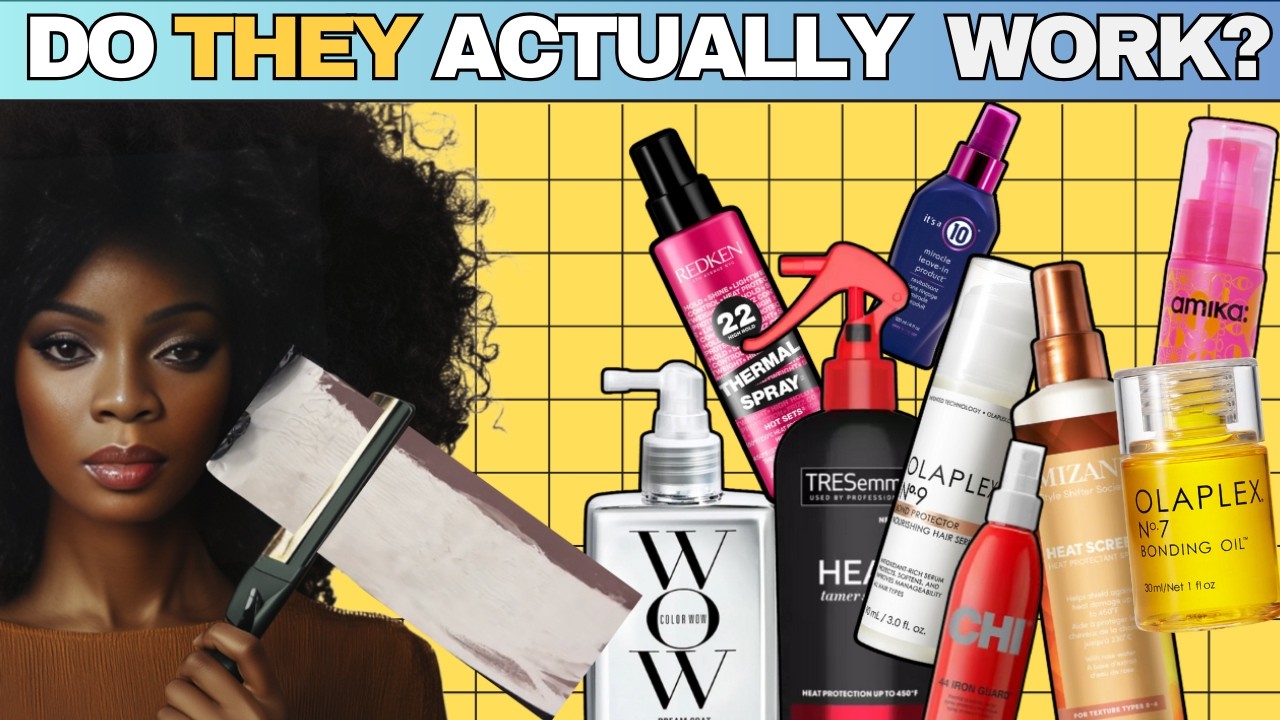
Curious to know do heat protectants really work? In this video, we dive into a heat protectant experiment to uncover the truth! Discover the best heat protectants for natural hair and learn how to prevent heat damage on natural hair while using a heat protectant for flat irons. From testing silk press heat protectant products to viral heat protectant TikTok experiments, we explore viral heat protectant tests like testing heat protectants on thermal paper. Plus, check out an Olaplex No. 7 bonding oil review, debunk heat damage myths, and compare high-end vs drugstore heat protectants. Learn how to avoid heat damage with hot tools, find the best products for silk press, and understand natural hair burn temperature. Whether it's testing viral beauty products, a cotton swab heat protectant test, or the thermal paper flat iron test, you don’t want to miss this!
Heat protectants: we love them!
We use them consistently and can even spend a pretty penny on them because we believe that they do what they claim to do: protect our hair from heat damage when we apply direct HEAT using hot tools such as blow dryers, curling irons, flat irons, hot brushes, diffusers and any other hot tool directly onto our natural hair. We want to enjoy a silk press and have peace of mind that our hair will revert back on wash day! I need my curls back. Okayyy!
Some women even layer different heat protectants before using a flat iron for example to further mitigate the risk of heat damage! They’ll first start off with a liquid heat protectant then apply a cream heat protectant and sometimes even use a third heat protectant such as the olaplex no. 7 bonding oil.
The logic: it is always best to use more heat protectant to prevent heat damage. Some even believe that the more expensive the heat protectant is…the better the protection against heat damage. I mean, if it costs more money it has to have better ingredients, right? Therefore better protection, right? Otherwise why is it so expensive? Make it make cents!
But how trusting should we truly be of these heat protectants especially when some of these tools we apply directly to our hair can get as hot as 400 degrees Fahrenheit, if not more? Did you know that hair generally burns at around 450 degrees Fahrenheit…that’s 230 degrees Celsius. Well, 450 degrees Fahrenheit is considered the point where EXTREME heat damage occurs; however, if you have finer or if your hair is already damaged…did you know that your hair can burn at a lower temperature. So we truly need to be careful and reassured.
It seems that many women share the same skepticism about the efficacy of heat protectants as I do because on TikTok these women are attempting to get to the bottom of this consuming mystery by running different experiments to see how well heat protectants protect our hair from heat damage. So ladies…thank you. Women make for the best detectives.
They’re testing heat protectants on cotton swabs, bread, bagels and recently thermal paper! The logic is “if a flat iron can’t burn through thermal paper once it’s covered in heat protectant then the heat protectant must work; otherwise the heat protectant is a scam!” Although, I understand the logic…my only issue is that hair is made up of keratin and paper is made up of cellulose so…the math will not math. But hey…let's at least see if they can change my mind.
Using heat protectants is essential for black women, as it is for anyone, when using hot tools on hair. However, the unique texture and characteristics of black hair make it especially important. Here's why:
1. Minimizing Heat Damage: Black hair is often more fragile and prone to damage due to its structure, which includes a tighter curl pattern and fewer cuticle layers. These features make it less able to retain moisture and more susceptible to breakage.
2. Preserving Moisture: Black hair tends to be drier because natural oils have a harder time traveling down the hair shaft due to its curls or coils.
3. Preventing Breakage: Over time, heat damage weakens hair, causing it to break more easily. Protectants coat the hair strands, reducing the direct impact of high temperatures.
4. Enhancing Style Longevity: Heat protectants often contain ingredients that smooth the hair cuticle, reducing frizz and helping styles last longer. This is especially beneficial for black women who may use hot tools to achieve specific styles like silk presses or loose curls.
5. Maintaining Natural Curl Pattern: Excessive heat without protection can permanently alter the natural curl pattern of black hair, leading to uneven textures or "heat damage." Protectants reduce this risk, allowing the natural curl to bounce back after styling.
Use Appropriate Tools: Pair the protectant with high-quality hot tools that allow precise temperature control to avoid overheating.
By incorporating a heat protectant into your routine, you can enjoy styling with hot tools while preserving the health and integrity of your hair.

Информация по комментариям в разработке