Yedi Uyuyanlar Mağarası - İzmir
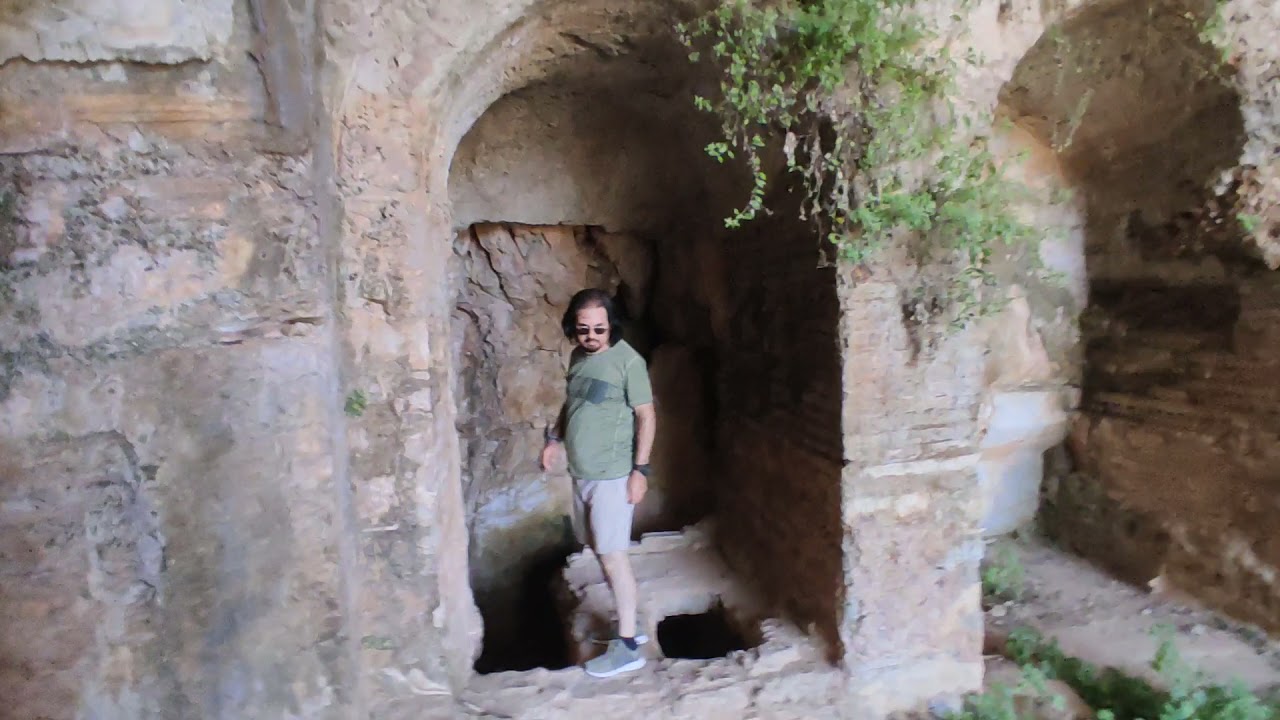
Efes Antik şehrinin yakınlarında, Panayır Dağı eteklerinde bulunan Yedi Uyuyanlar Mağarası'na Vedius Gymnasium’unun yanından doğuya doğru dönen asfalt yoldan giderek ulaşılabilir. Burası, hem İslam dininde, Hem Hristiyanlıkta söz edilen Yedi Uyuyanlar –ya da Yedi Uyurlar- hikâyesindeki yedi gencin uyuduğu mağara olarak bilinir.
Müslümanlar tarafından Kuran’da Kehf suresinde sözü edilen Ahsab-ı Kehf Mağarası’nın günümüzde daha çok Tarsus’ta ya da Afşin’de bulunan mağara olduğu kabul edilirken Hıristiyan dünyası Efes’teki bu yeri benimsemiştir.
Yedi Uyurlar Efsanesi
Farklı kaynaklarda farklı ayrıntılarıyla anlatılan efsaneye göre MS 250 yılı civarında İmparator Decius zamanında yaşayan yedi Hıristiyan genç (Bunlar, birçok kaynakta adları farklı verilen Malta, Malchus, Martinianus, Dionysius, Yohannes, Serapion ve Konstantinus’tur. İslamiyette ise Debernuş, Mesliha, Kafeştateyyuş, Sazınuş, Mekselina, Mermuş, Yemliha ve köpekleri Kıtmir’in adı geçer) imparatorun tanrılaştırıldığı tapınağa kurban sunmayı reddeder ve ölüm tehdidi alınca bir mağaraya sığınırlar. Hükümdar da mağaranın girişine duvar örülmesini emreder. Yedi Uyurlar bir süre sonra uykuya dalar. Gençler uyanır ve her şeyden habersiz olarak yiyecek almak için kente giderler. Bir fırından ekmek almak isteyen Yemliha eski parayı verince artık Decius’un (249-251) değil II. Theodosius’un zamanında (408-450) olduklarını ve arkadaşlarıyla yalnız bir gece değil, 200 sene boyunca uyuduklarını öğrenir. Hıristiyanlık Roma İmparatorluğu’nun her yanında yaygınlaşmıştır artık. Yemliha mağaraya geri dönüp durumu anlatınca, tüm arkadaşlar tekrar uyumaya karar verir ve bir daha uyanmazlar.
Yedi gencin ölümünden sonra büyük bir cenaze töreni yapıldığı ve gömüldükleri mağaranın üzerine bir kilise inşa edildiği söylenegelir.
Burada geçmiş yıllarda yapılan kazılarda, bir kilise ve çok sayıda mezar bulunmuştur. Mezarlarda ve kilisenin duvarlarında kutsal sayılan Yedi Uyuyanlar’a hitap etmek üzere yazılmış yazıtlar görülünce burasının efsanevi kilise olduğu kabul edilmiştir. Yakın çevresinde de Efes Antik Kentinin önemli mezarlık alanlarından birisi bulunmaktadır.
(Cave of the Seven Sleepers)
In January of 250, the Roman Emperor Decius issued an edict that everyone under his reign must perform a sacrifice dedicating themselves to the empire and to the Roman gods. Understandably, this caused an uproar among young Christian communities, who, though persecuted, had previously been free to worship. Refusal to submit came at the price of death. All the same, many Christians refused to deny their faiths.
Seven young men in Ephesus refused to make the sacrifice and hid in a cave on the outskirts of the city. Tired from fleeing, they fell asleep. The Roman sentries came upon the Seven slumbering peacefully in the cave. Rather than killing them outright, they sealed them in, perhaps in a mockery of Christians’ reverence for Jesus’ entombment. That was the last their families and friends ever heard of them.
Sometime much later, the myth continues, the farmer who owned the land thought to open the cave, perhaps to use as an animal pen. He was shocked to find seven young men inside, still asleep. When the light hit their faces, they awoke. Feeling hungry, they pooled their money and sent one of them to the village to buy food. They warned him to watch out for Romans, but, believing they had slept for a full day, they thought the coast was clear. When the young man reached the market and tried to buy bread, vendors were dismayed to see that he carried Decian coins—which were at least 150 years old by then. The bishop was called in (in the century they slept Christianity had resurfaced full force) to interview the Seven Sleepers, and they all died peacefully just a few hours after.
The cave outside Ephesus was excavated in the 1920s, revealing a number of 5th and 6th century Christian graves. An ancient Church sits atop the cave as well. Religious pilgrims still pay visits to the holy Cave of the Seven Sleepers.
The details of the myth are hotly disputed among the various cultures that tell it. Christians believe that the Seven slept for between 128 and 200 years, but the Qur’an states that they slept for around 300 years. Even the location is unclear. Though this cave in Ephesus is the most commonly visited by religious pilgrims, caves in Jordan, China, Tunisia, and Algeria lay claim to the myth of the Seven Sleepers.
Whatever the truth of story is, its lore has seeped into common culture. For example, in Danish, Norwegian, and Swedish, a sysover (“seven-sleeper”) is someone who slumbers long and hard. Seven Sleepers Day is June 27th, and is the German equivalent of American Groundhog Day.
















Информация по комментариям в разработке