Indian 2000-rupee note full details...
The Indian 2000-rupee banknote (₹2000) is a denomination of the Indian rupee. It was revealed by the Reserve Bank of India (RBI) on 8 November 2016 after the demonetisation of ₹500 and ₹1000 banknotes and is in circulation since 10 November 2016.[1] It is a part of the Mahatma Gandhi New Series of banknotes with a completely new design.
The Indian ₹2000 rupee note is the highest denomination of currency note printed by RBI that is in active circulation, ever since the 10,000 rupee note was demonetised in January 1978.[2][3][4] Before the official announcement by RBI, media reported that ₹2000 notes have been printed from the currency printing press in Mysuru by the end of October 2016.
Design
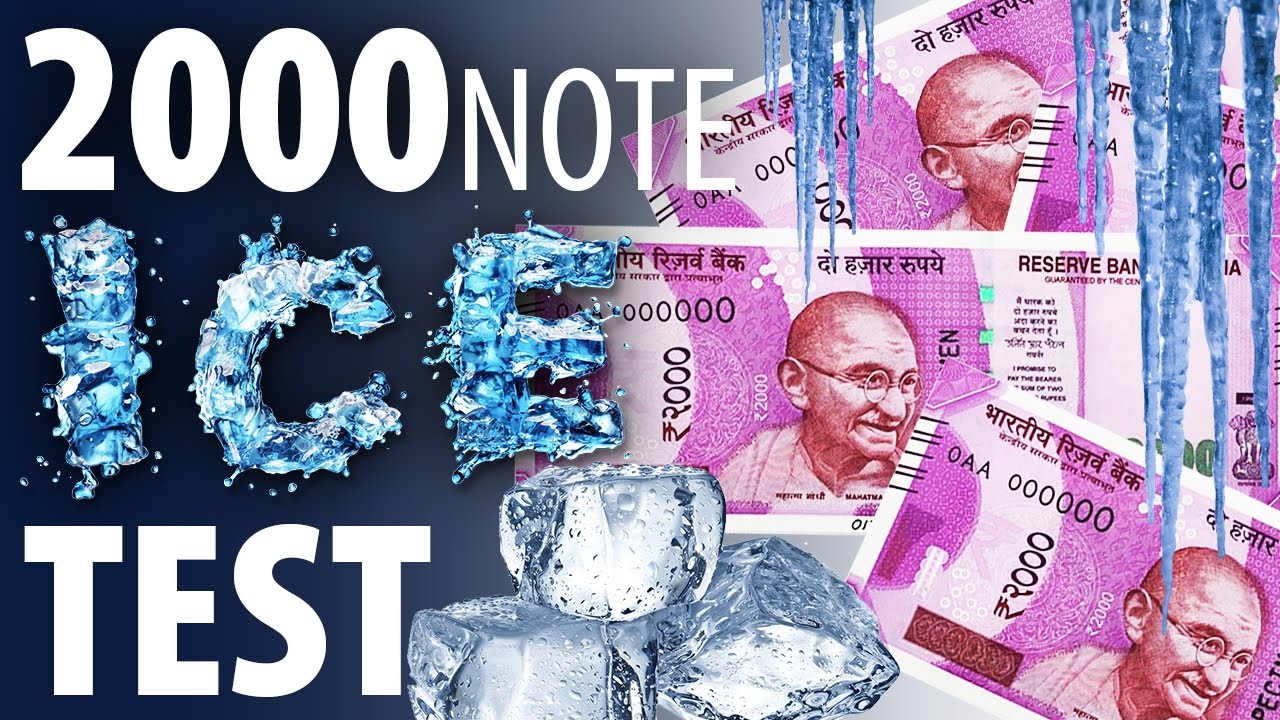
The ₹2000 banknote of the Mahatma Gandhi New Series is 66 × 166 mm magenta coloured, with the obverse side featuring a portrait of Mahatma Gandhi as well as the Ashoka Pillar Emblem, with a signature of the governor of Reserve Bank of India. It has the Braille feature to assist the visually challenged in identifying the currency. The reverse side features a motif of the Mangalyaan, depicting the India's first interplanetary space mission and the logo and a tag line of Swachh Bharat Abhiyan.
Security features
The ₹2000 banknote has multiple security features, listed below:[1]
See through register with denominational numeral ₹2000
Latent image with denominational numeral ₹2000
Micro letters ‘RBI’ and ‘2000’ on the left side of the banknote
Windowed security thread with inscriptions ‘भारत’, RBI and ₹2000 on banknotes with colour shift. Colour of the thread changes from green to blue when the note is tilted
Guarantee Clause, Governor’s signature with Promise Clause and RBI emblem towards right
Denominational numeral with Rupee Symbol, ₹2000 in colour changing ink (green to blue) on bottom right
Ashoka Pillar emblem on the right Mahatma Gandhi portrait and electrotype (2000) watermarks
Number panel with numerals growing from small to big on the top left side and bottom right side.
For visually impaired Intaglio (raised printing) of Mahatma Gandhi portrait, Ashoka Pillar emblem, bleed lines and identity mark
Horizontal rectangle with ₹2000 in raised print on the right
Seven angular bleed lines on left and right side in raised print (obverse)
Year of printing of the note on the left (reverse)
Languages
As like the other Indian rupee banknotes, the ₹2000 banknote has its amount written in 17 languages. On the obverse, the denomination is written in English and Hindi. On the reverse is a language panel which displays the denomination of the note in 15 of the 22 official languages of India. The languages are displayed in alphabetical order. Languages included on the panel are Assamese, Bengali, Gujarati, Kannada, Kashmiri, Konkani, Malayalam, Marathi, Nepali, Odia, Punjabi, Sanskrit, Tamil, Telugu and Urdu.
GPS Chip
The new ₹2000 note was rumoured to be embedded with a 'micro nano GPS chip', which could help track the location of the new rupee via satellite. However, Finance Minister Arun Jaitley dispelled rumours of the banknote having any such chip. Even the Reserve Bank of India clarified that there is no chip.[6]
Spelling error
There was a rumor about an error in the printing of the value of the banknotes in 15 different languages on the reverse of the banknote. "दोन हज़ार रुपये" in Marathi was allegedly written twice instead of once. But it is actually Marathi and Konkani, Hence it is not an error.
There have also been reports of the new banknote having two spelling mistakes in the Urdu lettering. According to Chennai based Urdu scholars, the lettering reads “lo bazaar rupye” (take the rupees to the market) instead of "do hazaar rupye" (two thousand rupees).
Color Bleeding
There were reports of the ₹2000 notes running colour when washed. This rumour came as a result of multiple videos showing the ₹2000 notes being washed in liquids ranging from water to a aerated drink. One of the videos shows some colour left over after the note was washed. Economic Affairs Secretary Shantikanta Das said that it was normal for the notes to lose some colour when dissolved in liquid. The senior bureaucrat said that intaglio ink used in notes does run a little when washed and said that if one tried it with an old ₹100 note as well, some colour would leak. “In fact if there’s no colour, it’s a sign of fake currency,” he said.
Value ₹2000
Width 166 mm
Height 66 mm
Years of printing October 2016 – Current
















Информация по комментариям в разработке