Wright Brothers First Flight 1903: The historic moment Orville and Wilbur Wright achieved the world's first controlled, powered heavier-than-air flight at Kitty Hawk, North Carolina. Discover the groundbreaking aviation milestone that changed history forever.
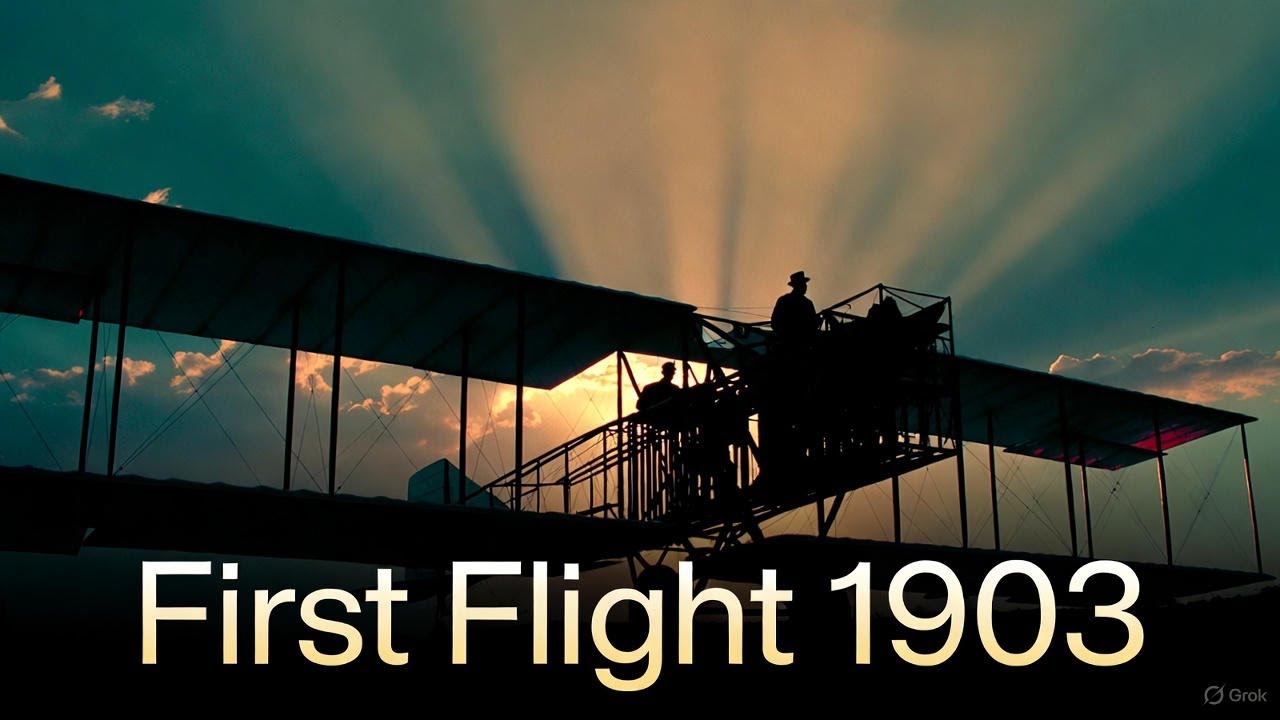
On December 17, 1903, at Kill Devil Hills near Kitty Hawk, North Carolina, Orville and Wilbur Wright etched their names into eternity with the first successful powered flight. Their meticulously designed Wright Flyer—a biplane crafted from spruce wood, muslin fabric, and ingenuity—lifted off the sandy dunes for 12 seconds, covering 120 feet in a controlled, sustained journey through the air. Orville piloted the inaugural flight, with Wilbur running alongside to steady the wing, marking the dawn of modern aviation.
The Wright brothers, self-taught engineers from Dayton, Ohio, were not mere tinkerers but pioneers who solved the complex problems of lift, propulsion, and control. Inspired by Otto Lilienthal's glider experiments and driven by years of rigorous research, they began with kites and progressed to unpowered gliders in 1900–1902. Testing at Kitty Hawk's windy shores provided ideal conditions: steady breezes, soft sand for landings, and isolation for uninterrupted work.
By 1903, they had perfected three-axis control—pitch, yaw, and roll—revolutionary innovations that made fixed-wing flight possible. Wing warping allowed lateral control, a forward elevator managed pitch, and a rear rudder handled yaw. Unable to find a suitable lightweight engine, their mechanic Charlie Taylor built a 12-horsepower gasoline engine in just six weeks. Custom propellers, designed using wind tunnel data, achieved over 75% efficiency—a remarkable engineering feat.
That fateful day saw four flights: the first at 10:35 a.m. lasted 12 seconds; the fourth, piloted by Wilbur, endured 59 seconds and spanned 852 feet. Witnessed by five locals from the nearby lifesaving station, the event was captured in the iconic photograph by John T. Daniels. A gust of wind later damaged the Flyer, ending its flying days, but the brothers' achievement ignited the aerial age.
The Wrights' work laid the foundation for aeronautical engineering, influencing everything from military aircraft to commercial airlines. Their patent battles and public demonstrations in 1908–1909 finally convinced the world of their triumph. Today, the original Wright Flyer hangs in the Smithsonian's National Air and Space Museum, a testament to human perseverance.
Explore the challenges they overcame: propeller design, engine weight, and aerodynamic principles tested in homemade wind tunnels. Learn how their systematic approach—data-driven experimentation and iterative improvements—set the standard for future inventors. This pivotal moment not only conquered gravity but unlocked endless possibilities for exploration, travel, and innovation in the 20th century and beyond.

Информация по комментариям в разработке