Welcome back to the Deep Dive.
Today we step into something radically different. This episode explores Scale-Time Theory 3.0, a newly released framework that proposes a complete inversion of how we think about reality. Instead of trying to “bridge” quantum mechanics and general relativity, STT argues that both are limiting behaviors of a deeper pre-geometric system. In other words, the century-long standoff between the smooth geometry of Einstein and the probabilistic jitter of quantum physics may not require a bridge at all. It may require a reframing.
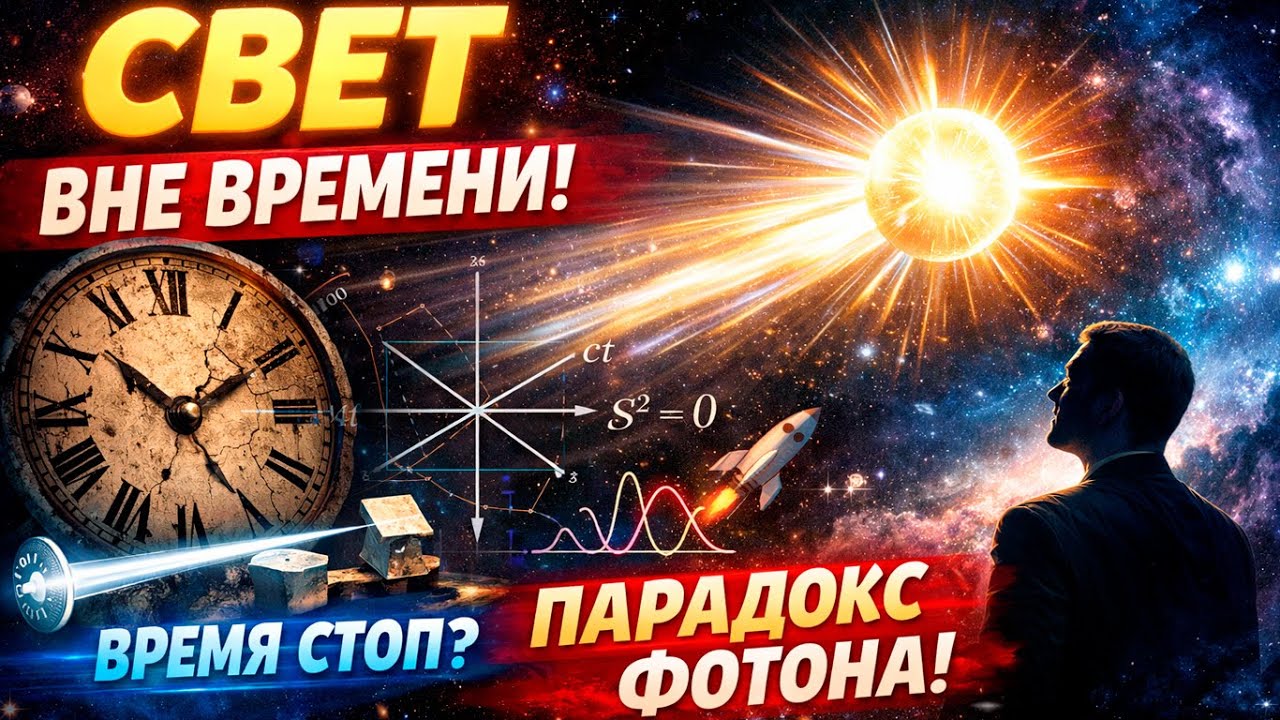
We begin before spacetime. STT describes a primitive arena called the scale plane, a punctured two-dimensional geometry where complexity increases radially from a central source. A rotating dipole at the center emits a continuous carrier signal. As that signal expands outward, a purely geometric effect forces its frequency to ramp higher and higher. Eventually the signal becomes so dense it can no longer be read smoothly. At that moment, the system is forced to digitize itself. The “Master Sampler” nucleates, taking discrete snapshots of the signal. That act of sampling creates time as ticks and space as pixels. Spacetime, in this view, is not the foundation of reality but the interface.
From there, the episode dives into the consequences. STT proposes that quantum indeterminacy is not mystical but structural: it emerges from aliasing, the same phenomenon that causes artifacts in digital audio and film. The probabilistic cloud of an electron becomes a sampling ambiguity. Tunneling becomes frame-skipping. The divide between quantum and classical physics collapses into a single parameter: the oversampling ratio. When systems are lightly sampled, they look quantum. When they are heavily oversampled, the noise averages out and they appear classical.
Gravity is reinterpreted not as curvature or force but as render latency. Massive objects increase computational load, slowing the local “scale clock.” Time dilation becomes processing delay. Galactic rotation curves, normally attributed to dark matter, are reframed as calibration errors caused by scale-dependent clock rates. Black holes become render horizons, regions where reconstruction cannot complete in finite time.
The discussion also explores one of physics’ most famous numbers, the fine-structure constant. STT suggests that 1/137 represents the critical oversampling ratio required to stabilize the hydrogen atom. In this telling, atomic size, electromagnetic strength, and even the emptiness of matter become consequences of the universe’s sampling architecture rather than arbitrary constants.
Finally, the episode moves into more speculative terrain: observer stacks, anchor and roam bands in cognition, creativity as structured noise exploitation, evolutionary scale leaps, and the possibility that consciousness operates near the boundary between deterministic stability and alias-driven ambiguity.
Whether STT ultimately proves correct or not, its internal consistency and scope demand serious engagement. It reframes the unification problem as a category error and invites us to rethink what we mean by space, time, matter, gravity, and information itself.
If this material is right, we have not been missing a bridge. We have been looking at the dashboard instead of the engine.
This is the Deep Dive.












Информация по комментариям в разработке