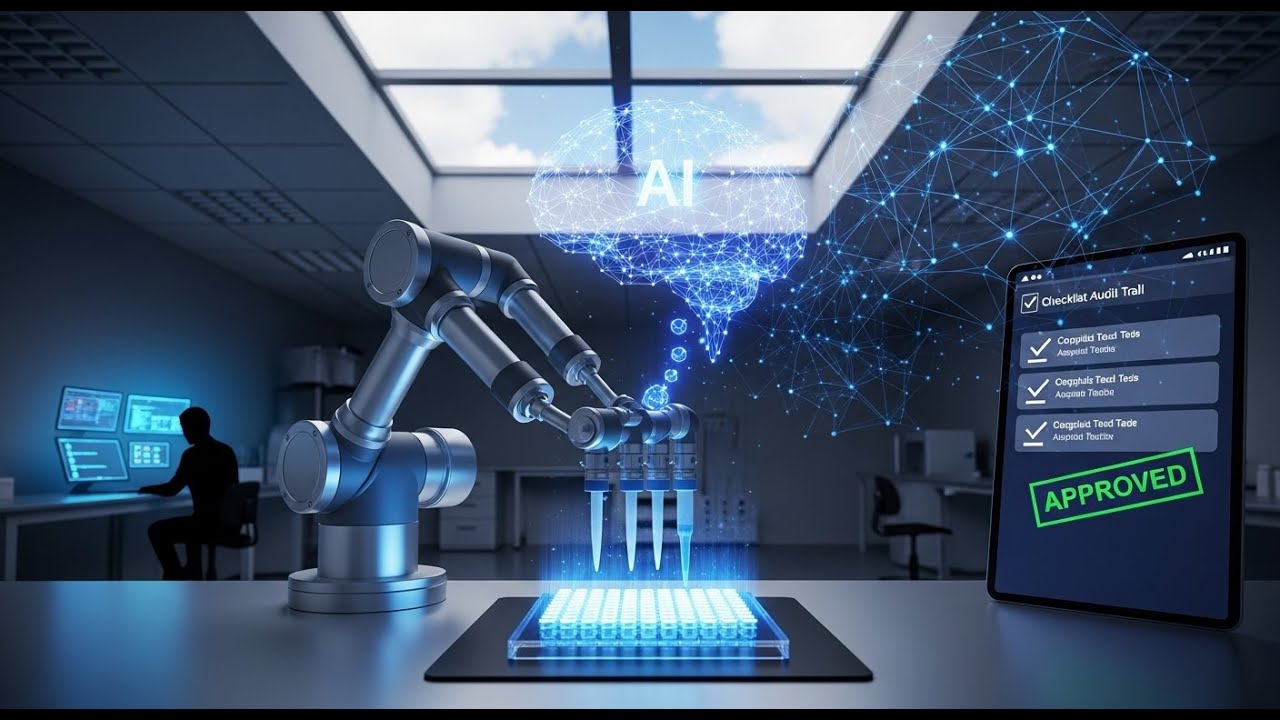
Step inside an autonomous lab in the 2030s—a place where robotic labs and hypothesis-generating AI design, build, and test new medicines end-to-end, while humans supervise, approve, and take credit with transparent audit trails. In this story from our playlist “How Will AI Change the World?”, follow Maya as her team and their AI system, Hypatia, hunt for a safer antibiotic, face real safety checks, and show how responsibility, access, and ethics work when science runs itself.
You’ll see how AI drug discovery, robotic chemistry, organoid testing, and credit maps (C-Index) fit together, why human oversight matters, and what this future means for patients, schools, and small clinics around the world. Simple language, rich visuals, and a hopeful tone—great for all ages and easy listening.
If you enjoy future tech stories with real guardrails—not AI horror or tech terrors, but honest risks, safety, and fairness—hit Subscribe, Like, and Share. Drop your questions in the comments for a Q&A, and tell us what part of autonomous labs you want next.
Chapters (suggested):
0:00 Hook — A lab that never sleeps
0:35 What is an autonomous lab
2:00 Meet Maya and the system
3:10 Hypothesis engine and robot chemistry
5:00 Safety flags and human pauses
6:20 Credit, blame, and the public audit trail
8:00 Community and access
9:10 Supply risk and resilience
10:10 Pattern discovered and lessons learned
11:15 The big picture and closing
Keywords: autonomous labs, AI drug discovery, robotic labs, hypothesis-generating models, 2030s technology, future of science, human oversight, bioethics, organoids, audit trail, C-Index, AI governance, responsible innovation, future medicine, How Will AI Change the World
Hashtags: #AutonomousLabs #AI #Robotics #DrugDiscovery #FutureOfScience #2030s #TechEthics #AIGovernance #HumanInTheLoop #HowWillAIChangeTheWorld
Информация по комментариям в разработке