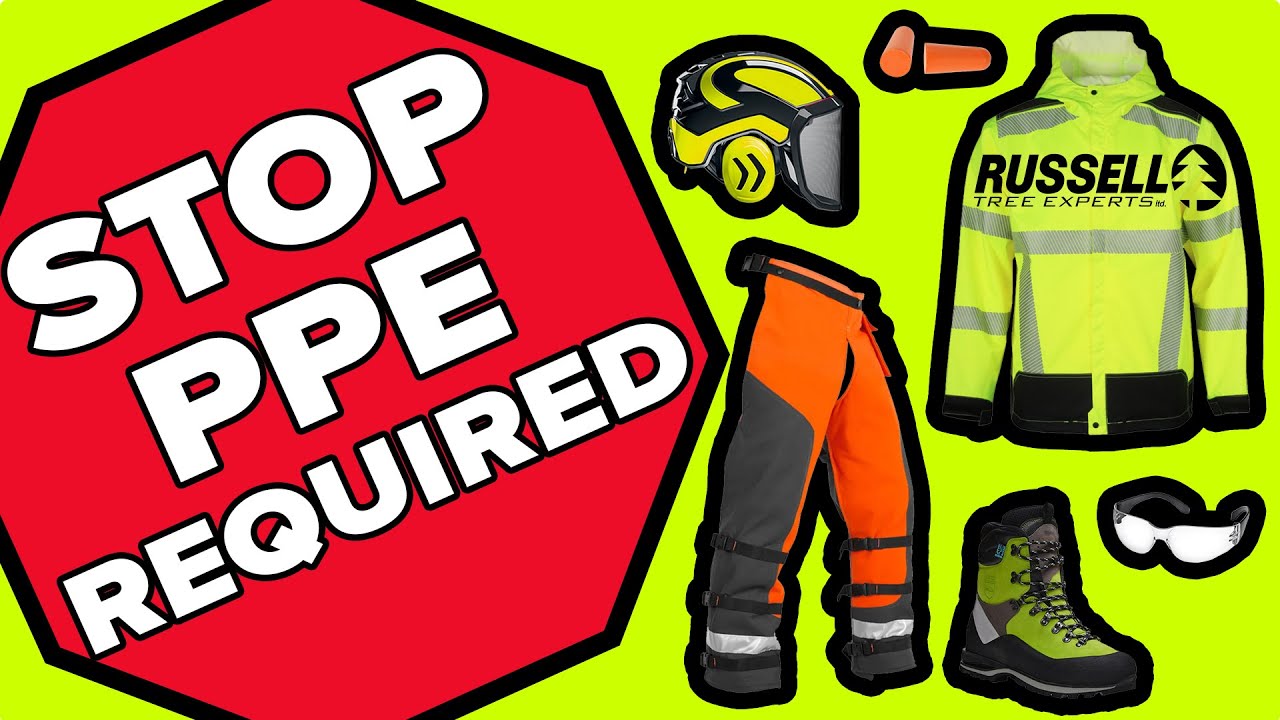
In this video, we are going to be going over proper Personal Protective Equipment, commonly known as PPE. There are 7 mandatory steps to take before you begin any tree work.
Step 1: High Visibility Clothing. The number one cause of death in the tree service industry is being struck by an object or vehicle; that is why high visibility clothing, or hi-vis, must be worn at all times as your outermost layer, regardless of time, location, or weather. There are three different classes of hi-vis clothing and the class of hi-vis you wear is dependent on your work location and time of day.
Class 1 is a yellow or orange hi-vis top that does not feature reflective striping. This is suitable when working in residential areas with a 25 miles per hour or lower speed limit or when consistently working at least 20 feet away from a 35+ miles per hour roadway.
Class 2 is a yellow or orange hi-vis top that features reflective strips on the torso. This is required when you are working within 20 feet of a 35+ miles per hour roadway. It is important to note that if you are working more than 20 feet away from the road but you need to temporarily go near the street to drag brush, drive equipment, and so on, you must still wear a class 2 top. Class 2 supersedes class 1, therefore, Class 2 can be worn in all areas deemed suitable for class 1.
When performing work between dusk and dawn at any work location, a Class 3 top which features reflective strips on the torso and arms in tandem with reflective over-the-calf gaiters must be worn at all times. Class 3 supersedes Classes 1 and 2. Therefore, Class 3 can be worn in all areas deemed suitable for Classes 1 and 2.
When flagging during the day, a class 2 top and reflective gaiters are required. When flagging between dusk and dawn, a class 3 top and reflective gaiters must be worn.
Step 2: Chainsaw Pants and Chainsaw Chaps. Chainsaw pants & chainsaw chaps must meet ASTM F1414 and ASTM F1897 standards. Chainsaw pants are pants with protective cut-retardant material such as Kevlar or ballistic nylon. Chainsaw chaps are sturdy over-the-leg covers also filled with protective cut-retardant material. In either case, both chainsaw pants and chainsaw chaps are designed to reduce the risk or severity of injury to body parts covered by this material in the event of direct contact with the chainsaw chain. When you are operating a chainsaw, you must wear chainsaw pants or chainsaw chaps.
Step 3: Boots. Boots must be worn on the jobsite at all times. Boots must be waterproof and over the ankle. Composite safety toe boots are permitted, but steel toe boots are not permitted.
Step 4: Helmet. You must inspect your helmet daily and your helmet must meet ANSI Z89.1 standards. Examples of issues to look for include, but are not limited to, cracks, chips, holes, structural defects, or missing straps. If your helmet is over five years old or if it has withstood any force or impact, your helmet must be inspected or retired by turning it in to your crew leader or production manager. When you are on a jobsite, your helmet must be worn at all times. Your chinstrap must be fastened and your band adjuster must be adjusted properly.
Step 5: Safety Glasses. When you are on a jobsite, company-approved safety glasses must be worn at all times. You must inspect your safety glasses daily and they must meet ANSI Z87.1 standards. Individuals who require prescription eyeglasses to perform their work duties must ensure their prescription safety glasses comply with ANSI Z87.1 standards.
Step 6: Hearing Protection. Hearing protection must be worn whenever loud noises are present or when mechanized equipment is in use. Acceptable forms of hearing protection include ear plugs or ear muffs.
Step 7: Items Prohibited to Wear. Do not wear jewelry of any sort. This includes, but is not limited to, rings, bracelets, necklaces, watches, and earrings. Do not wear earphones or headphones to listen to music or non-workplace audio. Do not wear non-hi-visibility clothing on the outermost layer of your body. Do not wear damaged, ripped, cracked, faded, worn out, or discolored clothing and PPE.
Following all 7 of these required PPE steps will help to create a safe workplace. Damaged or worn out personal protective equipment will not sufficiently protect you. You must immediately report any damaged PPE to your crew leader or production manager who will arrange for immediate replacement. If you have any questions or concerns regarding your PPE, please contact your crew leader or production manager.
Through our dedication to safety, education, teamwork, and the environment, our mission is to provide the best tree care and arboriculture resources in central Ohio.
Contact Us!
Phone Number: (614) 895-7000
Website: russelltreeexperts.com
Email Address: [email protected]

Информация по комментариям в разработке