RSS was founded in 1925 by Keshav Baliram Hedgewar, a doctor in the city of Nagpur, British India.[
Hedgewar was a political protege of B. S. Moonje, a Tilakite Congressman, Hindu Mahasabha politician and social activist from Nagpur. Moonje had sent Hedgewar to Calcutta to pursue his medical studies and to learn combat techniques from the secret revolutionary societies of the Bengalis. Hedgewar became a member of the Anushilan Samiti, an anti-British revolutionary group, getting into its inner circle. The secretive methods of these societies were eventually used by him in organising the RSS.
After returning to Nagpur, Hedgewar organised anti-British activities through the Kranti Dal (Party of Revolution) and participated in independence activist Tilak's Home Rule campaign in 1918. According to the official RSS history,[31] he came to realise that revolutionary activities alone were not enough to overthrow the British. After reading V. D. Savarkar's Hindutva, published in Nagpur in 1923, and meeting Savarkar in the Ratnagiri prison in 1925, Hedgewar was extremely influenced by him, and he founded the RSS with the objective of strengthening Hindu society.
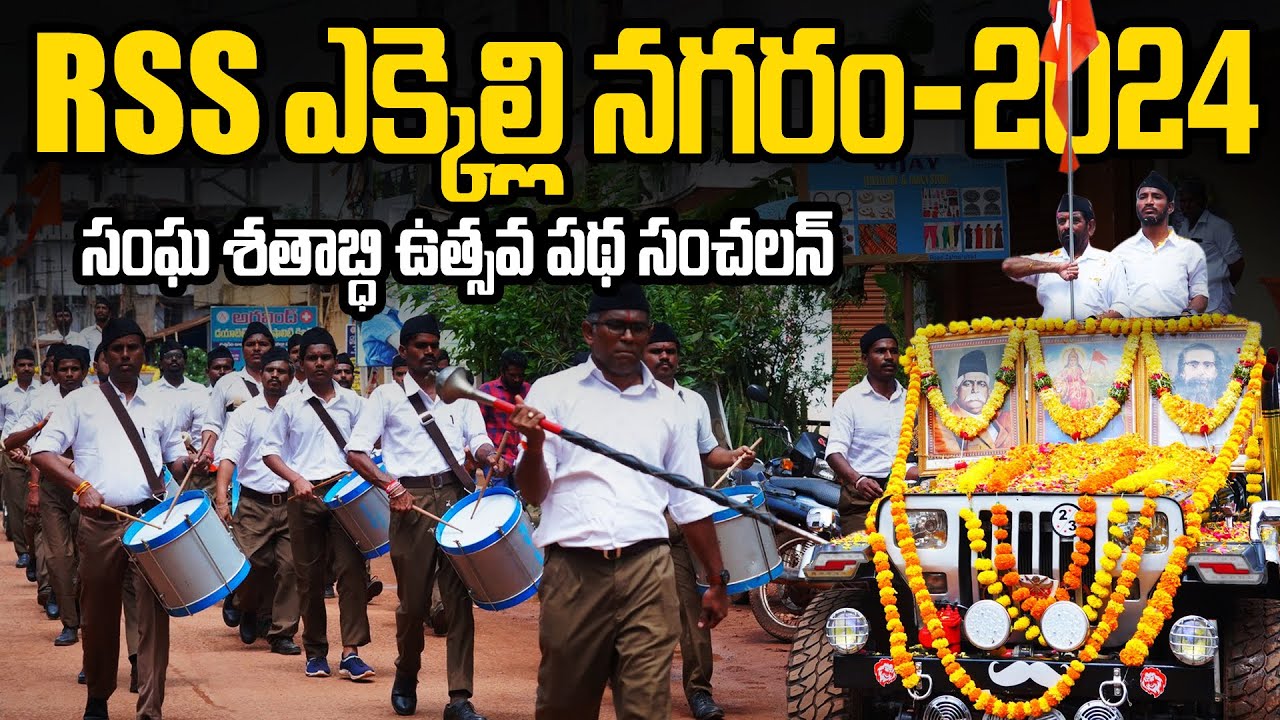
Hedgewar believed that a handful of British were able to rule over the vast country of India because Hindus were disunited, lacked valour (pararkram) and lacked a civic character. He recruited energetic Hindu youth with revolutionary fervour, gave them a uniform of a black forage cap, khaki shirt (later white shirt) and khaki shorts—emulating the uniform of the Indian Imperial Police—and taught them paramilitary techniques with lathi (bamboo staff), sword, javelin, and dagger. Hindu ceremonies and rituals played a large role in the organisation, not so much for religious observance, but to provide awareness of India's glorious past and to bind the members in a religious communion. Hedgewar also held weekly sessions of what he called baudhik (ideological education), consisting of simple questions to the novices concerning the Hindu nation and its history and heroes, especially warrior king Shivaji. The saffron flag of Shivaji, the Bhagwa Dhwaj, was used as the emblem for the new organisation. Its public tasks involved protecting Hindu pilgrims at festivals and confronting Muslim resistance against Hindu processions near mosques.[
Two years into the life of the organisation, in 1927, Hedgewar organised an "Officers' Training Camp" with the objective of forming a corps of key workers, whom he called pracharaks (full-time functionaries or "propagators"). He asked the volunteers to first become "sadhus" (ascetics), renouncing professional and family lives and dedicating their lives to the cause of the RSS. Hedgewar is believed to have embraced the doctrine of renunciation after it had been reinterpreted by nationalists such as Aurobindo. The tradition of renunciation gave the RSS the character of a 'Hindu sect'. Developing a network of shakhas (branches) was the main preoccupation for Hedgewar throughout his career as the RSS chief. The first pracharaks were responsible for establishing as many shakhas as possible, first in Nagpur, then across Maharashtra, and eventually in the rest of India. P. B. Dani was sent to establish a shakha at the Benaras Hindu University; other universities were similarly targeted to recruit new followers among the student population. Three pracharaks went to Punjab: Appaji Joshi to Sialkot, Moreshwar Munje to the DAV College in Rawalpindi and Raja Bhau Paturkar to the DAV College in Lahore. In 1940, Madhavrao Muley was appointed as the prant pracharak (regional head) for Punjab in Lahore.













Информация по комментариям в разработке