“NAUTILUS” – Marine Noise in the ligurian sea: From systematic signal analysis to impact on Marine Species.
The NAUTILUS project brings together experts in marine biology and ecology, geosciences, acoustic signal processing and artificial intelligence to observe and evaluate a major ecological hazard: marine noise, and its impacts on key marine species in coastal and offshore habitats in the Ligurian Sea.
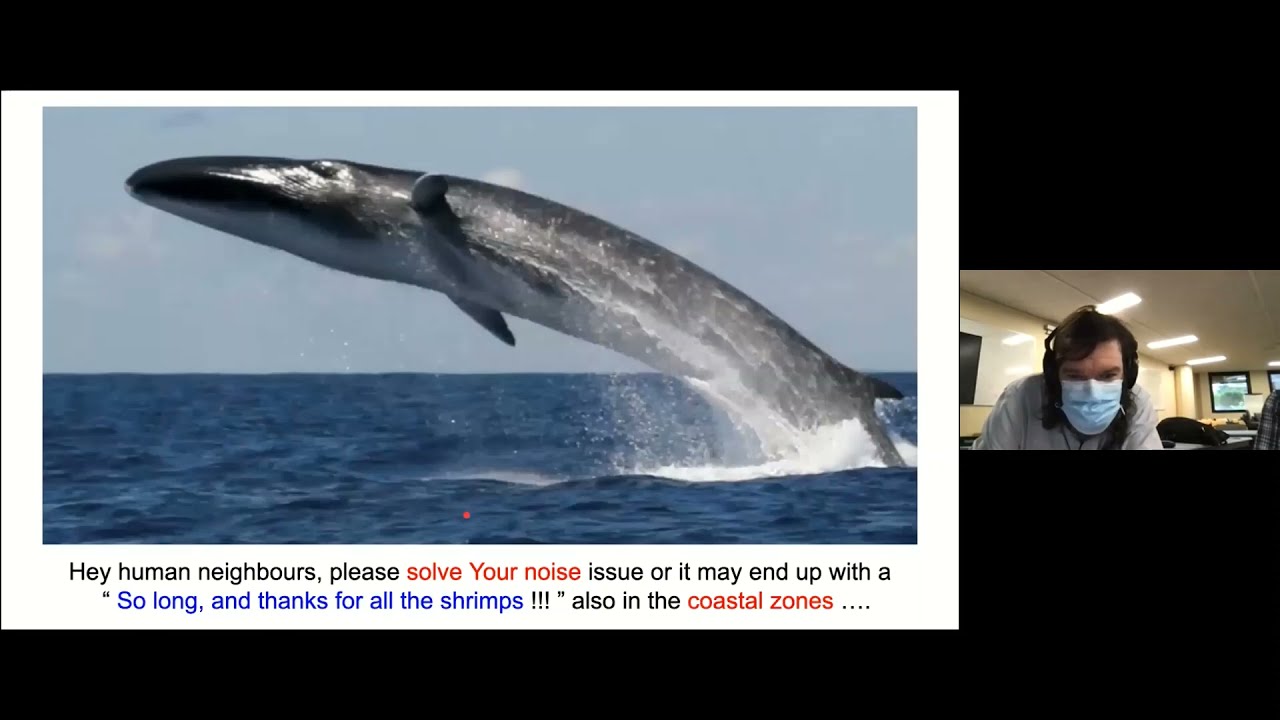
The undersea environment has long been described as a silent world. Research carried out in recent decades, however, has raised a growing awareness about sounds and noises as important components of the marine environment. Marine noise consists of biotic (produced by animals such as fish and mammals), abiotic (e.g., breaking waves, currents, ice breaking), and anthropogenic sounds (e.g., sonar, seismic prospecting, drilling, recreational and fishing vessels, shipping). The sum of these noise sources is referred to as the soundscape. The rise of global urbanization, industrialization and trading has resulted in a dramatic increase in anthropogenic noise, recognized as a major global pollutant in the 21st century. Anthropogenic noise may impact a large variety of marine
animal species, with consequences ranging from no effect to major repercussions (e.g., behavioral alterations or stress induction, negatively impacted co-specific interactions, survival and reproduction) or even immediate death. The NAUTILUS project builds upon a multidisciplinary
collaboration among researchers in marine biology and ecology, geosciences and acoustic signal analysis to provide essential information on the soundscape in the Ligurian Sea and its impacts on marine organisms that play key roles in the local marine ecosystems (i.e., bony fish and cetaceans).
The project started recently, and in the summer 2019, we deployed two types of instruments (some of which are usually used for earthquake recording), offshore Villefranche-sur-Mer, Saint-Jean-CapFerrat and Eze: short-term listening and high frequency hydrophones, and long-term listening, lower frequency hydrophones. These instruments recorded the soundscape (i.e., acoustic waves) for the first time in the Ligurian Sea, at sites that were Natura 2000 labeled by the EU. Meanwhile, we collected juvenile sparid fish data and samples in the three sites. Based on these data and on earlier seismological datasets (acoustic and seismic waves), we are currently developing machine-learningbased algorithms to automatically extract the signal information from marine noise and marine
mammal activity in the Ligurian Sea (along with other type of relevant information in the recordings). This automatic extraction should help us to discriminate, estimate and map the various sources of marine noise in the Ligurian Sea, and examine their local impact on key species.









Информация по комментариям в разработке