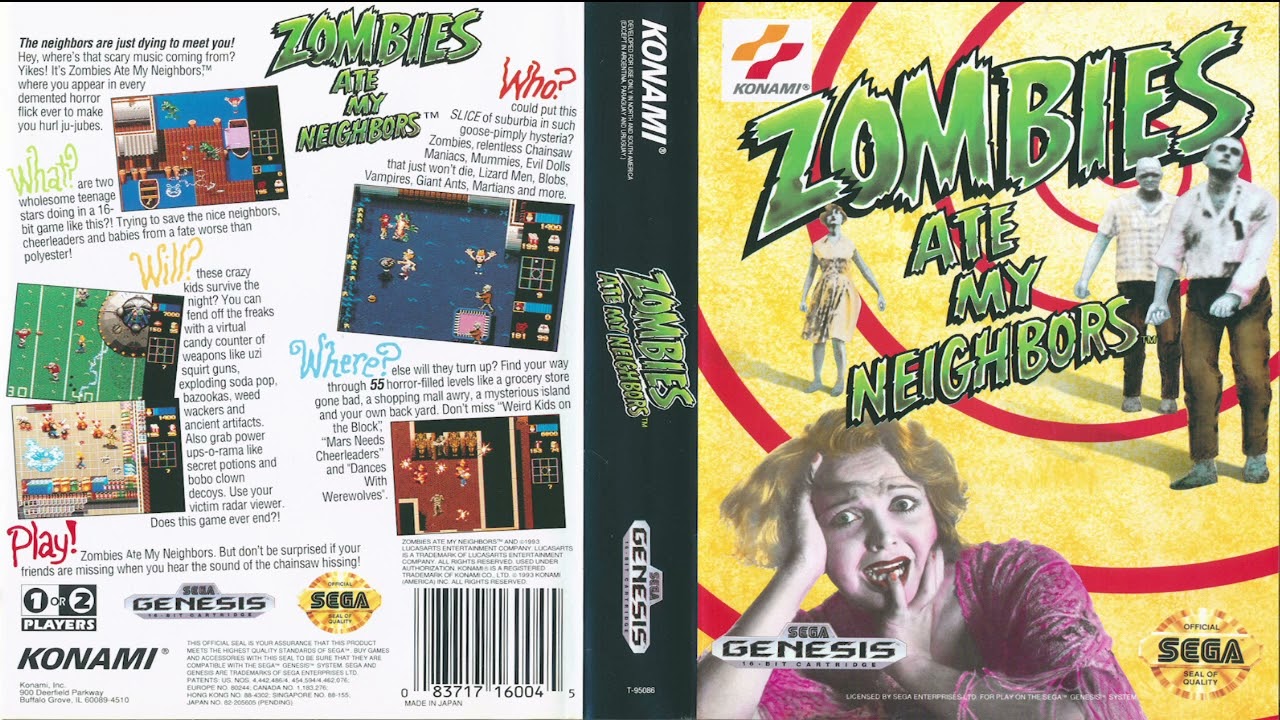
(AKA Zombies)
Release date: Jul 21st, 1993
Original Composer: Joe McDermott, Eric Swanson
1. Konami Logo
2. Weird Kids on the Block
3. Zombie Panic
4. Stage Clear
5. Evening of the Undead
6. No Assembly Required
7. Pyramid of Fear
8. Mars Needs Cheerleaders
9. Curse of the Tongue
10. Mushroom Men
11. Boss Battle
12. Titanic Toddler
13. Pandora's Box
14. Player Death
15. Unused (Sound Code 01)
*The Making of Zombies Ate My Neighbors for Sega Genesis & Mega Drive*
In the early 1990s, LucasArts—best known for point-and-click adventures like Monkey Island*—ventured into console action games with a wild idea born from late-night tinkering. Lead designer Mike Ebert, an artist-turned-designer who'd contributed to *Maniac Mansion*'s NES port and *The Secret of Monkey Island*, was experimenting in his spare time with a custom bitmap graphics engine coded by programmer Ed Kilham. What started as a simple side-scrolling demo—players saving people from chainsaw-wielding maniacs in a house—quickly evolved. Inspired by arcade classics *Robotron: 2084 and *Smash TV*, Ebert pivoted to a top-down, 3/4-view run-and-gun shooter. The hook? Rescue helpless suburbanites (the "neighbors") from hordes of B-movie monsters while managing scarce ammo and keys in sprawling, destructible levels.
This was 1992, and LucasArts greenlit the project as a low-budget experiment at Skywalker Ranch. Ebert designed all 56 levels himself, drawing from 1950s schlock horror (*The Blob*, Invasion of the Saucer Men*) and slashers like *Friday the 13th and *Texas Chain Saw Massacre*. Zombies melt from holy water pistols; werewolves crumple to silverware; vampires flee crucifixes. Levels parodied films: "Dances with Werewolves," "Seven Meals for Seven Brothers" (zombie dinner party), "Chopping Mall." Neighbors—cheerleaders, babies, dogs—could be scooped up but died gruesomely if ignored, slashing your max rescues per stage. Resource hoarding was key: Blow doors with bazookas early, stockpile soda grenades for UFOs later.
The core team was lean: Ebert (design/art), Kilham (engine), early involvement from Toshi Morita, and later lead programmer Dean Sharpe. Artists like Collette Michaud handled sprites; Joe McDermott composed the soundtrack. Published by Konami (LucasArts lacked console muscle), development prioritized SNES first—256-pixel width, Mode 7 radar overlay toggled by L/R buttons. But Sega loomed: Genesis/Mega Drive version kicked off six months in, once SNES prototypes shone. Konami demanded both platforms; LucasArts adapted internally, no external port like Imagineering (despite rumors).
SNES built the foundation: Smooth-scrolling mazes with interactive hedges (melted by weed whackers), fire extinguishers freezing foes, random potion effects (Astro-Zeke flight!). Passwords tracked levels/neighbors (no battery save—too pricey). Ebert hid secrets: Flamethrower in Level 22 (secret path via Level 16 key), added impulsively while awaiting Konami approval. Hidden warps led to bonuses like "Monsters Among Us"—a LucasArts office crawl with cameos: Steve Purcell as Indy, the Day of the Tentacle purple tentacle, even George Lucas (sneaked in sans permission). "I don’t think we were actually supposed to put George Lucas in the game," Ebert chuckled.
Genesis demanded tweaks for 320-pixel width and YM2612 sound. No Mode 7 meant a permanent sidebar HUD: Radar, health, ammo—clean but shrinking playfield. Sprites compacted horizontally, looking "thin and grainy"; floors turned dotty vs. SNES textures. No transparencies forced the bar's bland look—no zombie-themed flair. Sound dipped: Abrasive FX (maniacs like "Al Pacino yelling 'Woo Ha!'"), music ports varied (catchy but less punchy than SNES's kitsch-spooky loops). Flamethrower? Cut—perhaps too hidden or space-crunch. Controls felt stiffer; two-player co-op (Zeke/Julie sharing ammo) shone but split-screen was axed for framerate. Still, sidebar eased monitoring vs. SNES toggle.
Challenges abounded. Isolated at the Ranch, the unkempt team ("we slept there") faced minimal oversight but scarce testing—two kid sessions. Early levels hooked; later ones spiked (e.g., Snakeoids post-Level 17 sans carryover). Europe neutered it: "Zombies" title, axes replace chainsaws (UK ban), censored names. Nintendo: Crucifixes to '+', blood purple, severed heads to creepy dolls. Konami's deal starved royalties: "I wish Lucasfilm had published it themselves."
McDermott's music captured '50s reverb-guitar dread (*Creature Features*) via SNES cart and Ensoniq sampler—short loops, burpy samples ("Uh oh!"). Genesis ports held up decently but lost polish. Art popped: Goofy yet menacing sprites, destructible worlds.
SNES dropped June 1993; Genesis September. Rave reviews—"best I've worked on," Ebert beamed. Power Unlimited lauded co-op but noted Genesis' "more difficult controls, worse graphics."

Информация по комментариям в разработке