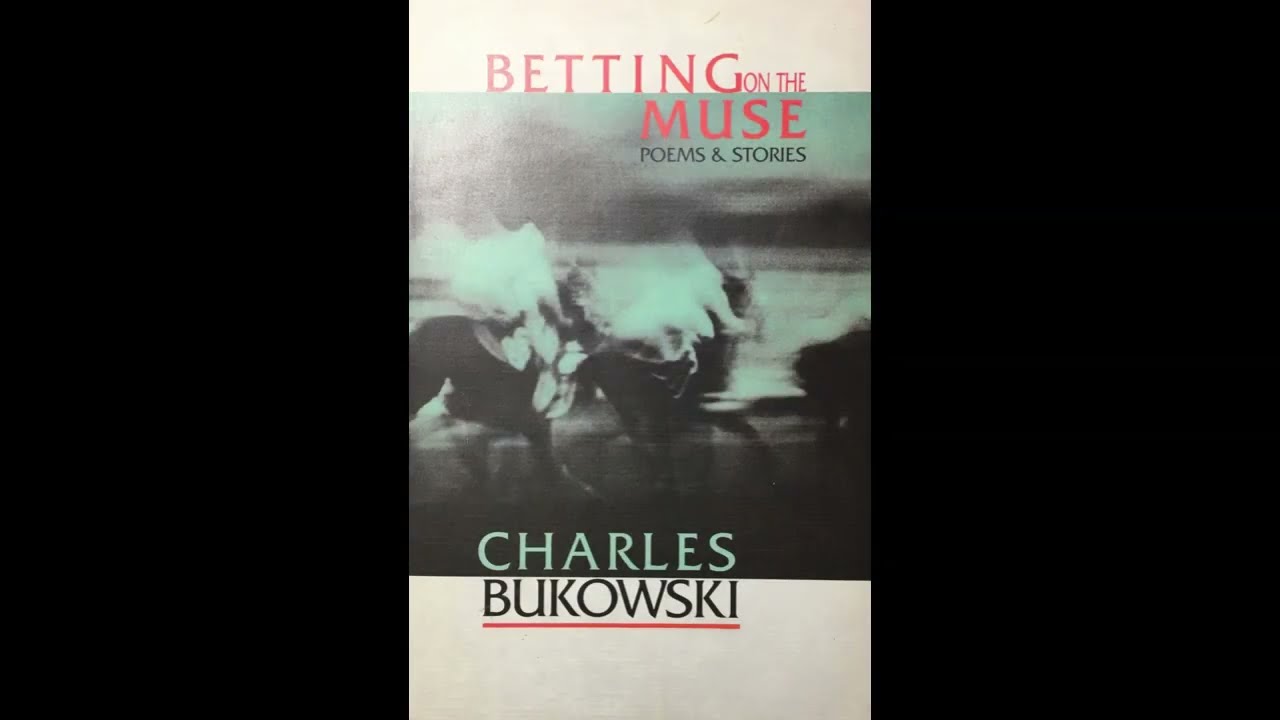
In Betting on the Muse: Poems & Stories, Charles Bukowski presents a raw, unflinching look at life through his signature lens of gritty realism, exploring themes of despair, isolation, and the underbelly of society. The collection is a powerful blend of poems and stories that reflect Bukowski’s deep understanding of the human condition, often through the eyes of characters who live on the fringes of society, struggling with their own personal demons. His writing is marked by its unpretentious language, irreverence, and a kind of brutal honesty that challenges the norms of conventional poetry and storytelling.
The poems in the collection are often sparse, direct, and sometimes disjointed, reflecting the chaos of the world Bukowski describes. There is little ornamentation or sentimentality in his work, and the lack of polish feels intentional, enhancing the authenticity of the emotions he conveys. Bukowski often portrays an internal struggle, as his characters wrestle with their own failures, vices, and the disappointments that come from attempting to live authentically in a world that often seems indifferent. The work reveals a recurring preoccupation with alcohol, sex, and the search for meaning in a seemingly indifferent world. Bukowski is not afraid to delve into the messiness of life, showing that beauty and truth can exist even in the darkest corners of human experience.
In the stories, Bukowski’s characters are often disillusioned men, far removed from idealized depictions of heroism or virtue. Instead, they are flawed, sometimes pathetic, but undeniably human. They struggle with addiction, loneliness, and an existential malaise, yet they persist, often finding solace in small, fleeting pleasures. These characters may seem cynical or nihilistic at first glance, but upon closer inspection, their resilience becomes evident. Bukowski’s writing shows that even in the most desolate lives, there are moments of grace, however brief they may be. His stories often avoid moralizing, focusing instead on the lived experience of his characters, who are caught in the web of their own desires and shortcomings.
What makes Betting on the Muse: Poems & Stories stand out is its unapologetic approach to depicting the rawness of existence. Bukowski’s ability to capture the humor and sadness of life simultaneously is one of the hallmarks of his work. There is a kind of bleakness in his portrayal of the world, but there is also an irreverence that prevents it from becoming overwhelmingly tragic. His characters may be defeated by life, but they continue to push forward in a stubborn, almost defiant manner. In many ways, Bukowski’s writing reflects the idea that survival, in its most basic form, is a kind of victory in itself.
The collection is also a reflection of Bukowski’s own struggle with the act of writing and his relationship with the creative process. Throughout the poems and stories, there are self-referential moments that explore Bukowski’s role as both an observer of life and a participant in it. His writing often reflects an ambivalence toward success and fame, as if he is fully aware of the absurdity of his position as a literary figure. Bukowski’s frequent exploration of the difficulty of writing, the frustrations of being a writer, and the compromises that come with artistic success offer a meta-commentary on the nature of creativity itself.
Bukowski’s relationship with women is another central theme in Betting on the Muse: Poems & Stories. His depictions of women are often controversial, at times objectifying, yet they are also complicated and multifaceted. The women in his work are rarely idealized, and Bukowski’s portrayal of their sexuality and desires can be stark and uncomfortable. However, this rawness is part of what makes his work so powerful; he does not shy away from exploring uncomfortable truths about human nature, including the ways in which gender, power, and desire intersect. His depictions of women are often less about idealization and more about the messiness of relationships and the ways people seek connection, sometimes in unhealthy or destructive ways.
At its core, Betting on the Muse: Poems & Stories is a celebration of Bukowski’s unique voice, one that has earned him a devoted following among readers who appreciate his unvarnished, unapologetic approach to life and literature. The collection reveals Bukowski’s ability to find beauty in the mundane and to uncover the profound within the ordinary. His characters may be broken, flawed, and lost, but they are also undeniably real. Through his exploration of the darker aspects of human existence, Bukowski invites readers to confront the complexity of life, to laugh in the face of its absurdities, and to find meaning in the most unlikely places.

Информация по комментариям в разработке