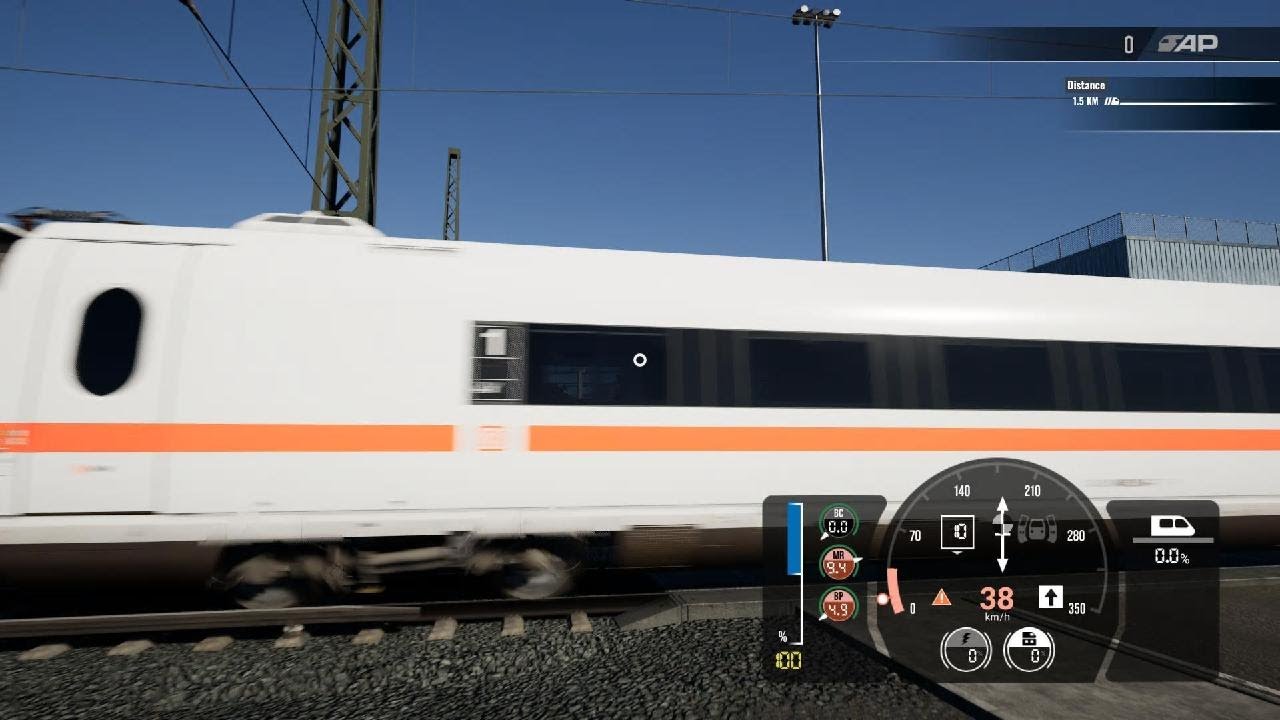
The ICE 3 is one of Germany’s most advanced high-speed trains, part of the InterCity Express (ICE) family operated by Deutsche Bahn (DB). It’s known for its sleek design, high speed, and use in both domestic and international services.
🚄 What is the ICE 3?
The ICE 3 (officially: Baureihe 403/406/407) is a third-generation high-speed train in the German ICE series. It was designed for speeds up to 330 km/h (205 mph), though it typically operates at 300 km/h (186 mph) in regular service.
It was introduced to:
Handle increased demand for high-speed rail.
Run on newly built high-speed lines (like Cologne–Frankfurt).
Be lighter and faster than previous generations.
Operate across borders (especially the ICE 3M, or “Multi-system” version).
⚙️ How the ICE 3 Moves (Power + Mechanics)
🔌 Power Source: Electric
The ICE 3 is electric-powered, drawing electricity from overhead catenary lines using pantographs (devices mounted on top of the train).
In Germany, it runs on 15 kV AC / 16.7 Hz, but multi-system versions can also operate on other countries’ voltages (e.g., 25 kV AC or 3 kV DC in France, Belgium, the Netherlands).
🚂 Traction System
Unlike earlier trains with a separate locomotive at the front, the ICE 3 uses a distributed traction system:
Electric motors are located underneath several carriages, not just in a locomotive.
This means better acceleration, less wear on tracks, and more space for passengers.
⚡ Electric Motors
Motors convert electric energy from the overhead wires into mechanical energy.
The power is managed by transformers and inverters to adjust voltage and frequency.
Each powered bogie (wheelset assembly) contributes to pushing the train forward.
🛤️ Key Technical Features
Maximum speed: 330 km/h (design), 300 km/h (in service)
Train length: Around 200 meters (for an 8-car unit)
Power output: Around 8,000 kW (10,700 hp)
Weight: ~400 tons
Seating: About 400–460 passengers depending on the version
📜 History of the ICE 3
📅 Development
In the 1990s, DB and Siemens began designing a lighter, faster train for new high-speed routes.
Main goals: higher acceleration, border-crossing ability, modern passenger experience.
🚄 ICE 3 Generations
There are several types:
ICE 3 (BR 403) – For domestic use (Germany only)
ICE 3M (BR 406) – "Multi-system" for international use (Belgium, Netherlands, France)
ICE 3 Velaro D (BR 407) – Latest version, based on Siemens Velaro platform, meets updated European standards
📍 Key Milestones
1999: First ICE 3 enters service.
2002: Full deployment on the Cologne–Frankfurt high-speed line.
2004: Expansion to international routes like Frankfurt–Amsterdam and Frankfurt–Brussels.
2013: Velaro D (BR 407) begins entering service.
🌍 Where You Might See It
Germany: Berlin, Frankfurt, Cologne, Munich, Stuttgart, etc.
International:
Netherlands (Amsterdam)
Belgium (Brussels)
France (Paris, via LGV Est)
🧳 Passenger Experience
First and Second Class
Onboard Wi-Fi, power outlets, quiet zones, family areas
Onboard restaurant (Bordrestaurant) or bistro (Bordbistro)
🚧 Notable Incidents & Challenges
Technical issues delayed Velaro D’s entry into service.
In the 2000s, a few cases of axle cracks led to temporary inspections and changes in maintenance routines.
Still considered among the most reliable high-speed trains in Europe today.
🧠 Summary
Feature Detail
Type High-speed EMU (electric multiple unit)
Max Speed 300–330 km/h
Power Source Overhead electric wires (catenary)
Traction Distributed electric motors (underfloor)
Introduced 1999
Built By Siemens & Bombardier
Used In Germany + Netherlands, Belgium, France.

Информация по комментариям в разработке