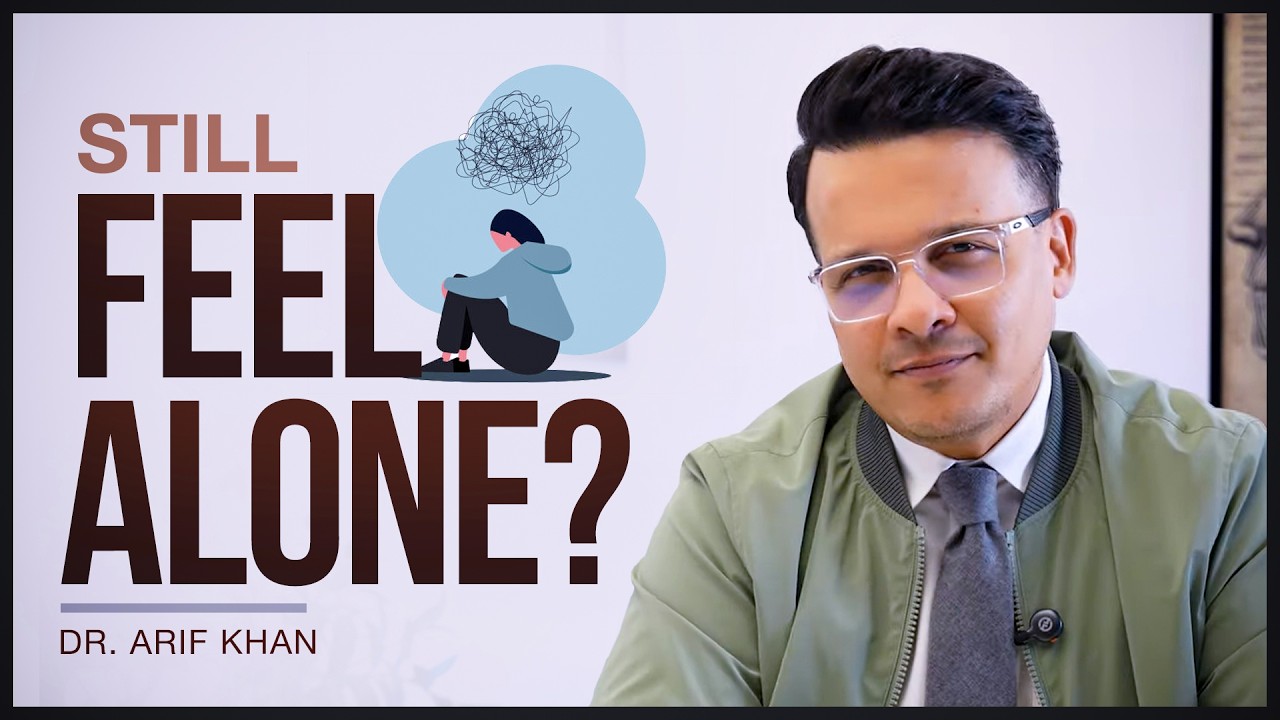
There is a quiet form of loneliness that many people experience but rarely talk about. You can be constantly connected, surrounded by messages, notifications, and social activity, yet still feel unseen. In this deeply insightful episode of The Brain Project, Dr. Arif Khan explains why modern loneliness feels different and why it can quietly affect your brain, emotions, and sense of safety. Drawing from neuroscience, he reveals how the brain interprets social disconnection as a real threat and why even subtle signals like unanswered messages or passive interactions can keep your nervous system on edge. If you have ever wondered why you feel socially exhausted yet still crave deeper connection, this video will help you understand what your brain is truly experiencing.
Dr. Arif Khan breaks down the science behind loneliness through the role of the anterior cingulate cortex (ACC), the brain region responsible for detecting both physical and social pain. Using powerful metaphors and relatable examples, he shows how modern life often mimics connection without fully delivering it, leaving the brain in a constant state of alertness. Most importantly, this video reminds you that loneliness is not a personal failure. It is evidence that your brain is still wired for belonging.
Whether you are a student, working professional, creator, or someone simply trying to understand your emotional world better, this episode offers clarity, validation, and a new perspective on connection in the digital age.
⏱️ Timestamps
0:00 The strange loneliness of modern life
0:35 Why you can feel invisible despite being connected
1:06 Social exhaustion vs the deep craving for connection
1:29 The brain mechanism behind loneliness: Anterior Cingulate Cortex (ACC)
1:49 Physical pain and social rejection activate the same brain regions
2:26 Why modern life keeps the brain’s alarm constantly triggered
2:47 How repeated social signals make the brain more reactive
2:58 When loneliness becomes a background condition
3:14 Living in a world that mimics connection without completing it
3:39 Loneliness means your brain still cares about belonging
3:49 Why real connection needs faces, voices, time, and presence
4:03 A reflective question: When do you feel the quiet kind of loneliness?
4:18 Being seen can quiet the brain’s alarm and begin healing
What You Will Learn
• Why modern loneliness feels more intense than ever
• The neuroscience behind social pain
• How the anterior cingulate cortex shapes your emotional experience
• The hidden impact of digital interactions on the brain
• Why subtle rejection signals keep your nervous system alert
• The difference between being alone and feeling invisible
• How your brain continuously scans for belonging
• Why loneliness is not a weakness or personality flaw
• What real connection requires for emotional safety
• A healthier way to understand your need for connection
If this video resonated with you, consider sharing it with someone who might need to hear this message. Sometimes understanding the brain is the first step toward healing.
🎓 About Dr. Arif Khan
Dr. Arif Khan is a British Board-certified Consultant Pediatric Neurologist with extensive experience in brain health, neurodevelopment, and cognitive science. He has trained in top-tier UK hospitals, including:
🏥 Royal Manchester Children’s Hospital
🏥 Royal Aberdeen Children's Hospital
🏥 University Hospitals of Leicester
🏥 Queens Medical Centre, Nottingham
He has led complex epilepsy programs, vagal nerve stimulation therapy, and ketogenic diet services. In 2015, he moved to Dubai, where he became the Head of Children’s Services at the American Center for Psychiatry and Neurology before founding Neuropedia, the region’s first pediatric neuroscience center.
📢 Follow Dr. Arif Khan for More Expert Insights:
🌐 Website: https://drarifkhan.com/
📲 Stay Connected on Social Media:
🔹 Instagram: / dr.arif.khan
🔹 Facebook: / dr.arif.khanfb
🔹 LinkedIn: / dr-arif-khan-850533a
modern loneliness, neuroscience of loneliness, social isolation brain, anterior cingulate cortex loneliness, why we feel lonely, brain and social rejection, psychology of loneliness, digital age loneliness, emotional connection neuroscience, social pain brain, mental health awareness, brain project dr arif khan, feeling invisible psychology, human connection science, loneliness explained, neural basis of belonging, emotional safety brain, effects of social media on brain, loneliness psychology, how the brain processes rejection
#Loneliness, #Neuroscience, #MentalHealth, #HumanConnection, #Psychology, #BrainHealth, #SocialConnection, #EmotionalWellbeing, #DigitalAge, #SelfAwareness, #DrArifKhan, #TheBrainProject, #MentalHealthMatters, #PsychologyFacts, #EmotionalHealth, #BrainScience, #Belonging, #SocialIsolation, #Mindfulness, #InnerHealing














Информация по комментариям в разработке