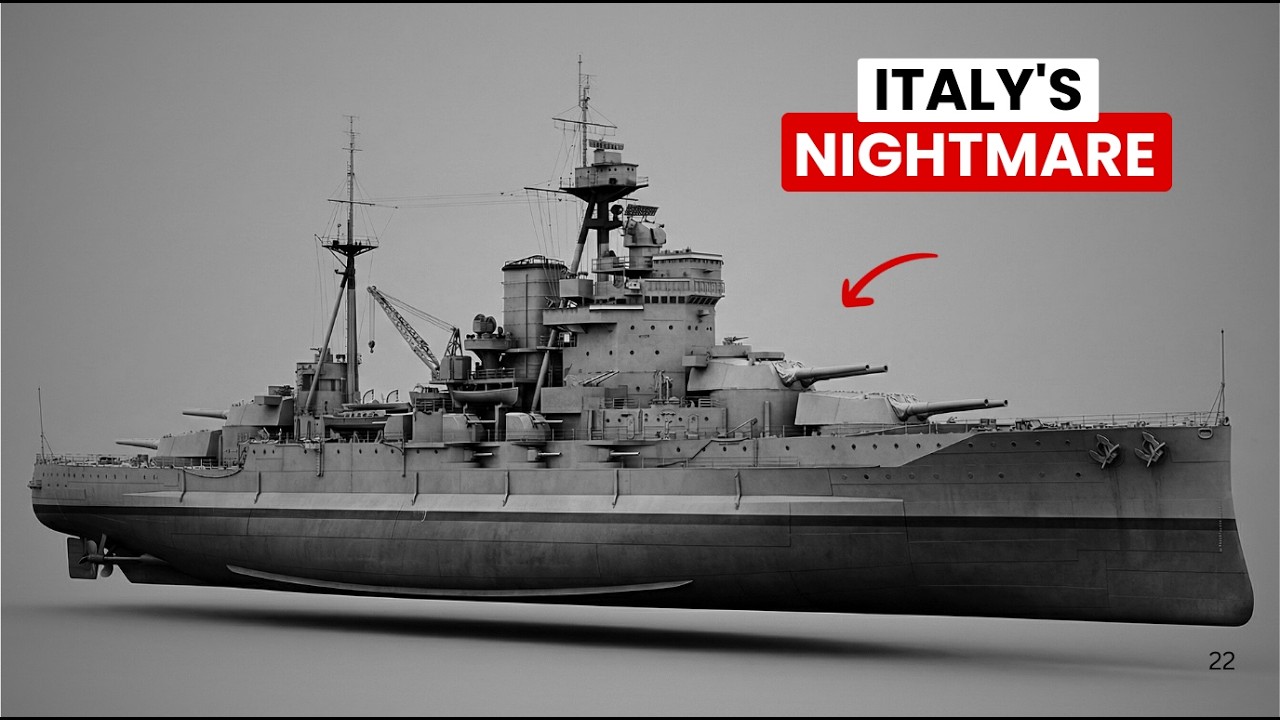
When Italy entered World War Two in June 1940, the Regia Marina outnumbered Britain's Mediterranean Fleet two to one in every surface category. Italy's newest battleships displaced over 40,000 tonnes and could exceed 30 knots. Britain's answer was HMS Warspite, a battleship launched in 1913, rebuilt for one-third the cost of a new capital ship, and commanded by Admiral Andrew Cunningham, the most aggressive flag officer of the war.
At the Battle of Calabria on 9 July 1940, Warspite scored one of the longest-range battleship gunnery hits in recorded history, striking the Italian battleship Giulio Cesare at approximately 26,000 yards. The Italian fleet retreated and never recovered its confidence. At Cape Matapan on 28-29 March 1941, Warspite helped destroy three Italian heavy cruisers and two destroyers in a devastating night action. British losses: three men killed.
By the war's end, HMS Warspite held 15 battle honours, more than any individual warship in Royal Navy history. She fought at Jutland, Narvik, Calabria, Matapan, Crete, Salerno, and Normandy. She absorbed bombs, guided missiles, and mines. She was never sunk by enemy action. When they finally towed her to the breakers in 1947, she broke free in a storm and beached herself on the Cornish coast. It took five years to cut her apart.
This is the story of how a rebuilt World War One battleship, costing £2.36 million to modernise, outfought warships that cost three times as much to build new.
Topics covered: HMS Warspite, Queen Elizabeth-class battleship, Battle of Calabria, Battle of Cape Matapan, Admiral Cunningham, Regia Marina, Italian Navy, Mediterranean Fleet, 15-inch naval guns, Taranto, Bardia, King George V class, Littorio class, naval gunnery, WWII Mediterranean, British naval history
Информация по комментариям в разработке