The development of the tank during World War I was not born out of a desire for mechanical glory, but out of a desperate, tragic necessity. It was an industrial response to an unprecedented human catastrophe. By 1915, the war on the Western Front had frozen into a paralyzing stalemate. The combination of entrenched defenses, razor-sharp barbed wire, and the devastating efficiency of the machine gun had created a "No Man's Land" where any attempt to advance resulted in unimaginable loss of life.
Thousands of young men were cut down in seconds trying to cross a few hundred yards of mud. The tank was conceived as a way to break this horrific deadlock and, hopefully, spare lives that were being spent at a terrifying rate.
The "Landship" Concept
The initial idea, pushed forward in Britain by visionaries who saw the futility of current tactics, was essentially a "landship." They needed a vehicle capable of crushing wire obstacles, crossing wide trenches, and shielding its crew from small-arms fire, all while carrying heavy weaponry to suppress enemy defenses.
The project was shrouded in intense secrecy. To disguise their true purpose during transport, the prototype vehicles were labeled as mobile water carriers for the troops in Mesopotamia. The workers began calling them "tanks," and the name stuck.
The Reality for the Crews
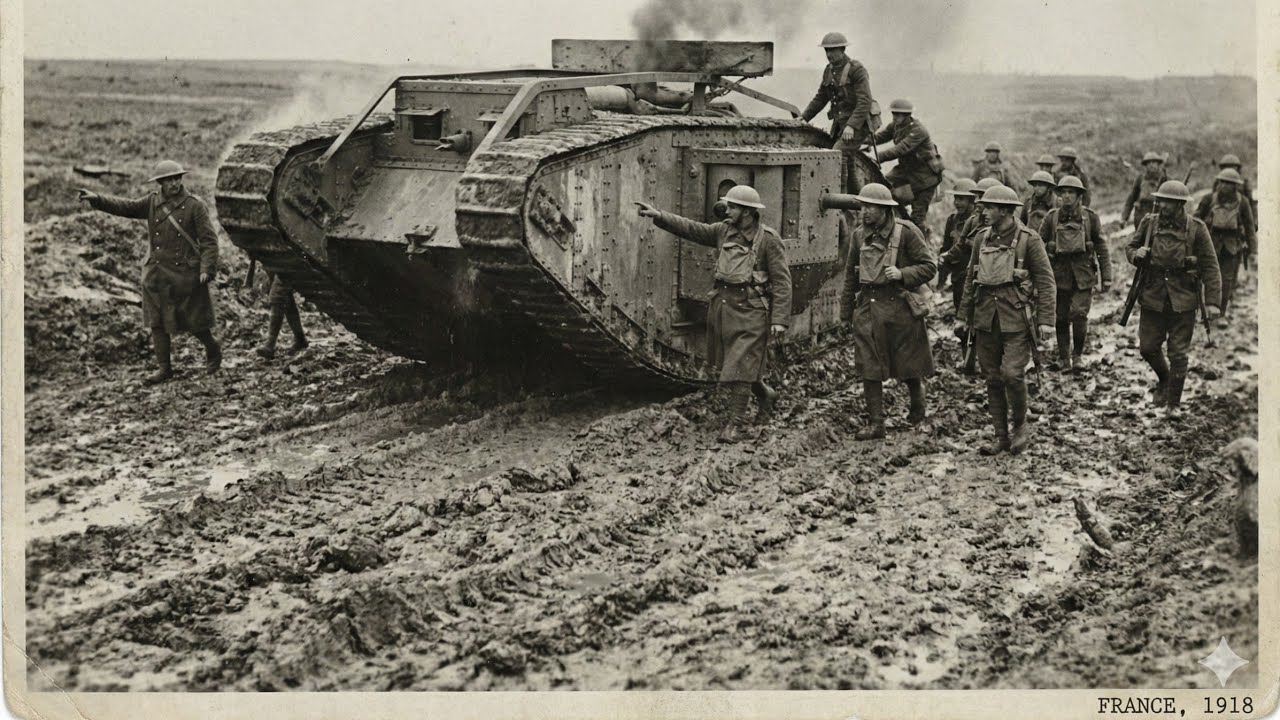
It is vital to remember the immense courage of the very first tank crews. When the British Mark I tanks were first deployed at the Battle of the Somme in September 1916, they were experimental, unreliable beasts.
Conditions inside these early iron boxes were hellish. The engine sat in the middle of the crew compartment, generating unbearable heat and deafening noise. Ventilation was almost non-existent, filling the air with choking exhaust fumes and cordite smoke from the guns. The crews, often numbering eight men, worked in semi-darkness, battered and bruised as the vehicle lurched over the cratered battlefields.
Furthermore, they were prime targets for German artillery. If a tank was hit, escape was difficult, and the risk of fire was a constant terror. The bravery required to climb into these untested machines and drive them toward the enemy line is humbling to consider.
Evolution Under Fire
The first tanks were far from perfect. Many broke down mechanically or became bogged down in the deep mud before even reaching the front lines. Yet, the psychological impact on the exhausted German troops facing them was profound, and they proved that the trench lines could be breached.
Throughout the war, the designs evolved rapidly based on the hard lessons learned in blood. The British developed the more reliable Mark IV and V, deployed effectively at the Battle of Cambrai in 1917. Meanwhile, the French introduced the Renault FT, a smaller, faster, two-man tank with a fully rotating turret—a revolutionary design that established the blueprint for almost every tank built since.
A Legacy Forged in Sorrow
The tank did not single-handedly win the war, but it was a crucial factor in breaking the stalemate that had claimed so many lives. It changed the face of warfare forever, shifting the balance from static defense back toward mobility.
Looking back at these early steel behemoths, we must look past the machinery and see the human beings. We remember the infantry, desperate for any relief from the slaughter of the trenches. We remember the tank crews who endured unimaginable hardships inside their vehicles. And we remember the countless souls on all sides who perished in the industrial nightmare of the Great War.
The development of the tank stands as a somber testament to human ingenuity pushed to its limits by the tragic necessities of a catastrophic conflict.
#WWI #WorldWar1 #TheGreatWar #History #MilitaryHistory #Documentary #WarHistory
#LestWeForget #Remembrance #19141918 #Soldiers #HistoricalFacts #Somme #Cambrai
#FørsteVerdenskrig #Historie #Krigshistorie #Kampvogn
#WWI #Landship #TankHistory #TheGreatWar #WorldWar1 #BritishTanks #MilitaryHistory #LestWeForget #TrenchWarfare #History #WarDocumentary #MarkIV #19141918

Информация по комментариям в разработке