10 Best Pet Frogs for Beginners
1. Horned Frogs (Ceratophrys sp.)
Also known as the Pacman frog or the Argentine horned frog, these are a large ground-dwelling species that love to burrow into soil or moss. They are commonly sold in a variety of colour morphs, such as ‘Albino’, ‘Tri-colour' or ‘Fantasy'. Aside from lighting for an albino, the care is exactly the same across these variations.
When fully grown, Pacman frogs can grow to around 8 inches in length and are generally feisty, but they can be held from behind once you get used to picking them up. The Pacman frog is great for beginners, as their environment is easy to set up and they have a simple diet.
2. Gray Tree Frogs (Hyla chrysoscelis)
Gray tree frogs are small tree-dwelling frogs commonly found in North America and Canada. They are the smallest arboreal frog on this list and probably the quickest too.
A gray tree frog is a little difficult to catch, and handling them can be stressful for the frog, so they aren't the most interactive pet. However, due to their size, they can be housed comfortably in a relatively small enclosure, making them a great feature or decorative pet.
The minimum size of a terrarium for one or two frogs is only around 45 x 45 x 60 cm. This, coupled with the recent advances in bioactive enclosures, means that you could have a fully living tropical enclosure in a glass terrarium anywhere in the house.
3. Dart Frogs (Dendrobates sp.)
Dart frogs are small terrestrial frogs, also commonly known as poison arrow frogs. There are many different species in a range of fantastic colours, from bright gold to deep blue, green or even red.
These little frogs will climb a little but need floor space more than they need height, making them another great option for a compact enclosure. Dart frogs thrive in a live enclosure with roots, plants and a small body of water, making them a great choice when setting up a bioactive terrarium.
4. Red-eyed Tree Frogs (Agalychnis callidryas)
The red-eyed tree frog is an iconic tree frog. With bright green, yellow and blue bodies and vibrant red eyes, these are spectacular pets. This species grows fairly large, so we would recommend a 45 x 45 x 60 cm terrarium for one to two frogs.
They need humidity, warmth and UVB, and they can be quite sensitive, but the reward is worth the work. Though they are slow through most of the day, we see ours light up whenever it's meal time or when they are sprayed.
As with the other colourful frogs on this list, red-eyed tree frogs look magnificent when paired with a live enclosure and jungle plants. They are one of the most asked-for pet frogs in the store, and as long as you have the set-up perfect from day one, there is no reason they would not make a great pet frog for beginners.
5. White's Tree Frogs (Litoria caerulea)
The White’s tree frog is the largest arboreal frog on this list. They are normally light blue or green with white underbellies and can get up to 5 inches in length. They are quite a lazy frog, so they can be caught and handled with relative ease.
This, coupled with their large size, makes them one of the easiest to find and most handleable on the list. We sell more White’s tree frogs than most other arboreal frogs, and they are our most popular amphibian in store for families.
6. Amazon Milk Frogs (Trachycephalus resinifictrix)
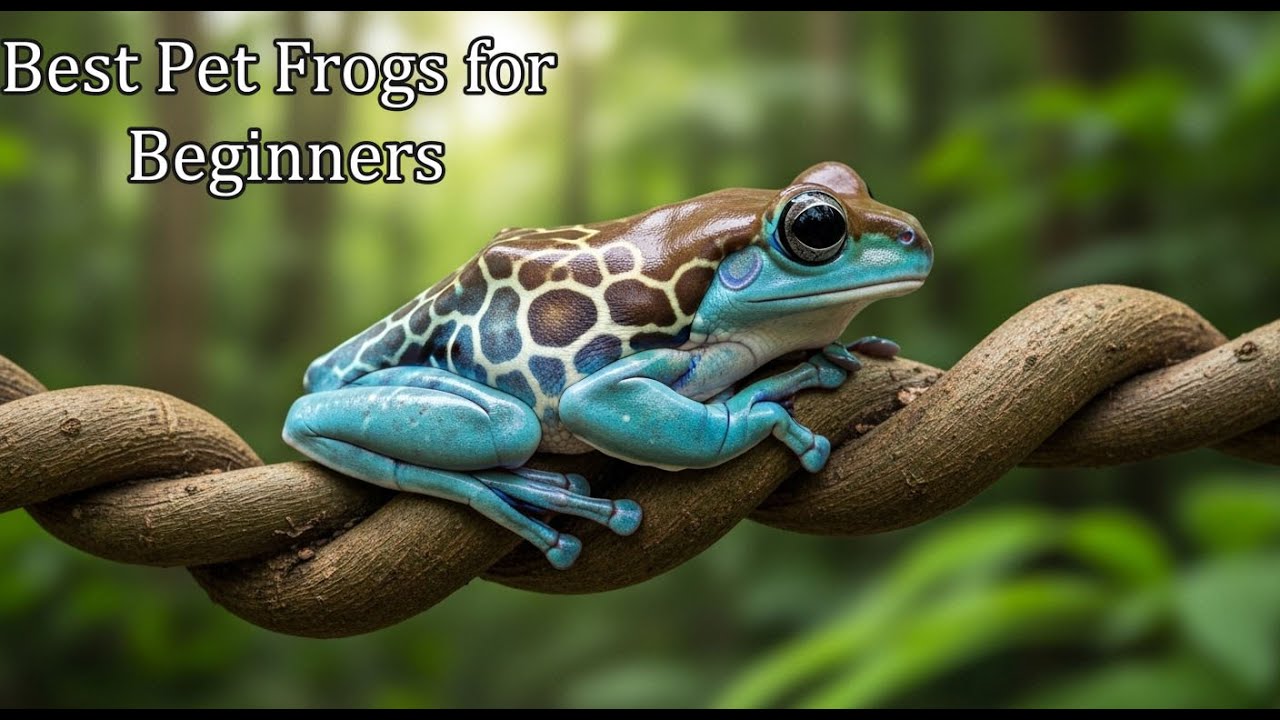
The Amazon milk frog or Brazilian milk frog, are another large tree frog, best known for their stunning brown and white stripes. They are known as milk frogs due to the milky white secretions they release when threatened.
Just like many frogs on this list, a 45 x 45 x 60 cm enclosure should do the trick, kept at an ambient temperature of 23ºC and a shallow water dish and daily misting to provide hydration and humidity.
For their diet, Amazon milk frogs enjoy a carnivorous diet of brown crickets, locusts and occasionally mealworms or calciworms. They love having space to perch and are a great species to keep in groups.
7. Pixie Frogs (Pyxicephalus adspersus)
Giant African bullfrogs, commonly known as pixies (due to its scientific name) are found as wild frogs in southern Africa. These are the largest species on this list and the second-largest species in the world.
As they are so large, pixies need to have a large enclosure. We typically recommend a glass terrarium that’s at least 60 x 45 x 45 cm. Additionally, they need an ambient temperature of 23ºC. These frogs should live alone, as they are known cannibals.
Lastly, while these massive amphibians are low-maintenance pets, they don’t like to be handled much. What’s more, they have sharp teeth and are one of the only frog species that have a nasty bite. Don’t worry, as they’ll let out a loud croak if they’re feeling stressed.

Информация по комментариям в разработке