The H.L. Hunley was a Confederate submarine during the American Civil War, and its story is one of innovation, tragedy, and mystery. Named after its financier, Horace Lawson Hunley, the submarine was built in Mobile, Alabama, and was designed to break the Union blockade that was crippling the South's access to crucial supplies during the war.
The Hunley was a pioneering vessel, measuring around 40 feet in length and resembling a large metal cigar. It operated with a crew of eight, who hand-cranked its propeller and controlled its movements. The submarine's most distinctive feature was a spar torpedo—a bomb attached to the end of a long pole—which was intended to be used to attack enemy ships.
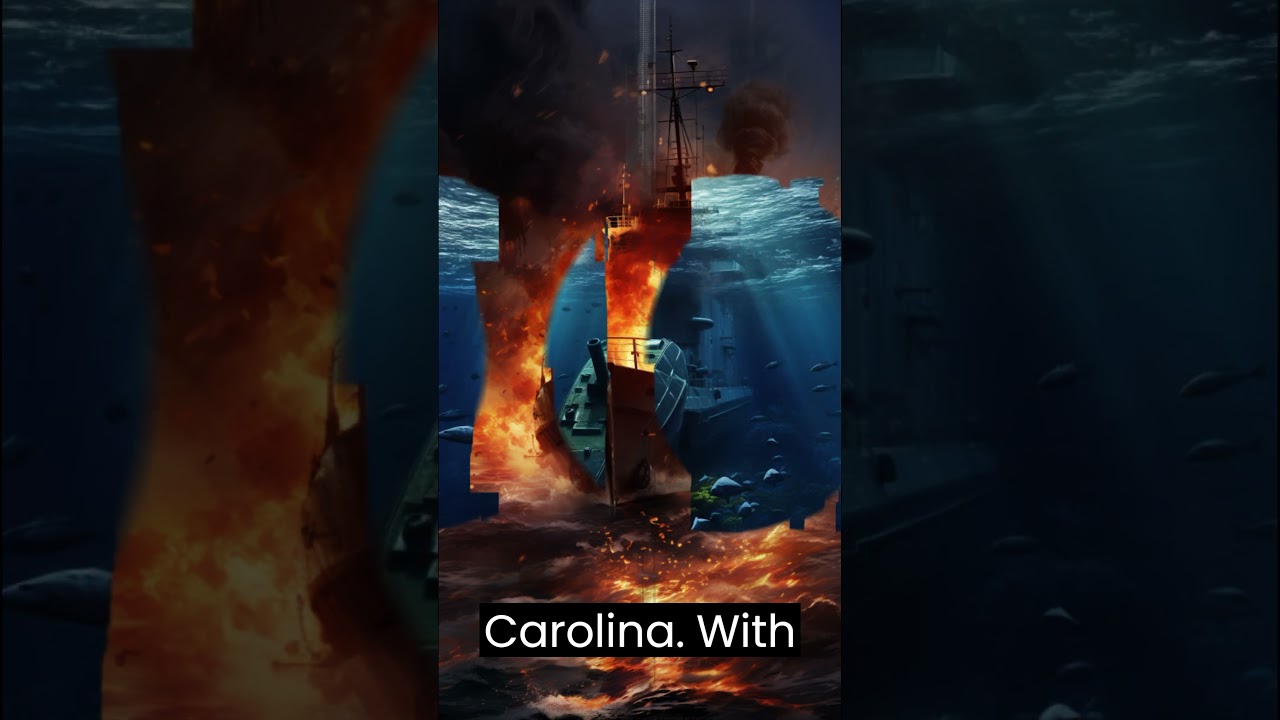
On February 17, 1864, the H.L. Hunley set out on its third and fateful mission in Charleston Harbor, South Carolina. Its target was the USS Housatonic, a 207-foot-long Union sloop-of-war. The Hunley approached the Housatonic stealthily, and at approximately 8:45 p.m., it successfully rammed the spar torpedo into the Union ship's hull. The torpedo detonated, causing a massive explosion that sank the Housatonic within minutes.
The H.L. Hunley achieved its mission, but tragically, it did not survive the encounter. After the successful attack on the Housatonic, the submarine mysteriously disappeared without a trace. The crew aboard the USS Housatonic witnessed the explosion and saw the submarine sink beneath the waves shortly after the attack.
In the aftermath of the engagement, the fate of the H.L. Hunley remained unknown for over a century. Various search and salvage operations were launched to find the missing submarine, but they all proved fruitless. Speculations and theories abounded, with some suggesting that the Hunley had been destroyed by the force of its own torpedo, while others believed it may have been attacked by Union forces after the Housatonic's sinking.
Then, in 1995, after years of searching, the H.L. Hunley was finally discovered off the coast of South Carolina. In 2000, the submarine was carefully raised and brought to the surface in a remarkable feat of marine archaeology.
As researchers examined the wreckage, they made a haunting discovery. The crew of the H.L. Hunley had not abandoned ship after the attack. Instead, they found the remains of the eight crew members still at their stations, indicating that they had died in place. This finding led to further investigation into what caused the submarine to sink.
Through meticulous analysis, researchers pieced together the final moments of the H.L. Hunley. They concluded that the submarine had survived the attack on the USS Housatonic but had encountered trouble on its way back to the Confederate shores. It seemed that the submarine had taken on water and eventually sank, leading to the tragic loss of its entire crew.
The exact cause of the H.L. Hunley's sinking remains uncertain. It is possible that damage sustained during the attack on the Housatonic compromised the submarine's integrity, and water slowly seeped in during the return journey. The crew's valiant efforts to hand-crank their way back to safety were ultimately in vain.
The H.L. Hunley's legacy lives on as a testament to the ingenuity and bravery of its crew and the innovative spirit of the era. Today, the submarine is on display at the Warren Lasch Conservation Center in Charleston, South Carolina, where it continues to be studied and admired for its historical significance and the enduring mystery that surrounds its tragic end.
#shortsvideo #accident #submarine #submersible #tragic #american #civilwar

Информация по комментариям в разработке