La via Amerina fu una via di collegamento in epoca romana e nel medioevo che staccandosi dalla via Cassia all’altezza della Valle di Baccano, attraversava tutto il territorio dell’Ager Faliscus, toccandone i suoi principali centri come Nepet l'odierna Nepi, Falerii oggi Civita Castellana, Fescennium Corchiano e Hortae l’attuale Orte, fino a giungere alla citta di Amerìa l’attuale Amelia in Umbria da cui prese il suo nome. La strada, in un successivo momento, proseguì anche oltre toccando centri come Todi e Perugia.
Il primo tratto da Roma ad Ameria fu aperto tra il 241 e il 240 a.C. unendo dei tracciati locali ancora più antichi che già collegavano Veio con Amerìa.
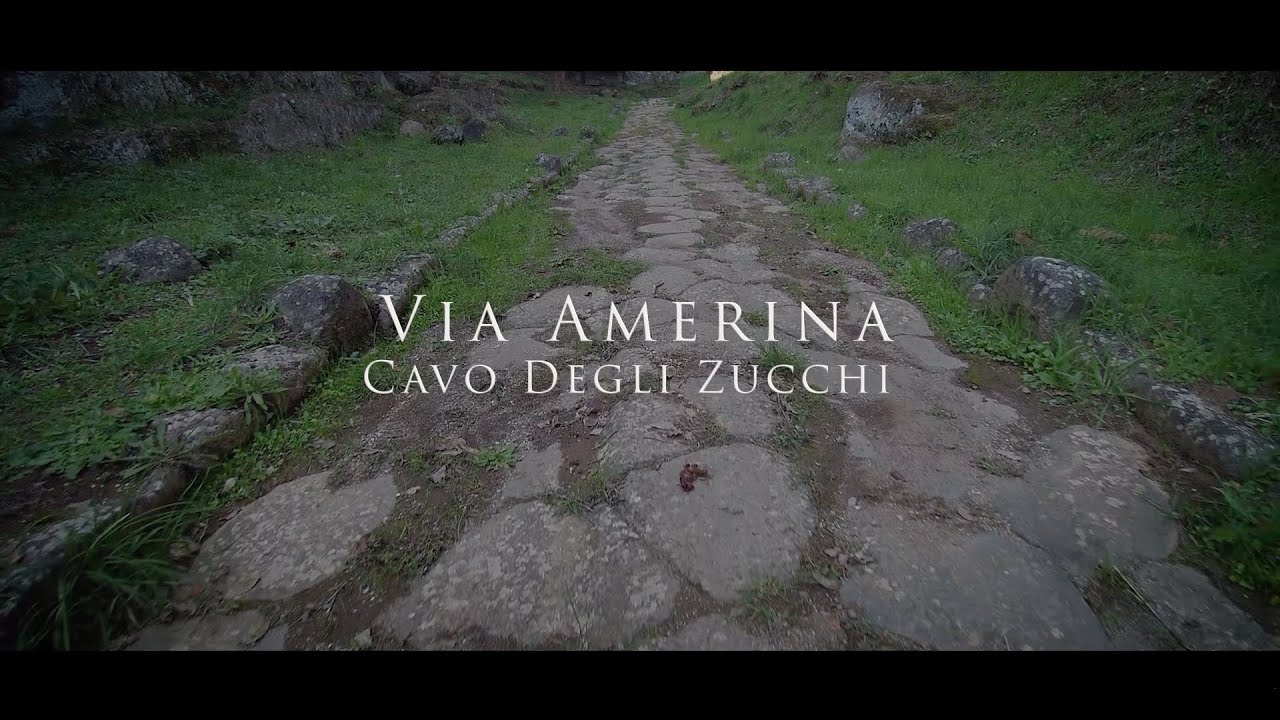
Una delle parti più suggestive di questo tracciato è senz’altro il complesso del Cavo degli Zucchi.
Si tratta di una grande tagliata viaria sulla Via Amerina.
A sud è possibile vedere i resti di un poderoso punte, da dove si conserva ottimamente un lungo tratto dell’antico basolato romano, completo in tutte le sue parti.
Caratteristica unica di questo luogo è la presenza, lungo le pareti della stessa via, di quasi 200 tombe di diverso tipo che accolgono, le une accanto alle altre, sepolture di diverso tipo, ad incinerazione e ad a inumazione, che ne testimoniano inequivocabilmente l’utilizzo nei secoli, difatti esse sono databili dal II secolo a.C. fino al al IV secolo d.C. Alcune di queste tombe sono state rinvenute intatte, nonostante la frequentazione bimillenaria del sito.
Dopo la caduta dell’Impero Romano d’occidente questo asse viario, di importanza minore per l’epoca, nel medioevo fu gradualmente abbandonato e, forse, è proprio questo che ne ha consentito la conservazione di gran parte del tracciato fino ai giorni nostri.
La via Amerina ed in particolare il cavo degli Zucchi testimoniano l’importanza storica che oggi ricopre questo asse viario, dove, sono conservate le memorie storiche che vanno dagli abitati più antichi, i Falisci, sino a quelle più recenti dei giorni nostri.
The Via Amerina was a connecting route in Roman times and in the Middle Ages that detaching from the Via Cassia at the Baccano's valley, it crossed the whole territory of the Ager Faliscus, touching its main centers such as Nepet today's Nepi, Falerii today Civita Castellana, Fescennium Corchiano and Hortae the current Orte, until reaching the city of Amerìa the current Amelia in Umbria from which it took its name. The road, in a subsequent moment, continued beyond touching centers like Todi and Perugia. The first stretch from Rome to Ameria was opened between 241 and 240 B.C. joining the even older local tracks that already connected Veio with Ameria. One of the most striking parts of this route is undoubtedly the Cavo dei Zucchi complex. It is a large cut road on the Via Amerina. To the south it is possible to see the remains of a grand bridge, from where a long stretch of the ancient Roman road is perfectly preserved, complete in all its parts. Unique feature of this place is the presence, along the walls of the same street, of almost 200 different types of tombs, next to each other in a different types of burials, incineration and inhumation, which unequivocally testify the use over the centuries, in fact, they can be dated from the second century BC until the fourth century A.D. Some of these tombs have been found intact, despite the fact that the site is two thousand years old. After the fall of the Western Roman Empire this minor road axis for the period in the Middle Ages was gradually abandoned and, perhaps, it is this that allowed the conservation of most of the route up to the present day. The Via Amerina and in particular the Zucchi site bear witness to the historical importance that today covers this road axis, where are preserved the historical memories that go from the most ancient settlements, the Falisci, up to the most recent ones of the present day.

Информация по комментариям в разработке