Access to justice is a basic principle of the rule of law. It is for this reason that the United Nations Convention on the Rights of Persons with Disabilities (CRPD) in its Article 13 prescribes access to justice as a fundamental right, which must be guaranteed by the States Parties, whose aim is to implement the new human rights approach.
In this sense, it is important to highlight the role played by the States Parties to this Convention in order to ensure Access to Justice for Persons with Disabilities, in addition to achieving Sustainable Development Goal No. 16 of the 2030 Agenda, dedicated to the promotion of peaceful and inclusive societies for sustainable development, the provision of access to justice for all, and building effective, accountable institutions at all levels; and Sustainable Development Goal No. 11: Make cities and human settlements inclusive, safe, resilient and sustainable.
Accordingly, the CRPD provides that all procedural and age-appropriate accommodations should be made to facilitate the effective performance of the functions of persons with disabilities, as direct or indirect participants, including testifying as witnesses, in all legal proceedings. In addition, Article 13 of the CRPD mentions that States Parties play a fundamental role in guaranteeing access to justice for persons with disabilities, since they have an obligation to promote appropriate training for those working in the administration of justice, including, for these purposes, police and prison personnel.
A quality inclusive police service for persons with disabilities will require developing, implementing and evaluating the application of a set of minimum standards and guidelines, including the implementation of procedural adjustments and reasonable accommodations, so that persons with disabilities can exercise their rights and obligations, as well as access police procedures, on an equal basis with others. Based on this, not only should reference be made to the interaction of police personnel, but it is also imperative to adopt pertinent measures to ensure access by persons with disabilities to police premises, facilities and transportation, both in urban and rural areas, to information and procedural communications, accepting and facilitating the use of sign language, Braille, augmentative and alternative modes, means and formats of communication and all other accessible modes, means and formats of communication chosen by persons with disabilities.
Access to police procedures, in various circumstances and qualities, as well as the exercise of the rights and obligations of persons with disabilities in the police environment, will require being free of barriers. Thus, the effective adoption of measures that enable the elimination of these barriers will be a key factor to achieve the full and effective participation of persons with disabilities in society.
Likewise, Accessibility is the legal standard that is a bridge for the exercise of human rights and fundamental freedoms.
States should seek to promote awareness of the rights of persons with disabilities to overcome the barrier of discrimination, in order to meet the needs and promote the human rights of the population, including access to justice as a pillar for the exercise of human rights and fundamental freedoms, and also for the fulfillment of SDG 16.
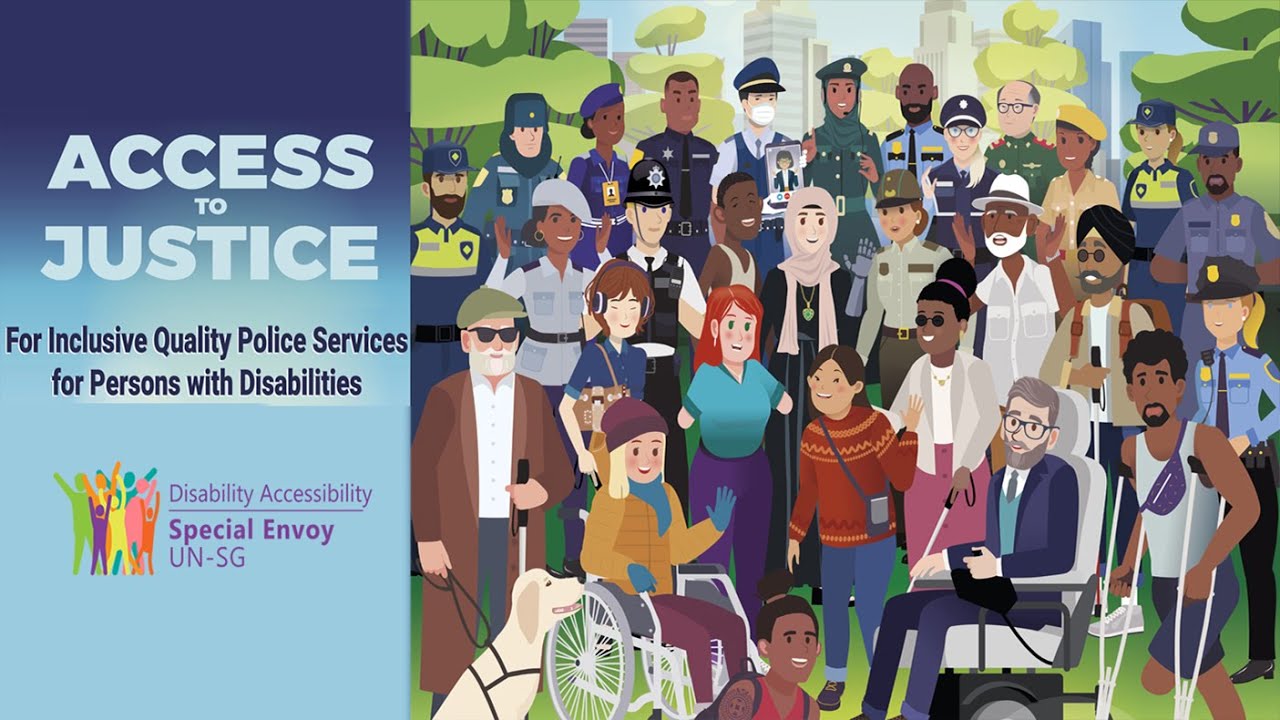
Therefore, promoting access to justice through actions such as awareness-raising will be a fundamental motive for the launch of the campaign "For Inclusive Quality Police Services for Persons with Disabilities".
Contact: [email protected]
-Twitter: / disability_se

Информация по комментариям в разработке