🔥 Battle of Tulagi & Gavutu–Tanambogo (1942) | The Small Rocks Stained with Blood ⚔️🌊
Description:
In August 1942, before the name Guadalcanal became synonymous with attritional jungle warfare and human exhaustion, two small, jagged pieces of land in the Solomon Islands were soaked in blood: Tulagi and the twin rock outcrops of Gavutu–Tanambogo. This 10-minute historical war film reconstructs one of the Pacific War’s most brutally compressed amphibious assaults, where the scale was small, the distances measured in meters, and the cost paid entirely in human bodies. There are no sweeping victories here, no clean breakthroughs, and no heroic mythology—only survival carved out of coral, mud, and fire.
The film opens at dawn. A calm, glass-flat sea reflects a pale, humid sky as landing craft surge forward. Engines growl, then choke, then die against coral shallows. Boots hit water. Men stumble. Coral slices skin like knives. A shouted curse breaks the quiet. Another hand yanks a fallen soldier upright. The shoreline offers no welcome—only rocks, low scrub, and the first snapping cracks of rifle fire from concealed positions. From the opening moments, the battle is intimate, disorienting, and unforgiving.
As pressure builds, the jungle and rock formations consume the assault force in fragments. Small groups vanish into foliage, heat presses down, and breath becomes audible over the hum of insects. Dialogue is short, strained, and functional—commands, warnings, and half-spoken reassurances meant as much for the speaker as for anyone else. A young soldier mutters that it is “just a small island,” only to be cut down verbally by the reality that small ground can still kill.
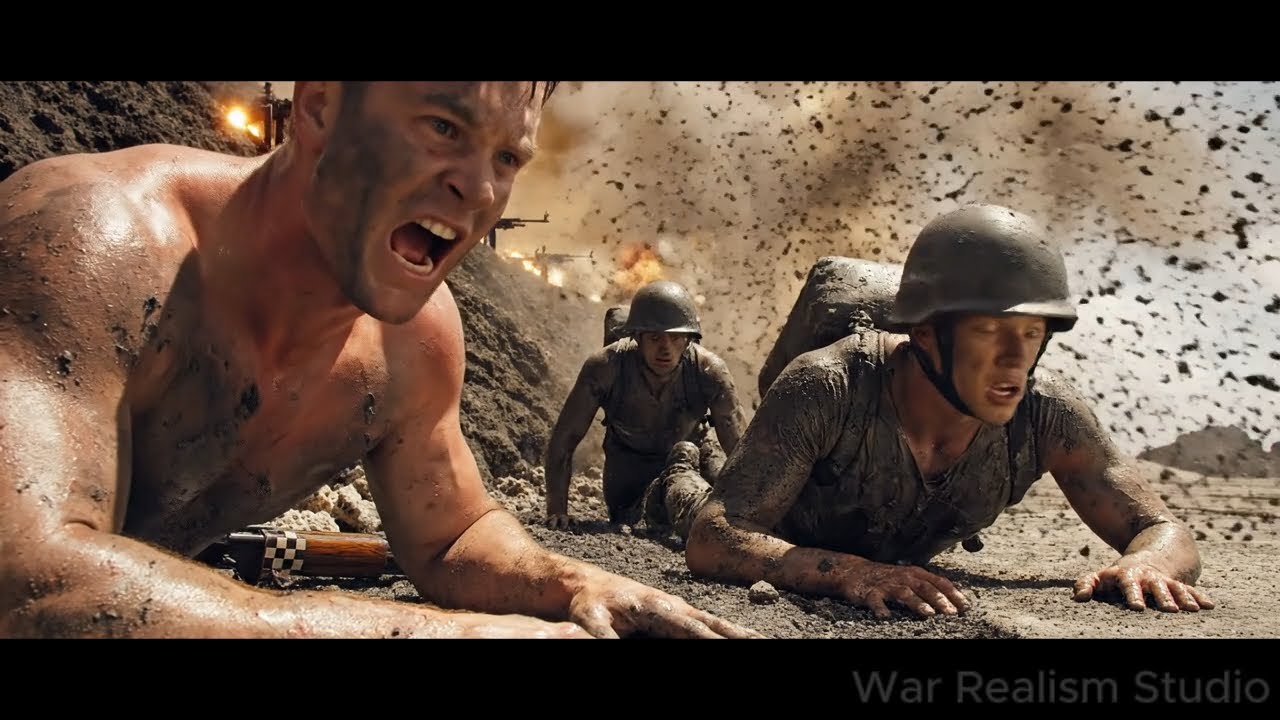
A brief false calm follows. Gunfire fades. Sweat is wiped from eyes. Someone dares to believe the worst is over. That illusion shatters instantly. Fire erupts from hidden bunkers and underground positions. Grenades thunder against bare rock. Shouts of direction and panic overlap. On Gavutu–Tanambogo, the terrain itself becomes a weapon: sheer slopes, honeycombed defenses, and no cover except bodies and broken stone. Every meter forward costs lives.
The cost phase of the film is unflinching. Wounded men lie scattered across coral and dirt. A corpsman kneels in the open, hands slick with blood, racing against incoming fire. A dying soldier grips a comrade’s hand, trying to finish a sentence that will never be completed. Ammunition is counted in breaths. Decisions narrow. Retreat is no longer possible—the sea is behind them, the enemy below and ahead. The only option left is to hold, advance, or die where they stand.
By late afternoon, the smoke thins. Survivors sit or collapse where they are, eyes hollow, uniforms shredded, bodies trembling from shock and exhaustion. There is no celebration, no sense of triumph. Only the awareness that these “small rocks” were merely the opening warning. Across the water lies Guadalcanal—larger, darker, and waiting. The final line hangs heavy in the humid air: if this is what the small islands demanded, what will the big one take?
This film is designed with strict historical realism and a human-scale perspective. Characters are anonymous composites rather than named heroes. Combat is shown through limited sightlines, ground-level cameras, and environmental dominance. Sound prioritizes weapons, breath, and terrain over music. Violence is abrupt, chaotic, and consequential. Tulagi and Gavutu–Tanambogo are not framed as victories, but as the first blood-price paid to enter the long nightmare of Guadalcanal.
If you are interested in World War II history, Pacific Theater battles, amphibious warfare, or realistic war cinema that rejects glorification, this film offers a raw and disciplined portrayal of how modern war reduces strategy to survival, and geography to fate.
Hashtags:
#WorldWarII, #PacificWar, #Tulagi, #GavutuTanambogo, #Guadalcanal, #WW2History, #WarFilm, #MilitaryHistory, #PacificTheater, #AmphibiousAssault, #HistoricalCinema, #RealisticWar,

Информация по комментариям в разработке