Zohran Mamdani - From Queens Organizer to Democratic Nominee for NYC Mayor
Have you seen this guy lately? You probably know his name.
He’s everywhere a millennial, Muslim, and democratic socialist born in Uganda, now reshaping New York’s political future.
From making rap music as Young Cardamom to defeating Andrew Cuomo in the 2025 Democratic primary, Zohran Mamdani has become one of the most polarizing and fascinating figures in modern American politics.
In this video, we explore how a Queens organizer turned grassroots activism into a city-wide movement.
This is the full story of how Mamdani went from fighting foreclosures in Astoria living rooms to standing at the edge of becoming the next Mayor of New York City.
Origins — The Queens Organizer (0:25–2:00)
Zohran Kwame Mamdani was born in Kampala, Uganda, in 1991.
His middle name, Kwame, honors Kwame Nkrumah - Ghana’s first president and a symbol of anti-colonial leadership.
His mother, a Punjabi Hindu filmmaker, grew up in Rourkela, India, before building a filmmaking career across continents.
When Zohran was seven, the family moved to Queens, New York, where he grew up surrounded by 800 languages, working-class stories, and the daily hustle of immigrants trying to make it.
Before politics, Mamdani worked as a housing counselor, helping families at risk of foreclosure an experience that grounded his understanding of New York’s affordability crisis.
In 2020, running on a Democratic Socialist platform, he defeated a long-time incumbent to win the State Assembly seat for Astoria. His campaign slogan was simple: Make New York affordable again for everyone.
The Meteoric Rise (2:00–3:30)
In June 2025, everything changed.
Against all odds, Zohran Mamdani defeated Andrew Cuomo in the Democratic primary, pulling 56% of the vote in ranked-choice tallies.
The upset sent shockwaves across the country.
National media lit up with headlines like:
“The Socialist Who Beat Cuomo.”
“From Astoria to City Hall.”
“The Ugandan-Born Candidate Changing New York Forever.”
Donald Trump called him a “100% Communist Lunatic.”
The ‘Affordability Agenda’ (3:30–5:10)
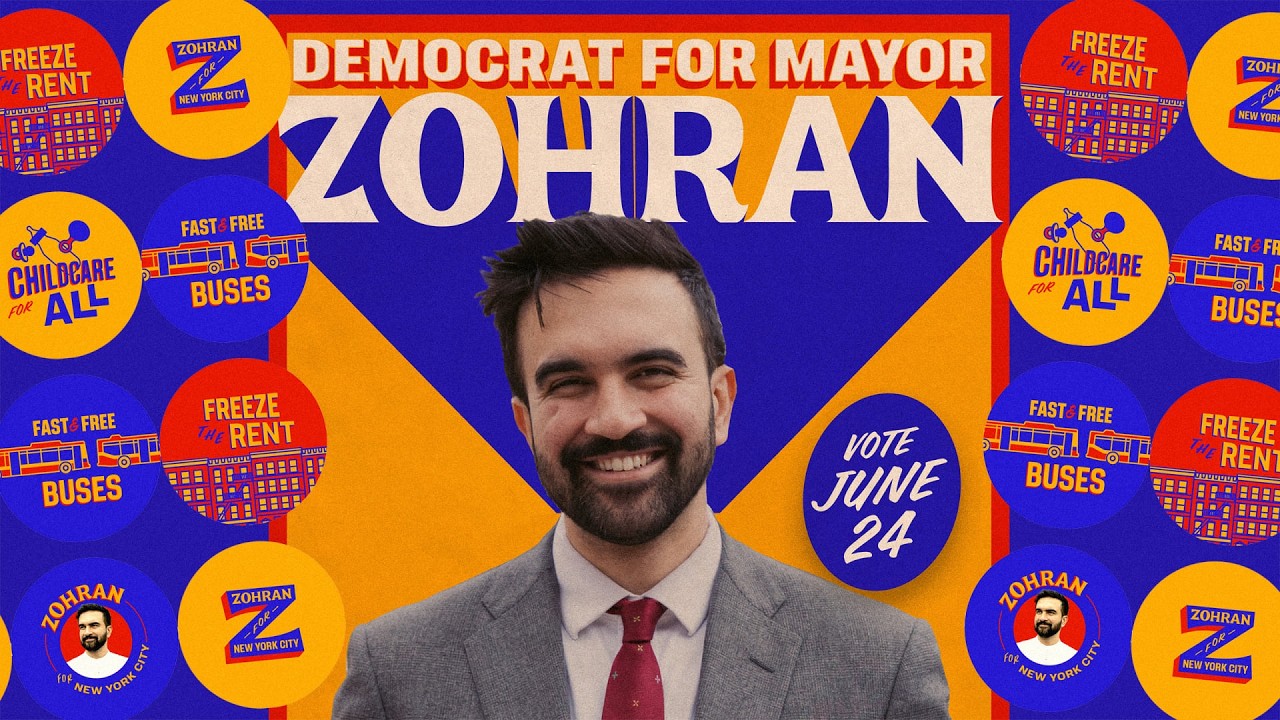
At the heart of Mamdani’s campaign is what he calls the Affordability Agenda, built on four pillars:
1️⃣ Rent Freeze on all rent-stabilized apartments
2️⃣ Fare-Free Buses for all New Yorkers
3️⃣ Universal Childcare, free at the point of use
4️⃣ Public Options city-run grocery stores and community services to force private prices down
His proposal sounds revolutionary, but here’s the catch: the mayor doesn’t control all those levers.
The MTA runs buses, not City Hall.
The Rent Guidelines Board sets rent increases.
And new taxes on the wealthy require state approval meaning negotiations with Governor Kathy Hochul are inevitable.
Mamdani knows this.
He calls it “a fight worth having.”
Why His Message Landed (5:10–6:40)
New Yorkers are exhausted.
A coffee costs $6. A halal plate, $10.
The median rent now eats up 55% of a household’s income nearly double the affordability standard.
Wages haven’t kept up with inflation.
Mamdani’s movement taps directly into that pressure.
His Coalition (6:40–8:40)
Mamdani’s coalition is one of the most diverse in NYC history.
Latino voters respond to his Spanish-language videos and grassroots organizing around rent and transit.
Muslim communities connect with both his identity and his stance on “halalflation.”
Black, Indian, and Pakistani voters see in him a bridge between working-class struggle and cultural pride.
Jewish progressives like Rabbi Sharon Kleinbaum have shared his stage, even as conservative voices oppose him.
LGBTQI+ New Yorkers support his message of inclusion and fairness.
He doesn’t just talk about solidarity he builds it, neighborhood by neighborhood.
The Rivals (9:40–11:00)
In the general election, Mamdani faces two formidable opponents:
Andrew Cuomo, running as an independent after his primary defeat.
Despite his experience, Cuomo’s past scandals including harassment allegations and a recent AI-generated racist ad have damaged his credibility.
Curtis Sliwa, the Guardian Angels founder, channels right-wing populism, focusing on crime and migration.
Both paint Mamdani as “too radical.”
He answers: “Too radical for who? For billionaires, maybe. For New Yorkers, I’m just realistic.”
November 4 - Election Day (12:00–13:40)
If he wins, he’ll be the first Ugandan-born, Muslim, Indian-heritage mayor of New York City.
But the harder part begins afterward: negotiating with Albany to turn his affordability promises into real policies.
This isn’t just a New York story.
It’s a test for the future of urban progressivism in America’s biggest city.
💬 Join the Conversation
What should the next mayor fix first: rent, transit, or childcare?
Drop your comment below we’ll feature the smartest two takes in Part 2: “The Election Results and the First 100 Days.”

Информация по комментариям в разработке