We grow up believing that governments rule the world. That presidents make decisions. That parliaments debate and decide the fate of nations.
But what if the real power doesn’t stand on podiums or campaign for votes?
What if it sits quietly behind closed doors, shaping the flow of money — and through it, the flow of history?
This is the story of the invisible empire — the rise of central banks, the unelected institutions that became the architects of modern power.
They don’t command armies. They don’t pass laws.
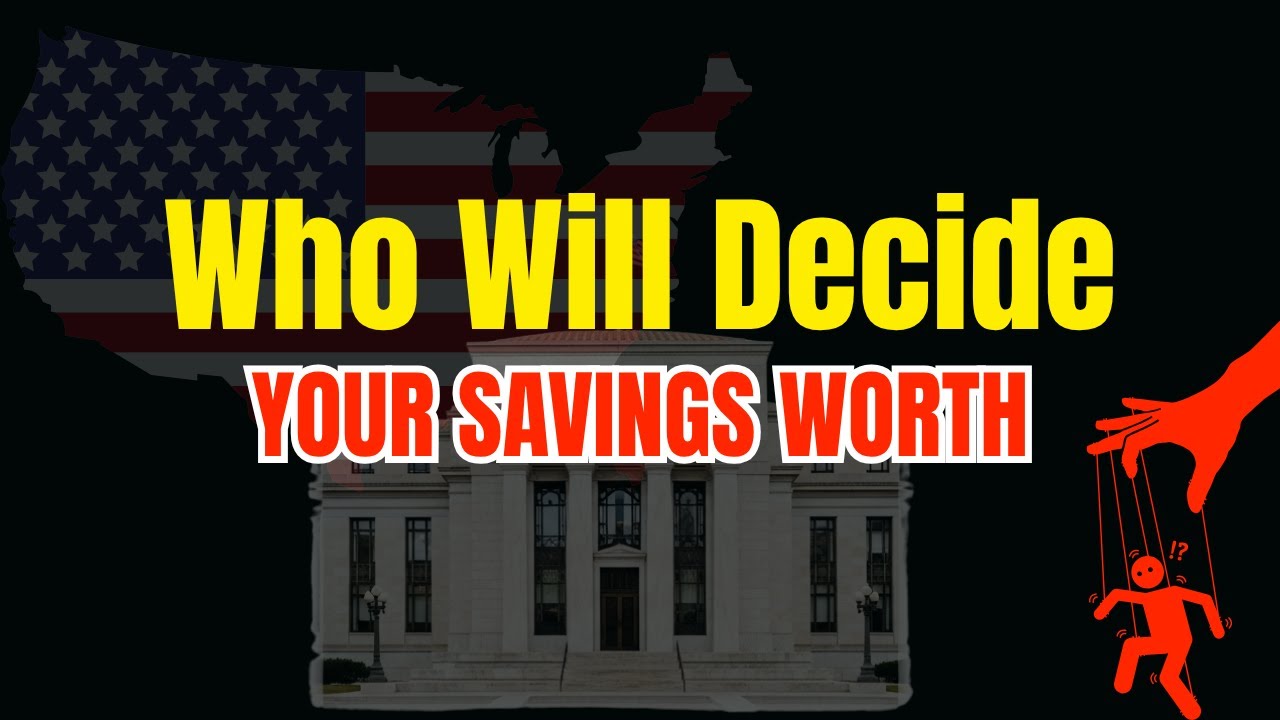
Yet they decide whether your mortgage doubles, your job survives, or your savings lose value overnight. And they can do all of this — without a single vote cast in their favor.
Discover the shocking truth about the role of central banks in shaping the global economy. Are they secretly controlling the world? In this thought-provoking video, we delve into the mysterious world of central banking and explore the ways in which they influence international finance, governments, and individuals. From monetary policy to economic manipulation, we examine the evidence and uncover the secrets that lie behind the closed doors of the world's most powerful financial institutions. Join us as we explore the complex web of central bank control and its far-reaching implications for our global community. Whether you're an economist, a financial enthusiast, or simply a concerned citizen, this video is a must-watch for anyone seeking to understand the intricate mechanisms that govern our world.
Research References
Bordo, Michael D., and Robert N. Siklos. Central Banks: Evolution and Innovation in Historical Perspective. Hoover Institution, 2018.
Hoover Institution
Discusses how central banks evolved over approximately four centuries, tracing origins, functions, and innovations.
Goodhart, Charles, and others. The Development of Central Banking. (LSE Research Online, 2013)
LSE Research Online
Provides a historical account of central banks, their functions, monetary policy, the gold standard era, and the transition to fiat currency.
Romer, Christina D., and David H. Romer. “A Century of U.S. Central Banking: Goals, Frameworks, Accountability.” Journal of Economic Perspectives, 27(4), 2013.
American Economic Association
Examines changes in the role of the U.S. central bank (the Federal Reserve) over the past 100 years, including its goals, framework and accountability.
Federal Reserve Bank of Cleveland. “A Brief History of Central Banks.” Economic Commentary, December 2007.
Cleveland Fed
A concise overview of the earliest central banks (e.g., Bank of England, founded in 1694) and their rise in Europe.
Blejer, Mario I., and Paul Wachtel. “A Fresh Look at Central Bank Independence.” Institute of Global Affairs, LSE, 2020.
LSE
Looks at the concept of central bank independence, how it emerged, and challenges to it in modern monetary policy.
“Creating a Central Bank – Banking History: Central Banking and the United States.” Library of Congress.
Library of Congress Guides
Provides historical context for the U.S. central banking system, including the creation of the Federal Reserve in 1913.
Humphrey, Thomas L. et al. “Uncomfortable Knowledge in Central Banking: Economic Expertise, Public Visibility and the Dilemmas of Transparency.” Environment and Planning A, 2022.
Taylor & Francis Online
Explores the visibility dilemma for central banks — how their power is hidden behind technical jargon and institutional complexity.

Информация по комментариям в разработке