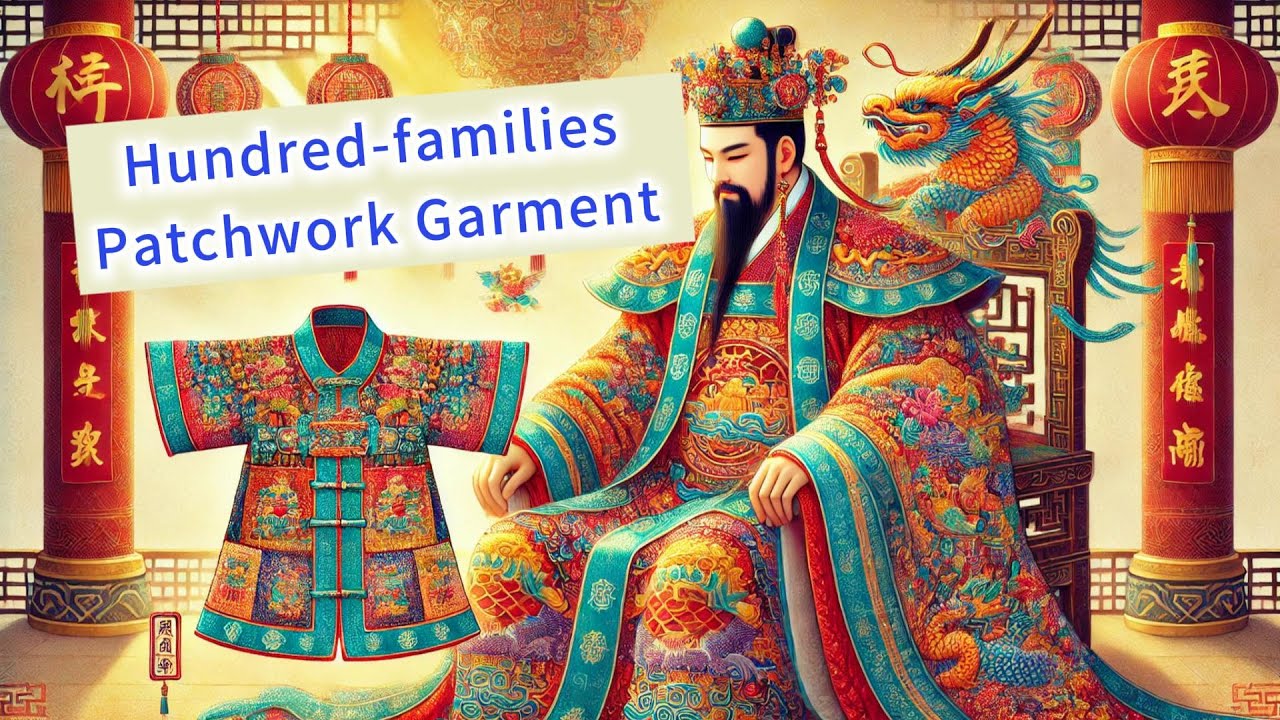
Baijia Yi, literally translated as “the garment of a hundred families,” is a traditional form of children’s clothing in Chinese culture. It is most commonly made for newborns or young children and is deeply rooted in the beliefs surrounding protection, blessings, and community support.
Baijia Yi is typically a patchwork garment sewn from small pieces of fabric collected from many different households. Each family contributes a fragment of cloth, which is then carefully stitched together into a single garment. The resulting clothing is often thick, warm, and colorful, reflecting the diversity of the families who participated in its creation.
In traditional Chinese society, infant mortality was high and medical care was limited. As a result, people placed great importance on spiritual protection and symbolic practices. Baijia Yi emerged from this cultural background. It was believed that every piece of cloth carried the goodwill and blessings of the family who offered it. When many such pieces were combined, the garment was thought to provide strong protection and bring health, peace, and good fortune to the child who wore it.
There are also legends associated with Baijia Yi that strengthened its cultural significance. One well-known story suggests that Liu Yu, the founding emperor of the Liu Song Dynasty, wore a Baijia Yi in his childhood. Born into a poor family, he lacked warm clothing during harsh winters. His family collected scraps of fabric from neighbors and stitched them together to keep him warm. After Liu Yu later became emperor, people viewed this story as evidence that the collective blessings embodied in the garment could shape a child’s destiny.
Beyond legend, Baijia Yi reflects an important social value in traditional Chinese culture: the idea that a child does not belong only to one family, but to the wider community. By contributing fabric, neighbors expressed care and responsibility for the child’s well-being. The garment thus became a physical symbol of mutual support and shared hope.
Even in modern times, Baijia Yi has not completely disappeared. In some regions, families still prepare similar garments for newborns, especially during meaningful occasions such as the baby’s first month or first birthday. While materials and designs may change, the underlying belief remains the same.
Baijia Yi is more than a piece of clothing. It represents collective kindness, cultural memory, and the enduring wish for a child to grow safely and peacefully, surrounded by care from many hands.
Hi, how are you?
I share China’s philosophy, history, iconic figures, culture and timeless stories.
Anyway, all of us have different views through these ancient stories, as well as learning something from it, that's the meaning of each stories passed down.
You'll get a heartfelt and lively glimpse into Chinese culture through my videos.
Please feel free to drop in the comments.
Thank you very much for your watching!

Информация по комментариям в разработке