Under Section 107 of the Copyright Act 1976, allowance is made for "fair use" for purposes such as criticism, comment, news reporting, teaching, scholarship, and research. Fair use is a use permitted by copyright statutes that might otherwise be infringing. Non-profit, educational, or personal use tips the balance in favor of fair use.
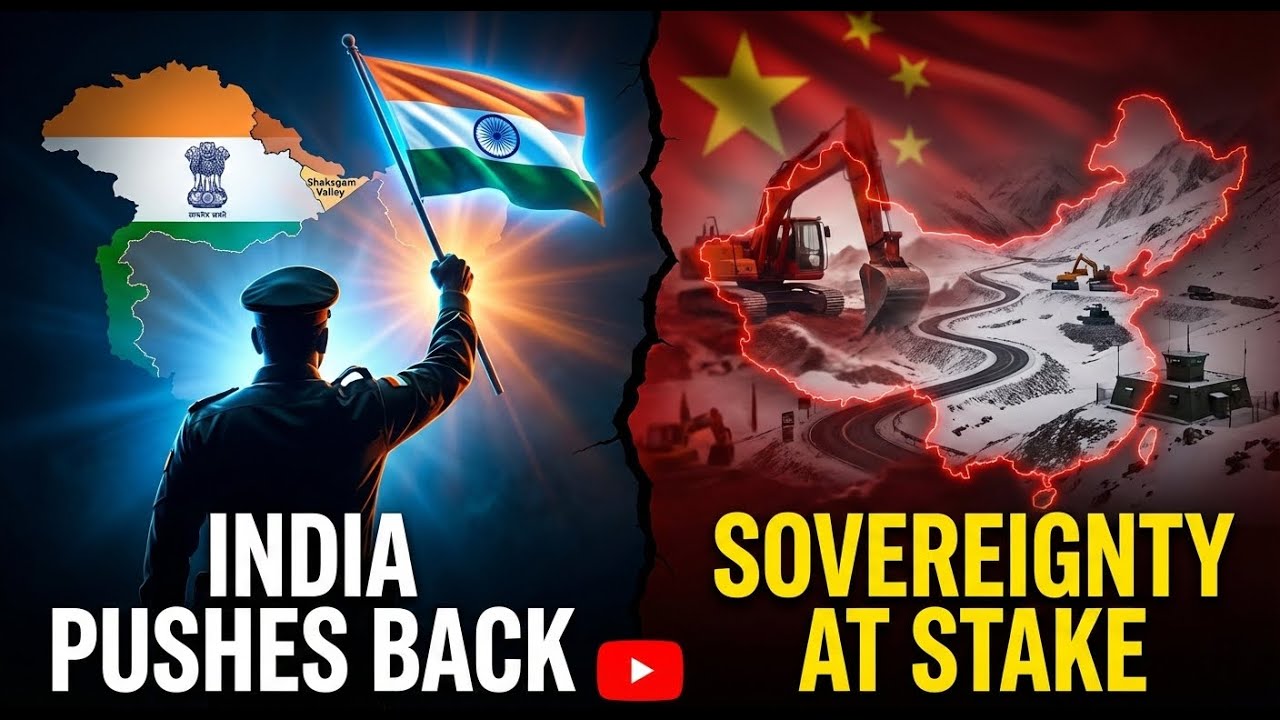
India has once again drawn a firm red line over Chinese infrastructure activity in the strategically sensitive Shaksgam Valley, with Army Chief General Upendra Dwivedi categorically declaring such projects illegal and unacceptable under international norms. The remarks come amid Beijing’s renewed defence of construction linked to the second phase of the China–Pakistan Economic Corridor (CPEC 2.0).
Addressing his annual press conference in New Delhi on Tuesday, General Dwivedi reiterated New Delhi’s long-standing position that it does not recognise the 1963 Sino-Pakistan Boundary Agreement, the pact under which Pakistan transferred control of the Shaksgam Valley to China. India, he stressed, considers the agreement unlawful and void, as it pertains to territory that legally belongs to India.
Beijing Pushes Back, Defends Sovereign Rights
The Indian Army chief’s statement followed closely on the heels of a public response from Beijing, which defended its activities in the region. China asserted that the boundary agreement signed with Pakistan in the 1960s was a sovereign decision between two independent states, granting it the right to develop infrastructure in the area.
Why Shaksgam Valley Matters
The Shaksgam Valley, a high-altitude expanse of approximately 5,180 square kilometres north of the Karakoram range, occupies a geostrategically critical position. It lies adjacent to Pakistan-occupied Gilgit-Baltistan and close to the Siachen Glacier, the world’s highest active military zone. Although currently administered by China as part of its Xinjiang region, India asserts that the valley has historically been part of Jammu and Kashmir.
The roots of the dispute trace back to March 2, 1963, when China and Pakistan signed a boundary agreement in Beijing to demarcate borders between Xinjiang and territories claimed by Pakistan following the first India–Pakistan war of 1947–48. India has consistently argued that Pakistan had no legal authority to cede the territory in the first place.
India’s Diplomatic and Strategic Stand
Reaffirming this position, the Ministry of External Affairs has repeatedly stated that Shaksgam Valley is Indian territory. MEA spokesperson Randhir Jaiswal reiterated recently that New Delhi has never recognised the so-called boundary agreement and considers it illegal and invalid.
India’s objection extends beyond Shaksgam Valley to the broader Belt and Road Initiative, of which CPEC is a flagship component. New Delhi argues that projects passing through Pakistan-occupied Kashmir undermine its sovereignty and set a dangerous precedent in international diplomacy.
Bigger Geopolitical Implications
At its core, the dispute highlights the deepening strategic alignment between China and Pakistan and the growing friction it generates for India’s security calculus in the region. As CPEC 2.0 expands its footprint, New Delhi’s opposition underscores its refusal to legitimise territorial claims built on contested agreements.
With infrastructure increasingly becoming a tool of geopolitical influence, India’s stance signals that economic cooperation cannot override questions of legality and sovereignty. The Shaksgam Valley, once a remote and little-known stretch of land, now stands at the intersection of history, diplomacy, and power politics in South Asia.

Информация по комментариям в разработке